‘The Lion’s Side of the Story’: Economic Agency in Africa

Assistant Professor of Geography & African Studies Kwame Adovor Tsikudo speaks about how growing up in Ghana shaped his research today.

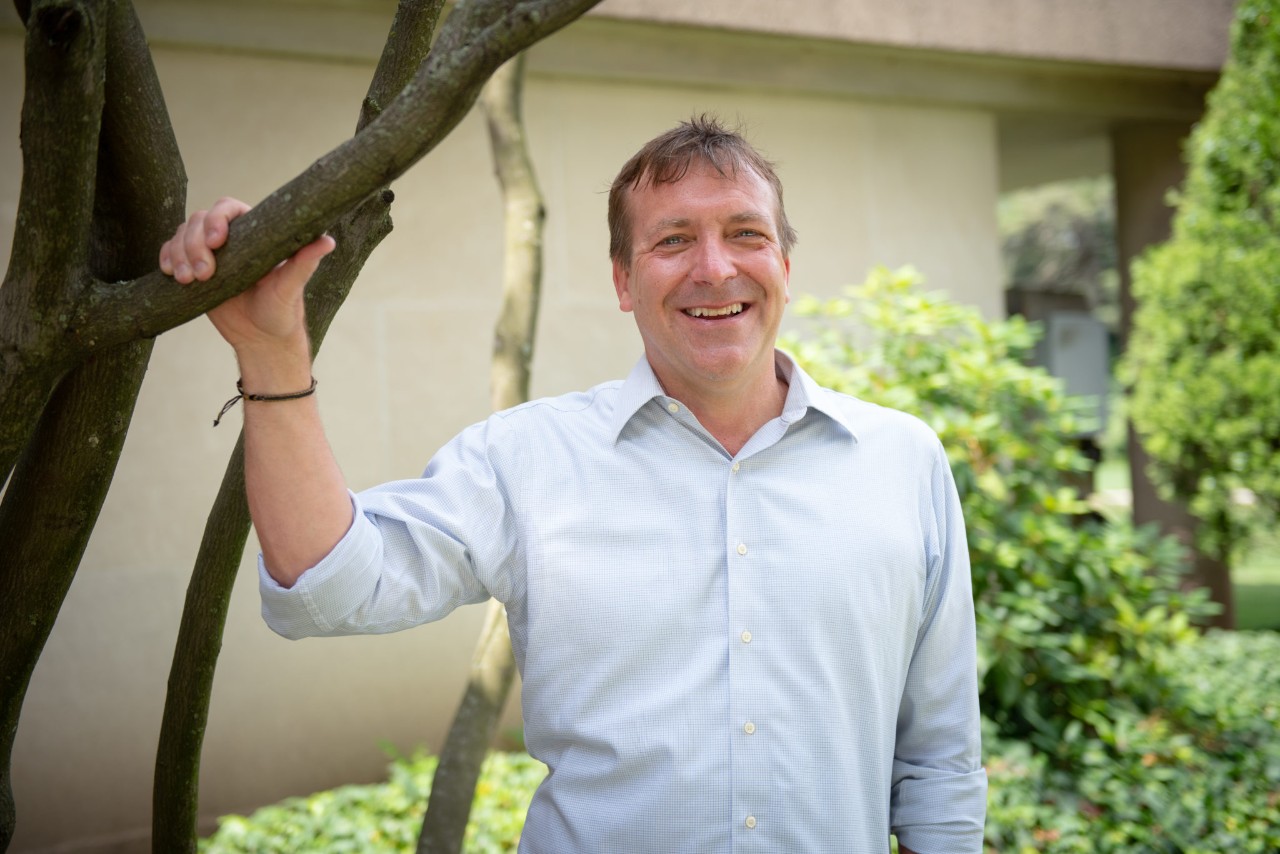
Kwame Adovor Tsikudo, PhD, assistant professor of Geography & African Studies

Africa holds vast natural resources, anchors some of the world's fastest-growing economies, and has been the site of development interventions for decades — but the gap between the continent’s promise and the lived reality of African citizens remains one of the most contested problems in the global economy. And now, China's expanding economic presence in Africa is adding a new layer of urgency to the conversation.

Kwame Adovor Tsikudo, PhD, assistant professor of African Studies & Geography at Thomas Jefferson University, has built his career around these issues. Drawing on his own experience growing up in Ghana, he works across political economy, environmental governance and development theory to understand why structural marginalization persists in his home continent and how that status quo might change. In this Q&A, Dr. Adovor Tsikudo explains why he thinks the Africa-China debate needs to be reframed from a new perspective, what African agency looks like and what conducting rigorous fieldwork inside African public institutions actually demands. 

How long have you been at Jefferson? What led you here?

I joined Jefferson in August 2022 as an assistant professor of Geography and African Studies, and what first stood out to me here was the people. Every conversation I had felt warm, genuine and welcoming. Academically, the small class sizes were a major draw. I was used to large lecture halls where students often blended into the crowd. Here, I can actually learn names, follow students’ progress and build conversations over time. That kind of engagement matters to me. Along with this was the College of Humanities & Sciences' highly interdisciplinary stature. As a geographer, I am used to being in an interdisciplinary environment — a key disciplinary hallmark! And then, of course, there is Philadelphia: a city with history, culture, great food and just enough edge to keep things interesting. 

Tell us a bit about your field or area of research.

I describe myself as an Africanist geographer — someone whose intellectual home is geography, and whose work is grounded in Africa. Geography is a wide-ranging field, including physical geography, human geography, geographic information system (GIS) and cartography. My work sits mainly in the human–environment geography interface, but in practice, it stretches across boundaries. I draw on political economy, environmental studies, critical social theory, development theory and international relations because the questions I ask cannot be answered through a single disciplinary lens.

At the heart of my research is a long-standing concern with development and underdevelopment. Why do some regions remain structurally marginalized in the global economy? How are those patterns produced and reproduced? And, crucially, how might they be disrupted? Africa is central to these questions, not as a passive site of intervention, but as a dynamic space of agency, negotiation and possibility.

Photo Credit: Kwame Adovor Tsikudo

What’s one question you’re currently exploring in your work?

One of the most significant shifts in the global political economy over the last five decades has been China’s emergence and its expanding engagement with African countries. This relationship is often framed in bifurcating terms: either as a welcome partnership or as a new form of neocolonialism. I find that framing to be analytically problematic and limiting. International politics is rarely about friendship or benevolence, but interests. China is pursuing its interests. So, the more generative question, to me, is what are African interests, and how are African states positioned to advance them?

With these questions, my work seeks to shift the focus from what China is doing in Africa to how African governments, institutions, and communities negotiate, shape and potentially leverage that engagement. This brings questions of state capacity, agency, environmental governance and social responsibility to the forefront. Ultimately, I am interested in what it would take for these relationships to transcend narratives of resource extraction and dependency toward something structurally transformative.

What first sparked your interest in Africanist geography?

My scholarship is intricately connected to who I am. I am Ghanaian, and I come from a family of builders and contractors. Growing up, development was not an abstract concept. It was concrete — literally. It is about bread and butter, as well as roads, schools, housing projects and government contracts. It was (and still is) about who got the bid and who did not.

During what scholars describe as Structural Adjustment Program 2.0 in Ghana — the period after the formal implementation of the Economic Recovery Program led by the Bretton Woods Institutions, premised on deregulating the economy and privatizing the means of production and social services to spur economic growth — I watched as large infrastructure projects sprang up all around us, mostly financed and built by Chinese firms. I also witnessed instances in which contracts awarded to indigenous companies were reassigned to expatriate firms in the name of efficiency. My family was a direct victim of this shift, along with many other Ghanaian contractors. I also experienced how social services were gutted, resulting in deepened inequality. These experiences made me question what creates conditions of underdevelopment and poverty. I also became curious about the sovereignty and agency of the state in promoting development, and the broader issues of social justice. 

How did your interest in this subject evolve over the years?

At the same time, during my formative years, I lived through waves of structural adjustment that reshaped Ghana's political economy across education, healthcare and transport. As an avid reader of the national newspaper, Daily Graphic, I could vividly recall one screaming headline that branded “deregulation as a necessary evil.” The profound impact of structural adjustment has been celebrated by some international agencies, which characterize Ghana as a good “pupil” of the adjustment program. Similarly, many celebrated China’s growing presence in Africa as another breakthrough in development. But for those of us who lived through these transitions, the story is more complicated.

We often say in Africa that until the lion tells its side of the story, the tale will always glorify the hunter. And as the Nigerian writer Chimamanda Ngozi Adichie reminded us, there is danger in a single story. But these stories can be corrected through a “balance of stories” as suggested by the indefatigable Nigerian novelist and poet, Chinua Achebe. For a long time, the Africa–China scholarship was dominated by outside voices, as seen in the framing of the initial debates on the subject. In part, my work is an effort to broaden that conversation — to bring lived experience, African agency and grounded perspectives into the analysis, and to complicate easy narratives about the outcomes of this burgeoning engagement between African countries and China, as well as the broader question of structural change. 

What’s the fire in your belly that drives your passion for your research?

One puzzle that continues to trouble me is how, decades after independence and decolonization, underdevelopment has not receded but adapted. It now operates in subtler, more dynamic ways, shaping how Africa and much of the so-called Global South engage with the rest of the world. What unsettles me most is that while the global economy has surpassed $100 trillion, a vast majority, especially in the Global South, remain ensnared in poverty. That contradiction is hard to unpack yet ignored. If the UNDP Human Development Index — a normalized index of health and human longevity, education and decent standard of living — is anything to go by, and if Indian economist and philosopher Amartya Sen’s clarion call for capability development as a means to development holds, then we must collectively work to remove all the unfreedoms that constrict society and derail the achievement of development as a holistic objective. The pursuit of this truth and the means to get there are my daily motivations.

What’s a little-known or unique fact about you?

Avoid engaging me about football (soccer) — that’s my other passion, and that conversation can last for hours!

If you had any words of advice for an aspiring researcher or student in this field, what would they be?

Most of my work engages with the public sector, which means I spend a great deal of time interacting with the state — its agencies, bureaucrats and institutional processes. And if you know anything about bureaucracy, you know it is rarely straightforward. Missing files, thin staffing, limited budgets and outdated record systems are everyday realities in many public institutions across Africa. Doing research in these spaces requires careful planning, flexible timelines, and patience. I have learned to expect delays and dead ends. Some institutions are remarkably professional and generous in their behavior. Others can be frustratingly ponderous, opaque or rigid. Prepare yourself for both experiences. Show up respectfully, follow up consistently and avoid taking setbacks personally.

Share This