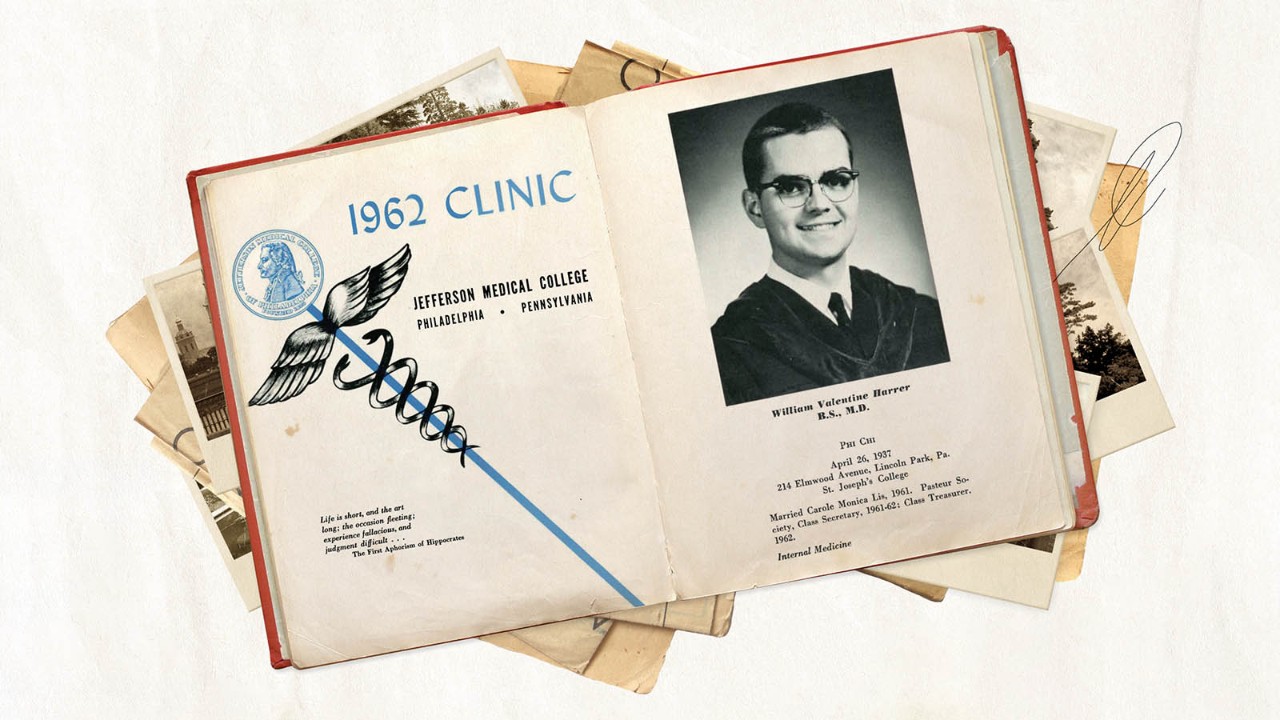

When Jefferson and Medicine Struck Gold
Sometimes, the arc of a career tells a larger story of a place and its purpose. For Geno J. Merli, MD ’75, RES ’78 and ’80, Jefferson isn’t just where he built his life’s work. It’s home.
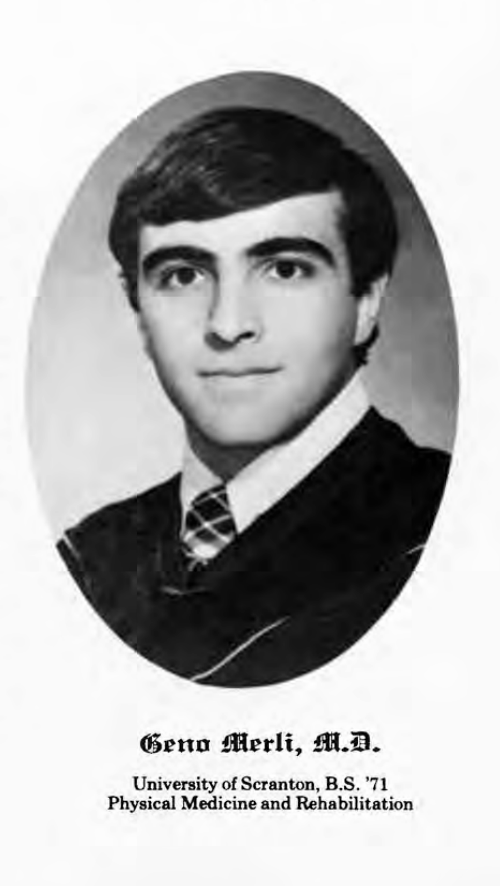
Fifty years ago, in 1975, Merli graduated from Sidney Kimmel Medical College at Jefferson, a young doctor with a mind for science and a heart for service. Today, as senior vice president and associate chief medical officer of Jefferson Health, his influence extends across the health system and far beyond. This year, Jefferson honored him with the Achievement Award in Medicine at the 23rd Annual Jefferson Gala — a fitting tribute to a physician whose career embodies the institution’s enduring spirit of clinical excellence, collaboration, and discovery.
The spark that lit Merli’s lifelong devotion to medicine came, as such things often do, by accident. As a high school junior, he suffered a hand injury that required the care of the renowned New York hand surgeon William Littler.
“I remember I was in the room, and his residents were all around him,” Merli said. “He showed the X-rays to me and then drew a picture of my hand and how he was going to repair my thumb. I was so impressed by his teaching.”
Inspired by his father, Gino J. Merli, who received the Medal of Honor for his valor during World War II, Merli attended the U.S. Military Academy at West Point. But medicine continued to call him. He transferred to the University of Scranton to study premed and soon set his sights on Jefferson. “I really wanted to go there,” he said. “The chairman of the biology department told me it would be great for me. I was accepted, and there my journey began.”

Merli worked two summers during medical school in the Department of Rehabilitation Medicine. The experience awakened a new fascination. “I had gotten married and needed to make some money,” he said. “I liked it so much that I applied for a residency in physical medicine and rehabilitation.” He returned for a second residency in internal medicine before graduating and joining a division of internal medicine at Jefferson.
During those early years, Merli witnessed the quiet tragedies of patients recovering from surgery only to succumb to pulmonary embolism. “That’s how my interest in blood clots began,” he said. The question that would drive much of his research career was simple but profound: How could such deaths be prevented?
The answer helped reshape clinical practice. His research focused on the development of medications to prevent blood clots. He published a seminal article in Annals of Internal Medicine in 2001 on the use of a new blood thinner at the time, enoxaparin, and showed that it could be used to treat patients with acute blood clots. His work expanded into vascular diseases, artery disease, vein disease, and hereditary disorders, resulting in the creation of Jefferson’s Division of Vascular Medicine, which he co-founded with Gregory Kane, MD ’87, FEL ’93, the Jane & Leonard Korman professor and chair of medicine, and Charles J. Yeo, MD, the Samuel D. Gross professor and chair of surgery.

Today, Merli is a nationally recognized expert in the prophylaxis and management of deep vein thrombosis and pulmonary embolism. But it is his instinct for collaboration — for creating systems that bring specialists together around the patient — that most distinguishes his work.
Two programs illustrate this philosophy. The first, CATCHem (Comprehensive Atherosclerosis Treatment Collaborative Health), identifies patients who have early peripheral artery disease and intervenes to prevent progression of the disease before invasive procedures become necessary. The other, Jeff FAST (Facilitated Anticoagulation for Safer Transitions program), is a safe and effective way to treat blood clots and reduce the number of unnecessary admissions.
My pathway went in the direction of bringing disciplines together to focus on the patient and achieve a better outcome.
“It’s so easy to just be focused on our own area of expertise,” he said. “My pathway went in the direction of bringing disciplines together to focus on the patient and achieve a better outcome.”
Among the many partnerships that have shaped his career, perhaps none has been more meaningful than his friendship with Howard Weitz, MD ’78, the Bernard L. Segal endowed professor in clinical cardiology. The two met during residency. “He had called me in the middle of the night to evaluate a case on a patient who was very ill,” Merli said. “From that day forward we became close friends — brothers from another mother.”
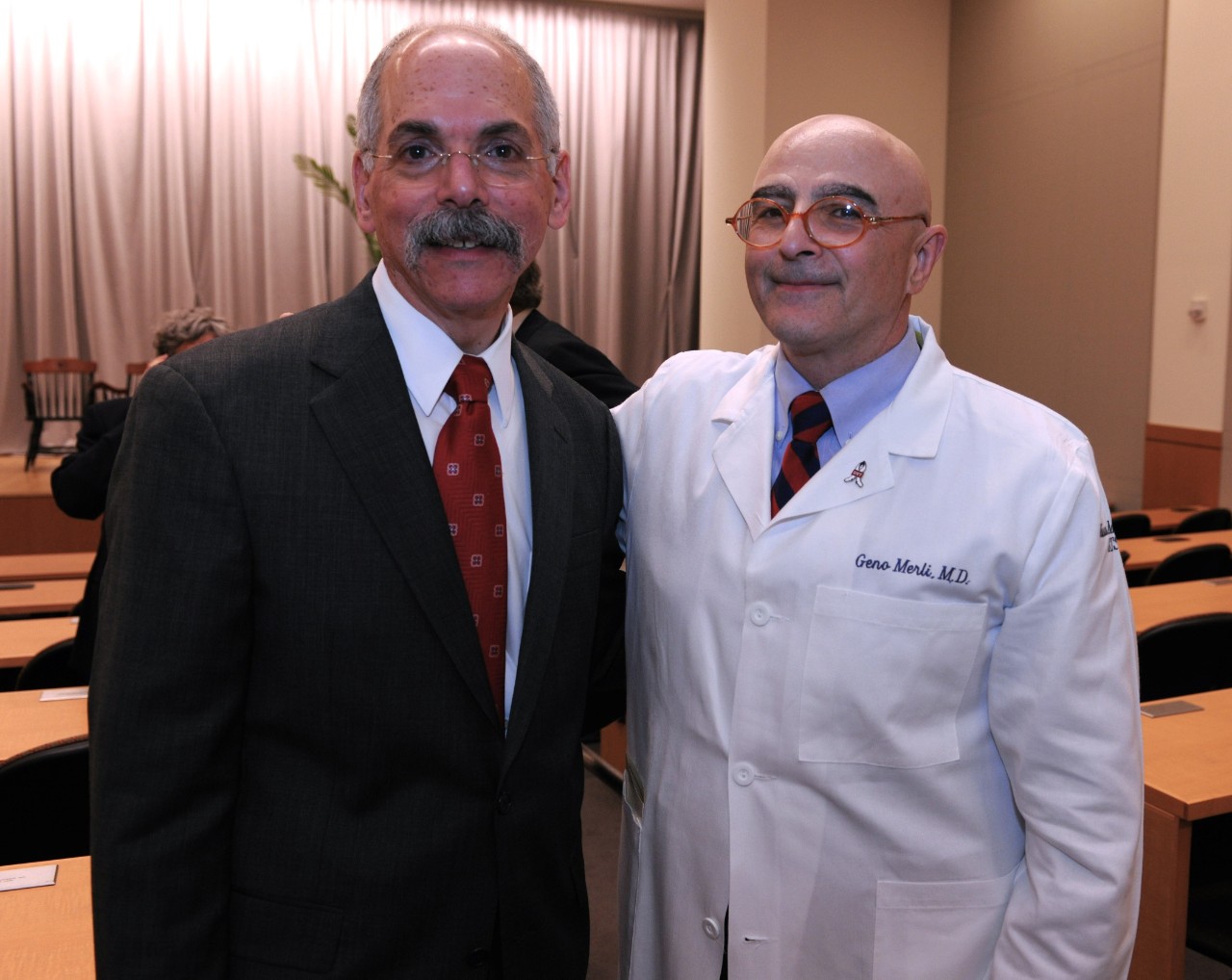
Their collaboration would become one of Jefferson’s great medical partnerships. Together they wrote the first “Medical Clinics of North America on Perioperative Care” and co-edited “Medical Management of the Surgical Patient,” now in its third edition. They host the popular program “Consult Guys,” which offers expert, humorous, and practical advice on complex medical issues, at the American College of Physicians annual meeting and monthly on the Annals of Internal Medicine site.
“Geno is the model of all who we strive to be,” Weitz said. “He has all the attributes of a great brother and none of the negatives.”
Service and caring for others remain Merli’s calling, and he never lost his desire to serve his country. Following residency, he joined the Army Reserve and became a commander for the 348th General Hospital and the 300 Field Hospital, where he learned to deliver healthcare in the field. After 17 years, he retired from active duty with the rank of lieutenant colonel.
“Geno has helped make Jefferson the place that it is,” Weitz said. “Our responsibility first is to the patient and their families. That is Geno Merli. He builds community.”
“Fifty years have gone by pretty fast,” Merli said. “It has been a journey, and I’m happy for all the things that I’ve accomplished.”