A Conversation with a Jefferson Legend

Herbert Kean, MD, RES ’60

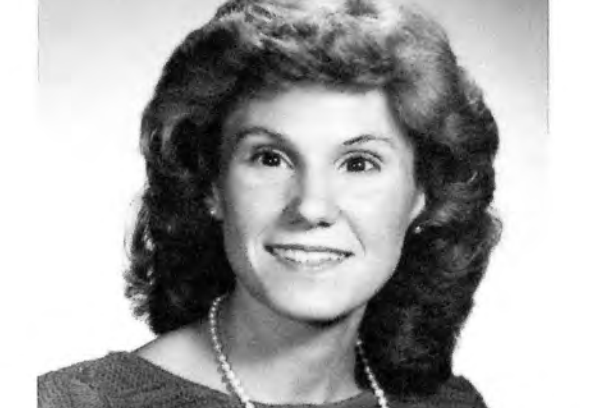
The name Herbert Kean is synonymous with greatness at Jefferson. What began as a residency in otolaryngology in 1957 grew into a distinguished tenure as a renowned clinician, surgeon, professor, faculty member, mentor, and generous benefactor.

Not only did he help to build the department and create its premier centers for head and neck surgery and plastic surgery, but he has continued to support the effort to keep Jefferson at the forefront of patient care, research, and physician education through philanthropy.

In 2001, he established the Herbert Kean, MD, Chair in Otolaryngology; in 2006, he created the Herbert Kean, MD, Otolaryngology Residency Education and Research Fund; and in 2008, he started the Herbert Kean, MD, Center for Facial Aesthetics. In 2021, Kean and his wife, The Hon. Joyce Kean, made a $5 million gift to support the Department of Otolaryngology in Jefferson’s Honickman Center.

Kean, now 94, recently sat down with David Cognetti, MD, RES ’07, the Herbert Kean MD Professor and Chair of the Department of Otolaryngology – Head and Neck Surgery at Thomas Jefferson University, to reminisce, talk shop, discuss philanthropy, and impart the wisdom he’s garnered throughout his seven decades as a physician.

Cognetti
There has been a big return on the investment in terms of the lives you’ve changed, the careers of the residents and fellows that have been inspired to go into facial and plastics, the programs that have been built here, and most importantly, the patients. And as my own children said after we recently had lunch with them, you’re an absolute legend. We’re here to talk about your legacy in the field, deep and long connections to the department, and what words of wisdom you can offer to those of us who are still learning, practicing, and teaching.

You started at Jefferson in otolaryngology as a resident in 1957, so you have been here for 68 of our 71 years. So, why don’t you tell us about your early times here? What attracted you here for residency?

Kean
I was an intern at Hahnemann, and I got very sick with infectious mono. And while I was sick in the hospital – I was in the hospital for three weeks – a friend of mine came in who was a doctor, and he said: “Where are you going when you finish here?”

I said, “Well, I guess I’ll go in the Navy.” He said: “Did you ever consider nose and throat?” I said: “I know nothing about it. I missed that in my rotation of internship.”

And then a second friend came and said: “I was reading the AMA Journal, and it said they have the biggest shortage of doctors in the ear, nose, and throat.” I said: “Well, I’ll put that in the back of mind.”

And then someplace along the line, someone came along and said: “Well, what are you going to do when you finish? When you get out of the hospital? When you finish your internship?” Then the ear, nose, and throat man came again and I said to him: “Can you get me a residency?”

He picked up a phone and said: “I’m here with the doctor, Herbert Kean, who’s looking for a residency. What should I tell him? Oh, you can start July first.” I said: “I can’t start July first, I need July to recuperate. I’ll start August first.” And that’s how I got this most-coveted residency.

I walked in August first to meet my fellow residents. I looked around; it was an empty room. I was it.

I didn’t know what I was doing. I was the worst resident. I was voted most likely to fail. Well, as time went on, I started getting better. And in fact, I was ambidextrous. I could use either hand. I got so good that when the chairman was in the operating room and he would have to go into a small area and he couldn’t get in because he was right-handed. And he would say, “Get Herbie.” So that was my residency ... like learning on the battlefield. And I got pretty good at it.

I looked around; it was an empty room. I was it. [...] it was like learning on the battlefield.

Cognetti
Now, 70-something years later, some things haven’t changed. It’s still a very coveted spot to get a residency. Some things have changed. The process to get a residency position is a little different than a phone call. It’s very competitive and we’ve grown tremendously. Instead of one or two residents, we have 25 residents per year. We have several clinical fellowships now – we’ve really expanded.

You clearly built an incredible legacy. Let’s talk about how you embarked on your career with what you learned at Jefferson.

Kean
I finished my residency ... and was recruited by the people at Hahnemann a few blocks away to build their department of ear, nose, and throat.

In 1969, they asked me to come back to Jefferson for plastic surgery. Why did they want me for plastic surgery? I took the first rhinoplasty course that was offered. I went someplace; we had a two-week course. Then I took a course in soft tissue. So, after two weeks, I was ready to start a plastic surgery department at Jefferson.

Cognetti
It’s amazing to hear the beginnings of it – to learn that you learned it in a two-week course, because as you know, that doesn’t happen anymore. Because of your influence and generosity, we have one of the best facial plastics fellowships in the country. That fellowship is a year long now, not two weeks. You’ve had a tremendous impact not only on the program ... All of our residents who are going into facial plastic surgery is because of the inspiration that you set out years ago.

Kean
When Dale Lowry [Dale Lowry, MD, who became chairman of the Department of Otolaryngology in 1980] came in, I said, “Wow, Dale is a good person. We have these residents, we have to keep this program going.” And you could tell by the quality of residents who apply how your program is. We were starting to get good applicants.

Then Bill Keane [William M. Keane, MD, who joined Jefferson as chair of the Department of Otolaryngology – Head and Neck Surgery in 1991] came along and I thought, “Oh my goodness. That’s competition. He’ll want to get rid of me. So, I had a talk with Bill, and he said, “You just keep doing what you’re doing ...” and so I stayed until I couldn’t stay anymore. I had a spinal cord injury, and I lost the feeling in the fingers, and I stopped practicing. But I was ready to stop. I think I was 69 or 70. And that’s when Bill came in and really took it to the next level. Bill Keane was really top-notch.

One day, Bill came over to me and said, “Herb, come, I want to show you something.” And he showed me the unfinished seventh floor ... there was nothing there. I said, “What are you going to do with this?” He says, “We’re going to make this into a plastic surgery center.” So, I said, “You know, I will help you with this.”

And we had two young kids, Krein and Heffelfinger [Howard Krein, MD ’00, RES ’02 and ’06, PhD ’00, director of the Herbert Kean Center for Facial Aesthetics, and Ryan Heffelfinger, MD ’00, RES ’05, director of the Division of Facial Plastic and Reconstructive Surgery and Head & Neck Microvascular Surgery], so I gave them money to help with their salaries.


Cognetti
So, you mentioned that story of walking through the seventh floor. Give me some other reasons for your inspiration for generosity.

Kean
Well, I used to be a big contributor to any charity, and I just got in the habit of giving money.

I took one business course at Penn in the Wharton School when I was an undergraduate, and it was stocks and bonds. So, I learned how to handle money a little bit ... and had a big pool of money. So, I just started giving it away and I enjoyed it. It was my drug, my drug of choice.

I just started giving it away and I enjoyed it. It was my drug, my drug of choice.

Cognetti
Well, we greatly appreciate the generosity. And we greatly appreciate you. And I hope you appreciate the big return on investment in terms of the lives you’ve impacted in terms of the careers of the doctors, the program that’s built here, the fellows that have come through the fellowship, the residents that have been inspired to go into facial plastics, and quite frankly, most importantly, the patients that have been impacted by all of these people whose careers you have helped build.

It’s hard to imagine this department without you because you were with it from the beginning, through the thick and through the thin times as well.

Kean
I just felt obligated that we had the residents and we had to train them. We had to teach them. So, I just stayed. I just stayed with it. And it’s so gratifying to see what’s happened.

Cognetti
Do you have any final words of advice for the people who are entering our field now?

Kean
Well, my connection with Jefferson started before my residency when I was turned down as a student, but I stayed with it. I kept at it. I went to another school, and I did come back. I’d say just keep your nose straight, look ahead, put the blinders on. Don’t be distracted by what is not important. Go for it – and go with it. You don’t have to be the best, just be the best you can be. That’s what I did when I was voted “Most Likely to Fail.” I put the blinders on and did the best I could do.

Cognetti
If any of us could achieve what you did in your career and have the impact on this department the way that you have throughout your life, we would all feel very accomplished. I can’t thank you enough for being a friend, a philanthropist, a mentor, a role model, and an absolute pillar in our Jefferson community, our faculty, our residents, our fellows, everyone involved in the Department of Otolaryngology – Head and Neck Surgery here at Jefferson. On behalf of them all, it’s been my privilege to have this conversation with you and to thank you and the Honorable Mrs. Kean for all that you’ve done for us throughout the years.

Share This