

Citing a 2020 report by AARP and the National Alliance for Caregiving, the Alzheimer’s Foundation of America states that millennials account for nearly a quarter of all family caregivers in the U.S. (23%). Specifically, these individuals care for a parent or grandparent with a long-term physical condition such as a dementia-related illness.
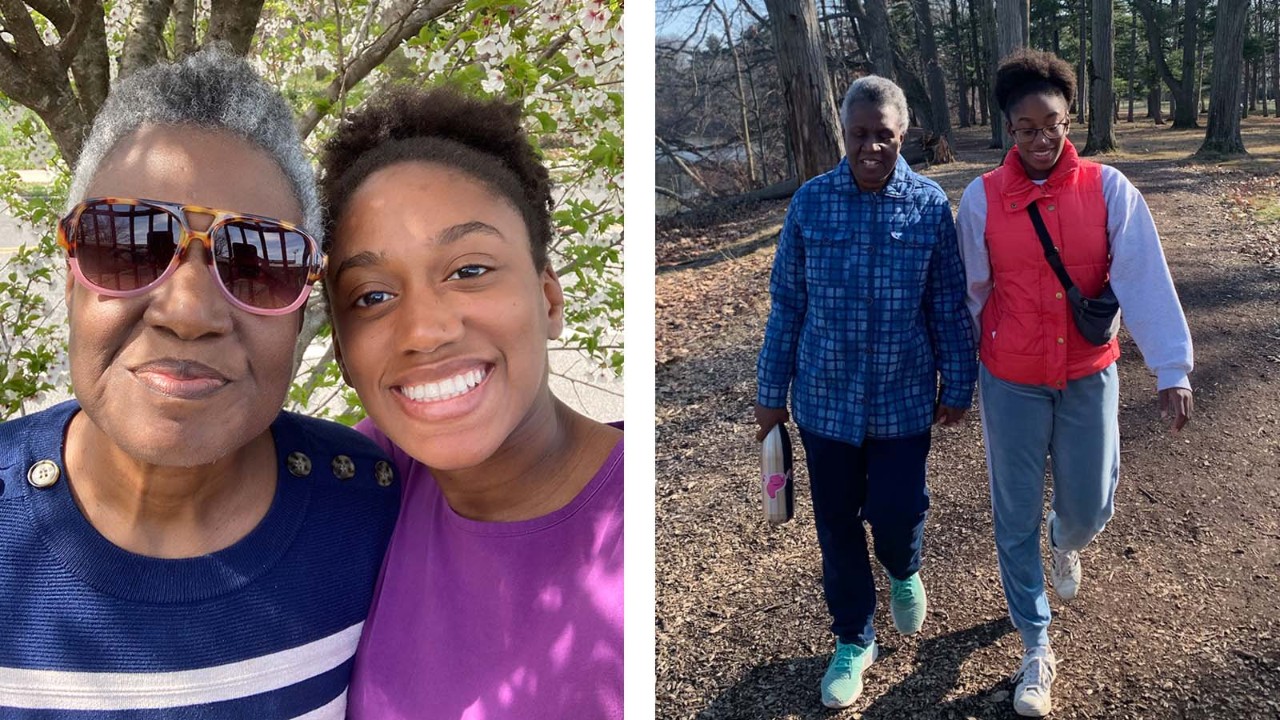
This statistic hits close to home for Sidney Kimmel Medical College third-year student Hannah Clarke, who in December 2024 was featured in Philadelphia PBS station WHYY’s news story, “How one Philadelphia medical student is learning to be a young caregiver to a parent with dementia.”
Hannah’s mother, Claudine Clarke, MD, was a geriatrician when, at age 56, she was diagnosed with frontotemporal dementia, a rare progressive brain disorder primarily affecting behavior, language, personality, and communication. Symptoms of this disease characteristically strike before age 65.
Claudine is no longer able to practice medicine. Suddenly, Hannah and her older brother, both only in their 20s, became the sole caregivers for their mother. “You’re slowly watching someone you love deteriorate, and that is just gutwrenching,” Hannah told WHYY.
Hannah remembers her mother, who immigrated to the U.S. from the Bahamas many years ago, as extremely intelligent, with a gift for words. “It was impossible to beat her at Scrabble,” she shared in the story. “She would play every night, and her friends would be like, ‘Claudine, you’re still playing Scrabble?!’ And she’d be like, ‘It’s so I don’t get dementia when I’m older.’ And now I look back, and I’m like, oh my gosh, the universe is so cruel.”
When her mother began to stumble over her words and to mismanage her money and make extravagant purchases, Hannah and her brother suspected that something was wrong. After they helped to sell her house, Claudine lived with both Hannah’s brother and his wife in Philadelphia, and with Hannah and her roommates in an apartment for her first two years of medical school at Case Western Reserve University in Ohio.
As she shared with WHYY, while this experience was complex, stressful, and obviously very different from what her classmates were going through, Hannah could only look back on those two years with love. “I got to spend time with my mom, which was all I wanted,” she said.