Letters of Life, Loss, and Love

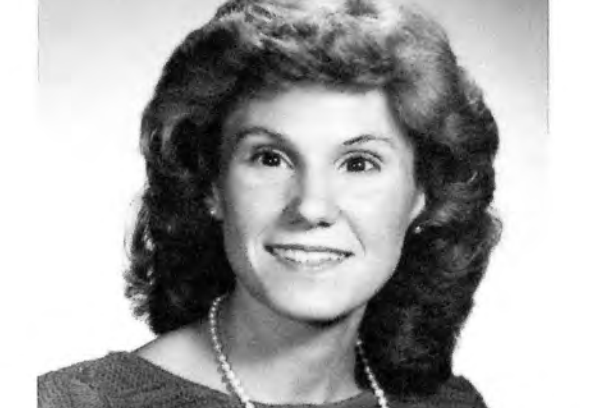
From as far back as she can remember, Shanda McManus, MD ’96, had no doubt that she wanted to be a doctor.

“Growing up in North Philadelphia, no one in my family had even gone to college, and there were no doctors,” she says. “I think the seed was planted because when I was 5 my mom was diagnosed with stage 4 ovarian cancer. She was only 24.”

She accompanied her father and grandmother to visit her mother at the hospital regularly. After initially being given only two years to live, her mother survived, but when McManus was 10, the cancer returned. “Between the ages of 10 and 14, I was involved in a lot of her care,” she shares. “I learned how to do the colostomy, the IV feedings, and pay bills at the electric company. All of that steered me into medicine.”

Following her mother’s passing, McManus earned the Mayor’s Scholarship from the city of Philadelphia to attend the University of Pennsylvania, where she received a bachelor’s in English literature.

Her childhood dream of being a doctor still squarely in her sights, she pursued medical school in her hometown at Jefferson. But no one could have predicted the triumph, tragedy, and twists and turns that awaited on her journey.

Her life was forever impacted following a tragic event that occurred on December 24, 1992, at the end of her first semester at Jefferson. Her beloved younger brother, Monir, was killed in a drive-by shooting at the age of 20 while standing on a street corner.

Needing to provide for his young son, Monir had joined the Army. Yet upon his return to Philadelphia, he struggled unsuccessfully to find work and turned to selling drugs. While on a waiting list for what could have been a life-changing veterans’ program at the University of Pennsylvania, he was killed. It was only after his death that the family learned of his acceptance. His murder remains unsolved.

Devastated, McManus threw herself into her studies and her life at Jefferson. “Right after New Year’s, I was back at school,” McManus says. “I felt that I didn’t have any space to grieve — as if I get off this train right now, I might never make it out.”

She recalls that the support she received while at Jefferson was immeasurable. “You will find your people there — from the administration to the course directors to your classmates. You can find people who have a heart for other people at Jeff.”


You can find people who have a heart for other people at Jeff.

In addition, she credits the scholarships and financial aid she received as critical to her ability to pursue her passion. Basketball legend Julius (Dr. J) Erving was one of her scholarship donors. “He was one of my childhood heroes,” she says.

The most important relationship that McManus formed while at Jefferson was with the man who would become her husband, Stephen McManus, MD, a fellow member of the Class of 1996. The couple not only married, but also welcomed a daughter in their third year of medical school.

Her pregnancy was a difficult one, as she suffered from severe hyperemesis gravidarum, which led to numerous trips to the emergency room and many missed classes. Nonetheless, she believes that the support she received across the board from Jefferson allowed her to succeed. She says, “I think as an institution, Jefferson wanted me to finish and get through.”

Following graduation, McManus took a year off and had another baby before completing a three-year residency in family medicine at ChristianaCare in Delaware. She waited five years after finishing her residency to begin her medical practice. “As a woman in medicine, often you have to pivot and carve out a space for yourself,” she says. “I felt like I needed to be there more with my children early on, and I slowly worked my way back into medicine.”

After practicing at a family medicine practice in Middletown, New Jersey, in 2024 McManus moved into the academic sector, joining Hackensack Meridian School of Medicine as assistant professor of family medicine. Currently, she teaches a human dimension course and is also responsible for the narrative medicine focus of the curriculum.

As McManus’ career — and life — unfolded, underneath it all her own story had yet to be fully told. She had never truly faced the trauma of Monir’s death.

“My brother and I were only 18 months apart, and we were very, very close,” McManus shares. “Yet underneath I had been dragging around unresolved grief that I was unable to truly process until more than three decades later.”

Joining a community writing class provided a creative outlet to process her pain and grief. She found herself always writing about her family, which culminated in a memoir about her childhood. “When I finished that manuscript, it brought up all these things,” she says. “I said, ‘who was the person that was with me through it all?’ It was Monir. I started writing him letter after letter. Writing these letters gave me access. They gave me my brother back.”

Soon, McManus can share the letters — and the memories of her brother — with the world. Published as a series of letters, her new book, “Brother Epistles,” will be released on June 23, 2026. “I have a wonderful, supportive husband, I have five children, and for the first time in my life, more than 30 years later, I felt safe to mourn,” she shares.

McManus hopes that by sharing her personal story, she can highlight that homicide among Black men is a public health crisis — and, by humanizing her brother, ensure he is seen as more than just a statistic.

“That’s why I wanted this book in the world, as a testimony — and a witness,” she says. “When someone hears about a murder on TV or hears the statistics, they can remember that this news story is really a human story.”

McManus and her husband are proud of where their marriage, family, and lifelong medical careers were born. “Jefferson is where we got our start,” she says. “If you dig up the yearbook there is a photo of me and my husband and our baby in Scott Plaza, and today, we’ve been married over 30 years!”

Share This