

In 1968, two scientists, Gramiak and Shah, injected saline into a patient from a bottle that had just been shaken to create bubbles. When they were taking ultrasound images of the heart, they observed a “cloud” of waves that actually detailed structures of the heart that couldn’t be picked up with traditional ultrasound. This is how the concept of ultrasound contrast agents emerged.
How Can Microbubble Contrast Agents Improve Ultrasound Imaging?
Learning how a flexible, inexpensive and non-invasive tool can be used to diagnose and stage common diseases from cancer to heart attack.
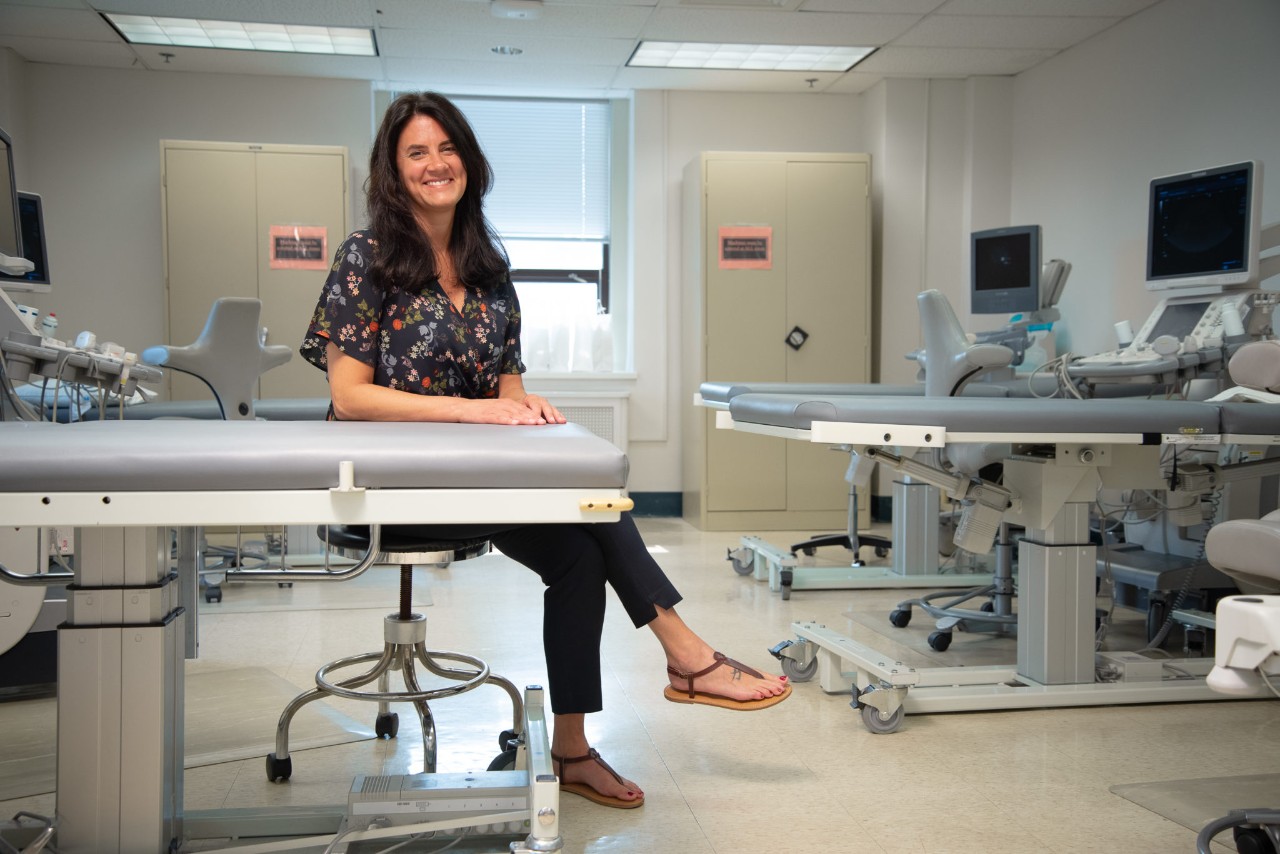 Maria Stanczak, assistant professor in Jefferson’s College of Health Professions. Photo by ©Thomas Jefferson University Photography Services
“Ultrasound contrast agents are essentially microbubbles. I am interested in how these bubbles respond to an ultrasound wave,” says Maria Stanczak, assistant professor of Medical Imaging and Radiation Sciences in Jefferson’s College of Health Professions.
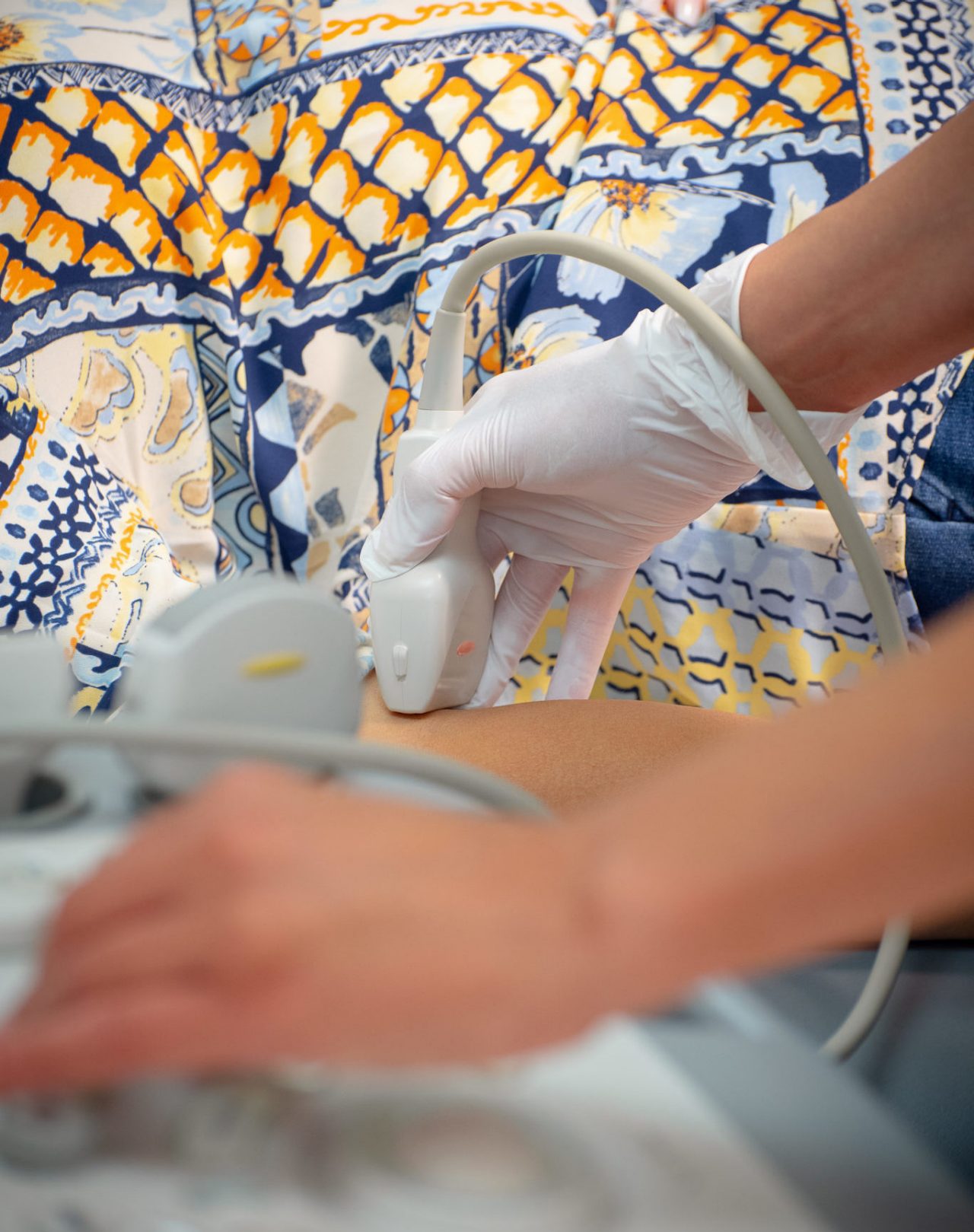
These bubbles are gas-filled and are smaller than red blood cells. They can therefore flow unimpeded through the body’s smallest blood vessels and act as excellent reflectors of ultrasound signals. These ultrasound contrast agents are used routinely worldwide to help detect heart disease and help classify a patient’s risk of heart attack or stroke. They are also used to identify, characterize and stage tumors of the liver, kidney, prostate, breast and other organ systems, and to monitor the effectiveness of cancer therapies.
Researchers like Maria are interested in further developing these microbubble contrast agents and their applications. Find out more about the questions Maria’s trying to answer.
Q: How long have you been at Jefferson? What led you here?
A: I am a two-time Jefferson alum. In total, I’ve been walking around Jefferson Center City campus for over 20 years. When I was a high school senior, I discovered that Jefferson is the best institution to learn sonography. Little did I know that Jefferson would become my professional home for so many years.
Q: Tell us a bit about your field or area of research. What’s one question you’re exploring?
A: I am most interested in exploring the benefits of microbubbles. The FDA-approved applications of ultrasound contrast agents in general sonography are limited to liver lesion characterization and urinary reflux in pediatric patients. However, microbubbles can assist in answering a variety of clinical questions. My work with the non-profit organization, International Contrast Ultrasound Society, has shown me the many beneficial off-label uses of microbubbles. The goal of this organization is to promote the use of microbubbles and provide resources to those seeking to incorporate microbubbles into their sonography curriculum and/or clinical practice. My recent interests have somewhat taken a new path to include diversity, equity and inclusion in higher education.
Q: What sparked your interest in this secondary path?
A: The civil unrest over the past year, and a country seemingly so divided, has caused me to reflect on what I can do individually to make a positive impact. Over the last two years, our students have experienced a pandemic, civil unrest, and in some cases catastrophic loss. I discovered that our students are more than just learners, and sometimes the best thing I can do as an educator is to listen and support them. I’ve been fortunate to have opportunity and support throughout my professional life. I realize that many students are not given the same basic need and encouragement. Because of this, I am beginning my next journey and actively seeking ways in which I can make a difference in the lives of our students through outreach.
Q: What’s the fire in your belly that drives your passion for your research?
A: Seeing firsthand how ultrasound contrast agents can improve patient outcomes and experiences has made me a passionate advocate for the utilization of the medium. Since the agents are not nephrotoxic, meaning they are safe to use on patients with kidney impairment, they provide an imaging alternative that otherwise may not be available. Ultrasound in general is an inexpensive diagnostic tool that does not utilize radiation. Further incorporating microbubbles into practice really supports a value-based model, something medicine is constantly striving to achieve. The ability to make a diagnosis, inexpensively, while efficiently using your resources, truly is the epitome of value-based care.
Q: What’s a cool or little known or unique fact about your work?
A: Ultrasound contrast agents themselves have evolved over time, allowing for prolonged imaging and improved visualization of structures. Ultrasound system software has also improved over time, enabling 3D reconstruction and quantification analysis of contrast enhanced studies.
Q: If you had any words of advice for an aspiring researcher or student in this field, what would they be?
A: Respect that research is a team effort and every person on the team contributes a special skill and perspective. Collaboration is such an integral part of a research environment.