
Jefferson Investigates: Maternal Death, Traumatic Brain Injury & Cellular Identity
How a common antibiotic can reduce sepsis during labor, how confidence can help memory recovery after traumatic brain injury, and how cells pass identity down to daughter cells.
 Image Credit: © Adobe Stock Fluky/255983839
One of the leading causes of maternal death is sepsis, the body’s over-the-top response to infection that can lead to organ failure and death. A recent study by Jefferson Health researchers, collaborating with global partners and published in the New England Journal of Medicine, found that a single dose of a common antibiotic can reduce the incidence of sepsis during labor and delivery.
Sepsis is a sudden and overwhelming reaction to infection; it’s a medical emergency that once triggered, can be very challenging to interrupt. That means prevention is key, however previous efforts to prevent maternal sepsis, have proven mostly futile, says Dr. Richard Derman, associate provost of Global Health at Thomas Jefferson University.
In the current study, nearly 30,000 women at eight clinics in seven low- or middle-income countries were assigned to receive either a single dose of azithromycin or a placebo when they went into labor. The antibiotic group experienced a 33% decreased risk of sepsis and maternal death than the placebo group.
“The size of the effect was greatest in Africa — about a 40% reduction,” Dr. Derman says. “It was a little smaller in South Asia — about 11%,” but still meaningful. Indeed, the study was stopped early because the results were so compelling. That’s because with such a clear benefit, it becomes unethical to continue giving placebo treatment.
The sheer size of the study was a strong point. “That’s the strength of the Network,” Dr. Derman says, referring to the Global Research Network, which encompasses data collected on over 800,000 deliveries. It is funded by the National Institute of Child Health and Human Development and often supported by the Gates Foundation grants. “Our collaboration has been actively involved in the Network since its inception more than 20 years ago.”
Previous work by the Network has addressed other leading causes of death and disability in mothers and infants, including postpartum hemorrhage, prevention of preterm birth and the important contribution of iron deficiency. Another important life-saving effect is achieved with a relatively simple intervention.
By Jill Adams
 Image Credit: © Adobe Stock Microgen/44113211
Memory problems are one of the most debilitating symptoms of traumatic brain injury (TBI), a condition that affects an estimated 1.5 million Americans every year. Moderate and severe TBIs can make it harder for a person to stay organized and pay attention, important abilities for forming and recalling new memories. This can lead to challenges in daily life, such as trouble remembering conversations or misplacing objects. Because of this, some people with TBI begin to lose faith in their memory.
Past research in older adults without TBI has suggested that a person’s confidence in their memory — called “memory self-efficacy” — tends to decrease as they age. This decrease may cause anxiety and discouragement around everyday memory tasks, creating a self-fulfilling prophecy that results in measurably worse memory performance. Ultimately, people with low memory self-efficacy may avoid situations that require memory, such as in-depth conversations, leading them to withdraw from daily activities and suffer decreased quality of life.
Umesh Venkatesan, PhD, Director of the Brain Trauma and Behavior Laboratory at Jefferson Health Moss Rehabilitation Research Institute, was curious if the same phenomenon occurred in people with TBI. In a study published in the Journal of the International Neuropsychological Society, Dr. Venkatesan measured people with TBI’s confidence in their memory, their actual memory performance, and their overall quality of life.
He found that performance on memory tests of people with TBI were more closely linked to self-perceptions of their memory strength than the characteristics of their injuries, supporting the notion that a person’s confidence in their memory influences their actual memory performance. People with low memory self-efficacy also tended to report lower health-related quality of life, showing the potential wide-reaching effects that memory struggles can have for people with TBI.
Dr. Venkatesan says these results emphasize the “power of perception” in TBI rehabilitation. While TBI treatment has traditionally focused on improving objective outcomes set by clinicians, this research suggests how the patients feel about their progress is important, too. “I see it as a positive message, says Dr. Venkatesan, “Because it tells us that at least for some people, they might be able to change their ways of thinking to perform to their full potential.”
By Marilyn Perkins
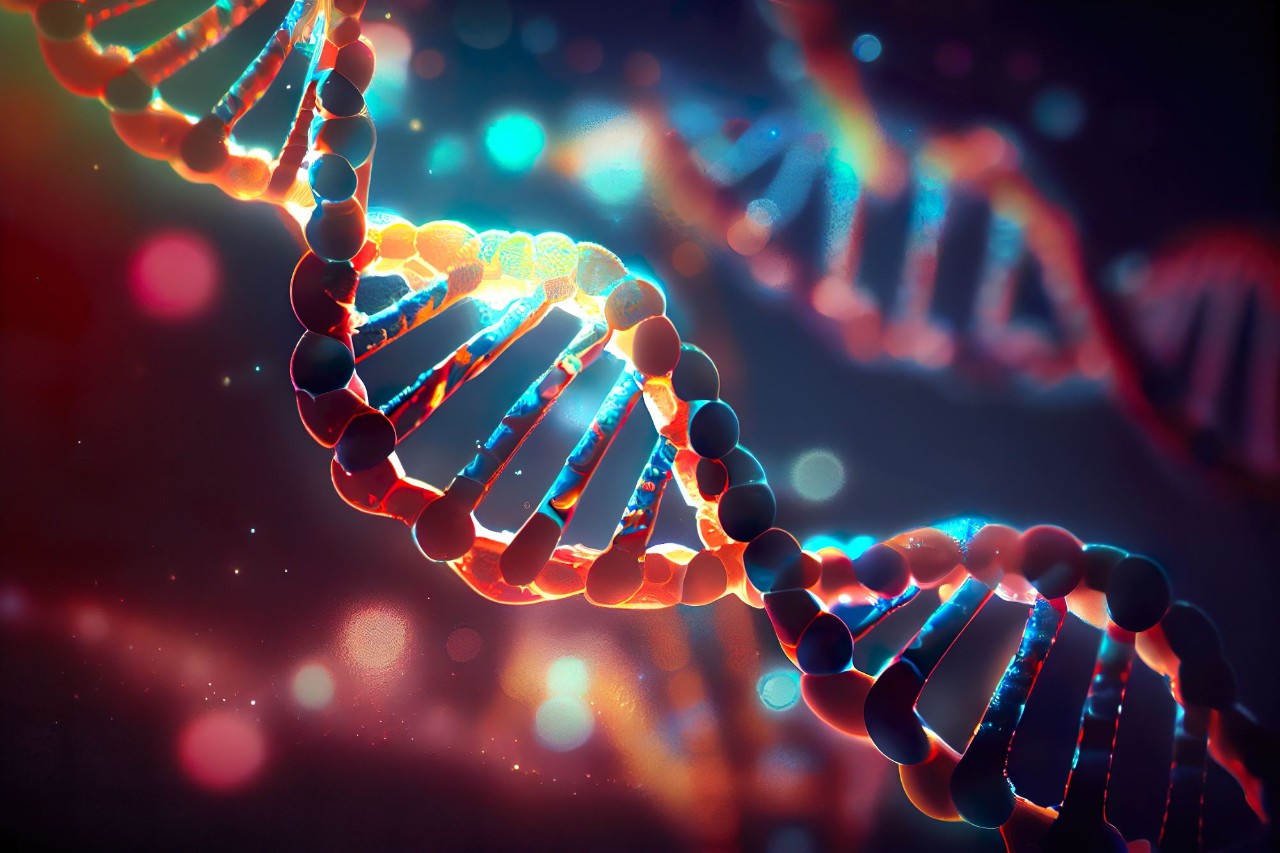 Image Credit: © Adobe Stock Radomir Jovanovic/570729348
Not all of the cells in our bodies look or act the same, despite containing the same genetic code. Your skin cells look and function much differently than your liver cells. This cellular identity was thought to be passed down during cell division thanks to specialized epigenetic marks or tags on histones, proteins that cover the DNA. These marks told cellular machinery which genes should be turned on constantly and which ones to ignore, in order to maintain the cellular identity of a skin or liver cell. New research from Thomas Jefferson University is upending this well-established dogma in biology, and suggesting that the marks might not be essential at all.
Biochemist Alexander Mazo, PhD, began exploring this question over a decade ago, when experiments in fruit fly embryos didn’t go as expected. The canonical process that everyone expected was absent, so he began to investigate the timing, proximity and placement of the proteins most closely involved in the process of keeping cellular identity: where were the histones that wrapped up DNA; where were the enzymes that modified these histones; where was the RNA polymerase that synthesized RNA for genes that are turned on; and what happened to these all of these cellular players when DNA was copied into a new daughter cell?
In a paper published in prestigious journal Nature, Dr. Mazo, together with first author Tyler Fenstermaker and others, discovered that in human cells RNA polymerase II keeps active genes on by physically interacting with the proteins that are copying the DNA for the daughter cells and then immediately jumping onto the new strands of DNA as they are made. It does this without waiting for any marks to be placed. In fact, they observed that the polymerase would hop onto the new strand of DNA in the middle of a gene, just to continue transcribing that gene for protein production. “These findings will change how we think about the process of cell division,” says Dr. Mazo. “This is one more piece of evidence that these epigenetic marks may not be as important as we thought they were to maintaining cellular identity.”
By Edyta Zielinska