
Jefferson’s Nexus Learning model has motivated many students to dedicate their education to finding solutions that improve lives and communities. This year, mechanical engineering students are using their senior capstone projects to pursue research that could have profound effects on safety and health outcomes.
Mechanical Engineering Capstones Address Real-World Problems
Student projects work to improve crosswalk safety and explore sustainable filtration systems for microplastics and lead.
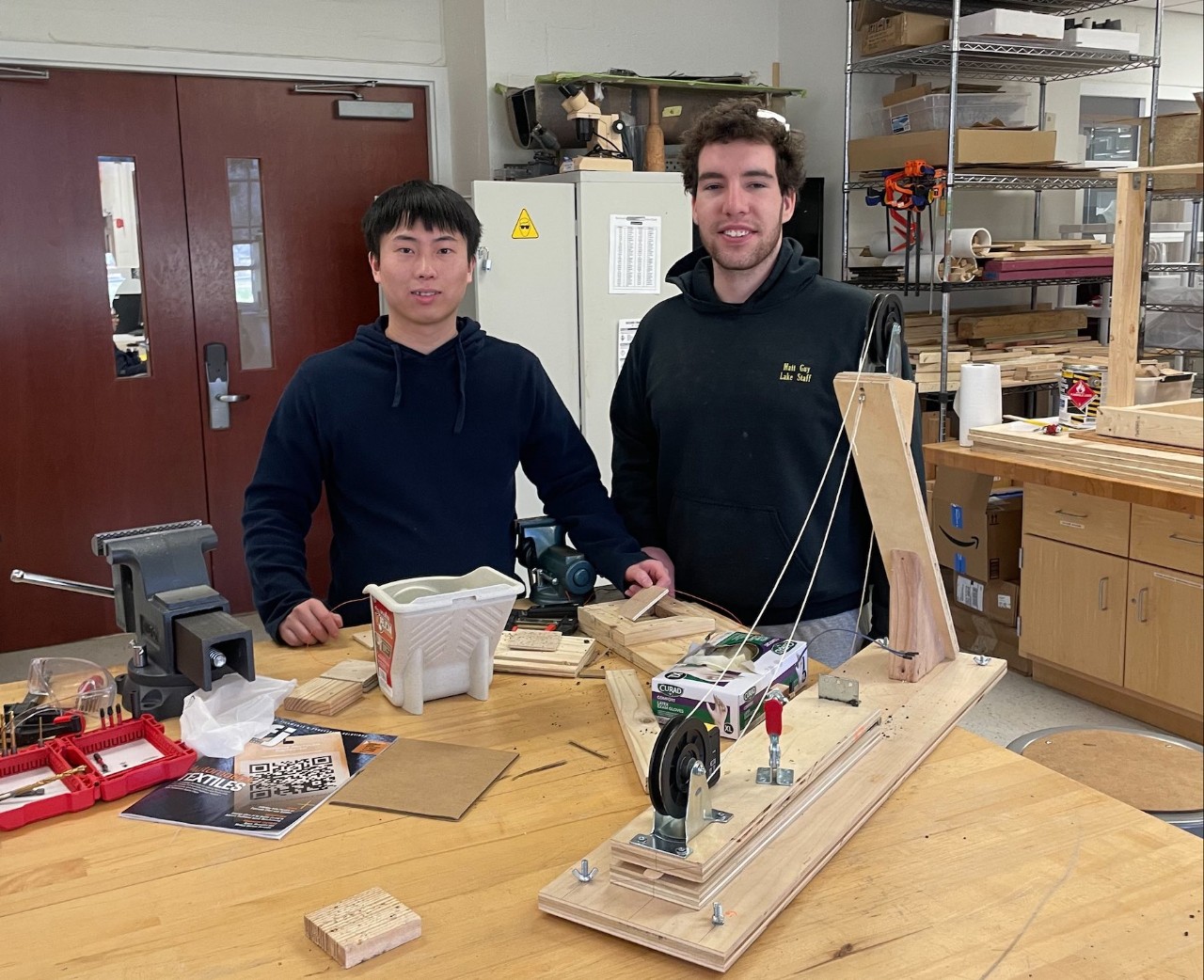 For their project, mechanical engineering students Penghui Huang and Matthew Guy aim to reduce slip-and-fall injuries with an innovative crosswalk paint.
“The senior design courses are the culmination of their education,” says Dr. Brian George, associate professor of engineering and director of the engineering programs. “Students combine knowledge gained from their previous courses to investigate an issue of interest to them—issues that often address real-world problems and have the potential to improve lives.”
Developing Sustainable Methods for Microplastic Removal
Recent research has uncovered elevated levels of micro- and nanoplastics in our water, posing potential health risks. While water companies have filtration systems in place, there’s limited research on how to better filter and dispose of microplastics and the most effective resources available remain expensive.
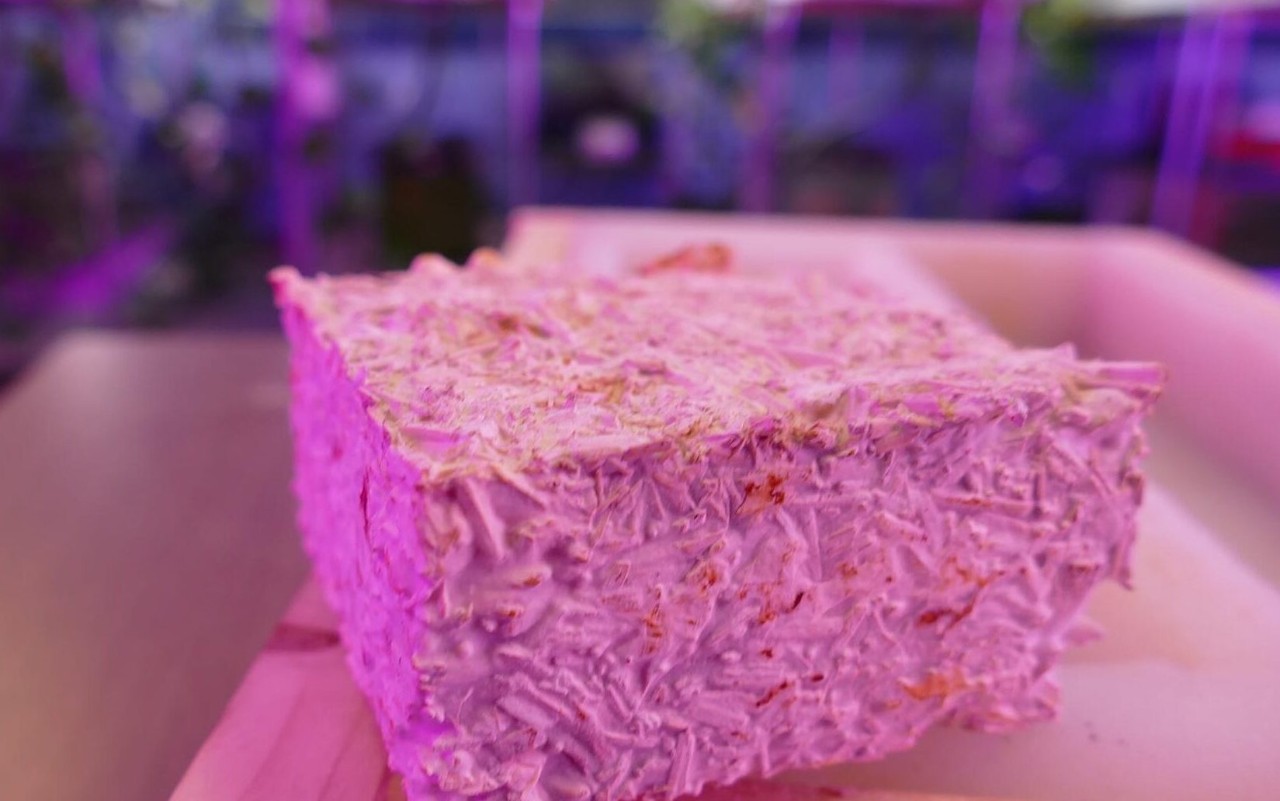
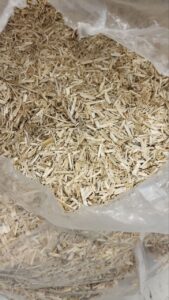 The raw hemp waste used in two projects.
Three mechanical engineering students—Tanisha Rutledge, Juan Bahena and Karl Kapadia—are working with the Philadelphia Water Department to develop a sustainable, affordable microplastic filtration system using hemp.
“We’re collaborating with microplastic experts at the water department and using a smaller-scale model of their existing filtration system,” says Rutledge, who will attend grad school at Jefferson to continue her work in sustainability. “The filtration system will be derived from hemp—an organic, sustainable material—because of its high cellulosic content, meaning it can easily absorb properties like microplastics.”
The goal is to create a primary filtration system with a secondary coagulation process. This system will aim to capture often missed microparticles sized between 5-10 μm.
Students combine knowledge gained from their previous courses to investigate an issue of interest to them—issues that often address real-world problems and have the potential to improve lives.
The students also hope their hemp filter will serve another purpose: helping the water department with the removal of PFAS (or per- and polyfluoroalkyl compounds), also known as “forever chemicals.”
Bolstering Lead Filtration for School Drinking Water
Lead contamination in drinking water is a pervasive issue. “Any amount of lead in drinking water is unsafe. Even very low levels significantly threaten children’s health and cognitive development,” says student Jaleel Laraki. “The Philadelphia Water Department already does a great job of cleaning our water, but as water travels through many of our buildings’ old plumbing systems, it can be contaminated by the time it reaches drinking fountains and sinks.”
Laraki and his research partner Manni Zhang are working to filter lead right at Philadelphia public schools’ water sources. To do this, they’re also turning to hemp as an organic, sustainable material that captures heavy metals.
“Current fountains use activated charcoal filters, reducing lead content to detectable but acceptable levels,” Laraki says. “Our goal is to retrofit hemp-based filters onto existing water fountains, aiming to meet WHO guidelines for lead concentrations under 10 parts per billion (ppb). But ideally, we’d like to filter lead below the detectable amount, which with our testing materials is 3 ppb.”
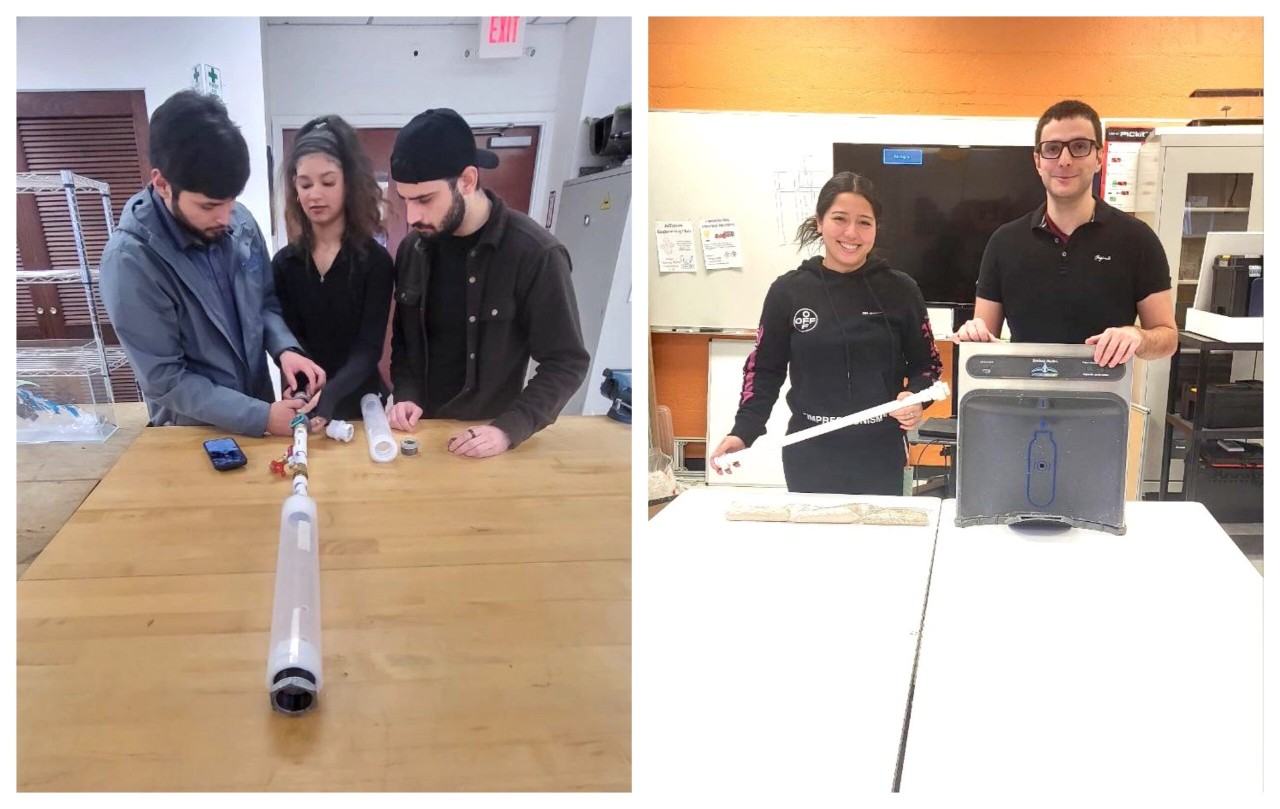 Mechanical engineering students’ capstone projects could improve public safety and health. Pictured (l-r): Juan Bahena, Tanisha Rutledge, Karl Kapadia, Manni Zhang and Jaleel Laraki.
While theoretical studies support hemp’s lead removal capabilities, these students are pioneering practical application tests.
“No matter the outcome of our project, getting this research out there will be extremely valuable for future development, as there is a lack of data on the direct implementation of hemp in lead filtration,” Laraki says.
Enhancing Crosswalk Safety With Innovative Hydrogel-Based Non-Slip Paint
In Tokyo, up to 2,500 people cross the Shibuya Crossing every two minutes. Japan also sees thousands of slip-and-fall fatalities every year, a growing problem partly attributed to the difference in friction between a shoe and a walkway, especially on crosswalk paint.
“In a perfect world, the paint used for crosswalks would be resistant to any environmental factor, including extreme weather and temperatures,” says student Matthew Guy. “But currently, crosswalk paint has a relatively low friction rate. Increasing the friction rate of this paint by even 10% would be significant.”
Any amount of lead in drinking water is unsafe. Even very low levels significantly threaten children’s health and cognitive development.
Guy and his research partners Penghui Huang and Ava R. address this issue by developing an innovative non-slip, shape-changing hydrogel-based paint that responds to water contact.
“We’re infusing crosswalk paint with hydrogels—three-dimensional network structures that can imbibe large amounts of water,” Guy says. “Rain will cause the hydrogel to swell, which in turn causes the geometry of the painted surface to change, making it more slip-resistant in wet conditions.”
In addition to improving crosswalk safety, successful development will unlock new opportunities for improving safety and functionality in various industries, including roadside construction and interior remodeling.