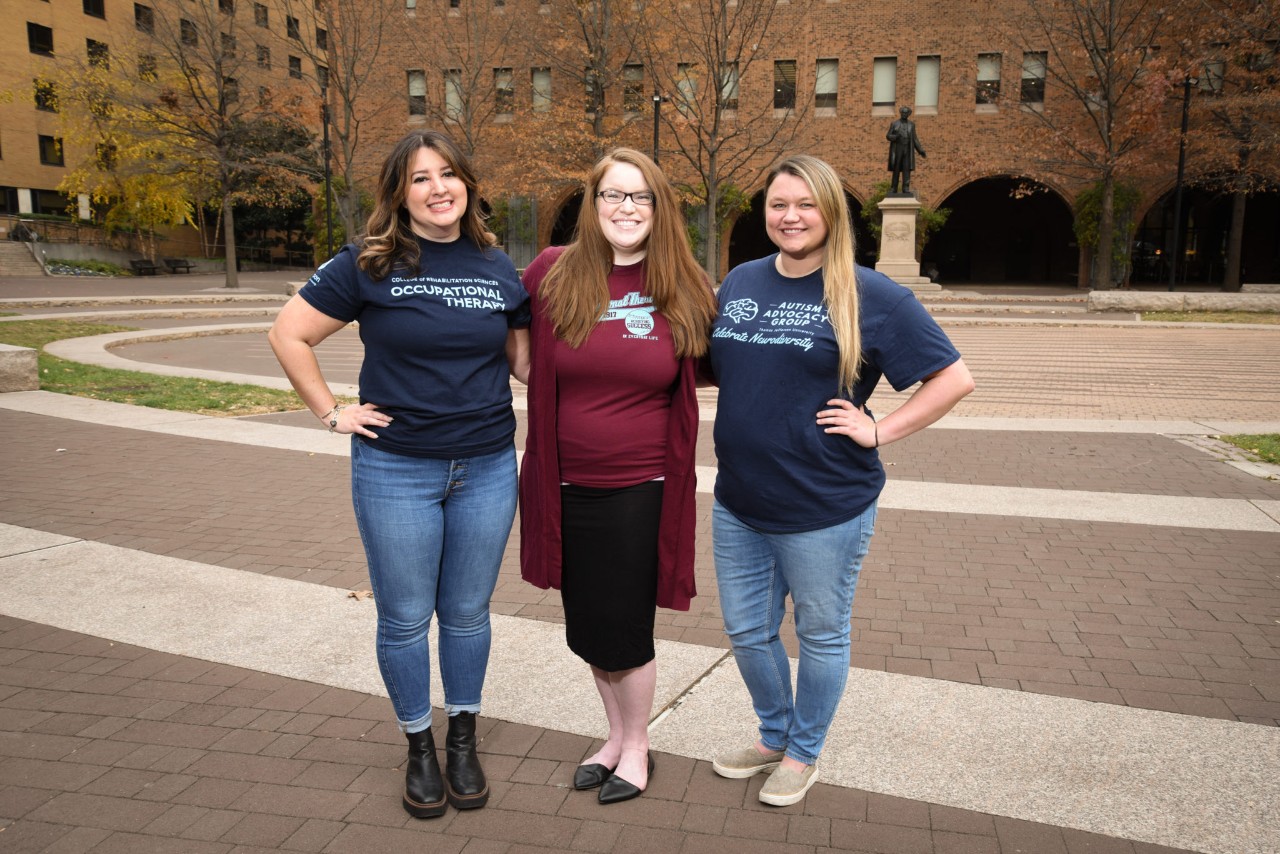

One 74-year-old woman may dance again thanks to industrial design student Molly Hynes and occupational therapy students Janet Nguyen and Samantha Hamilton.
Collaboration Leads to Innovation With Occupational Therapy-Industrial Design Projects
Student groups create assistive technology for people with special needs.
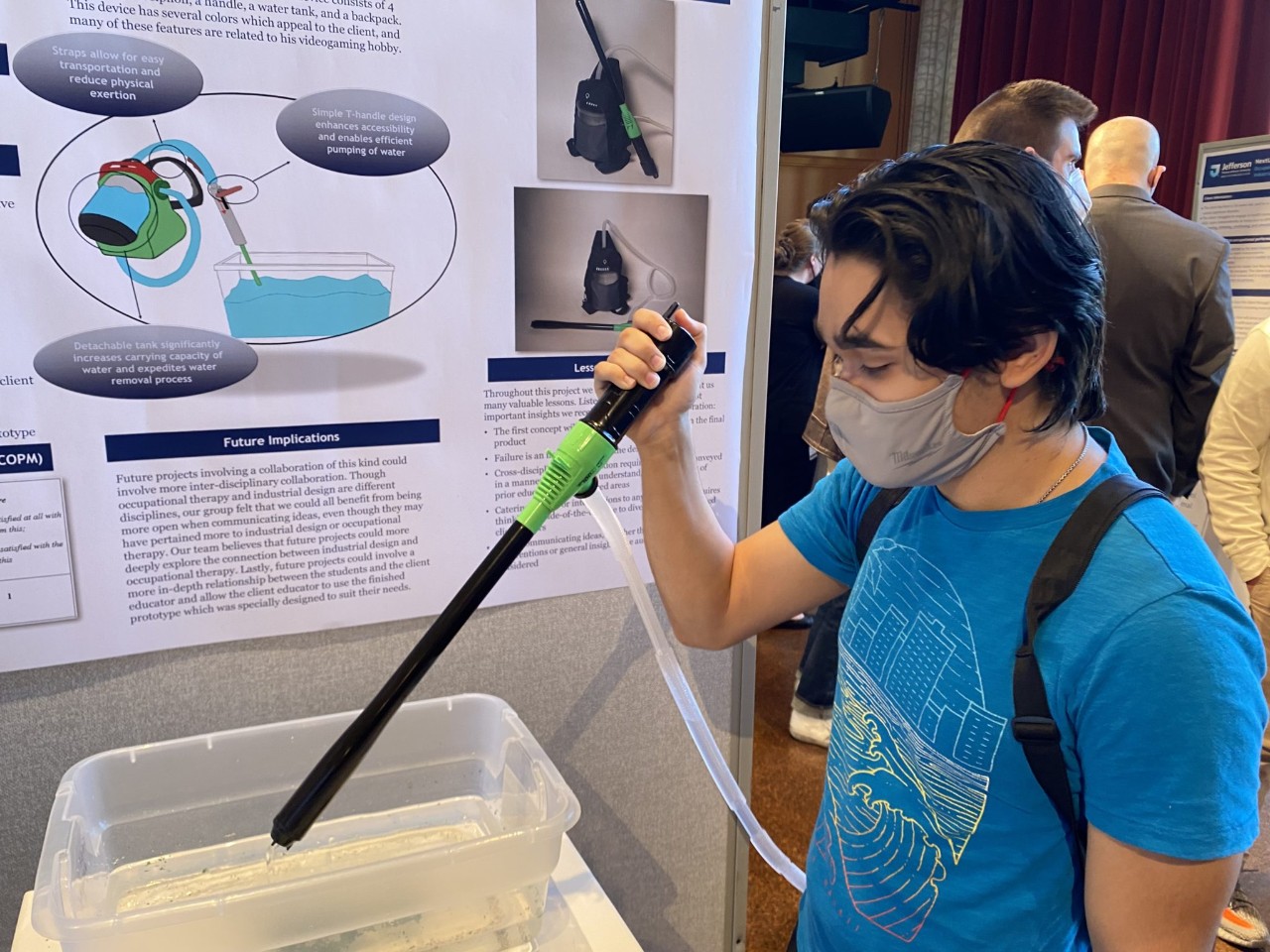 Industrial design student Ismael Caceres demonstrates his team's mobile water pump. The device would make the task of cleaning a turtle tank fun and easy for their client educator, a young boy with autism.
As part of Jefferson’s longest-running transdisciplinary collaboration, the team met frequently with their “client educator” over Zoom. The senior citizen has arthritis from her feet to thighs and kyphosis, an over-curvature of the spine.
“During our meetings, she always was grooving when music came on,” Hynes says, “but she wanted to be able to dance standing up.”
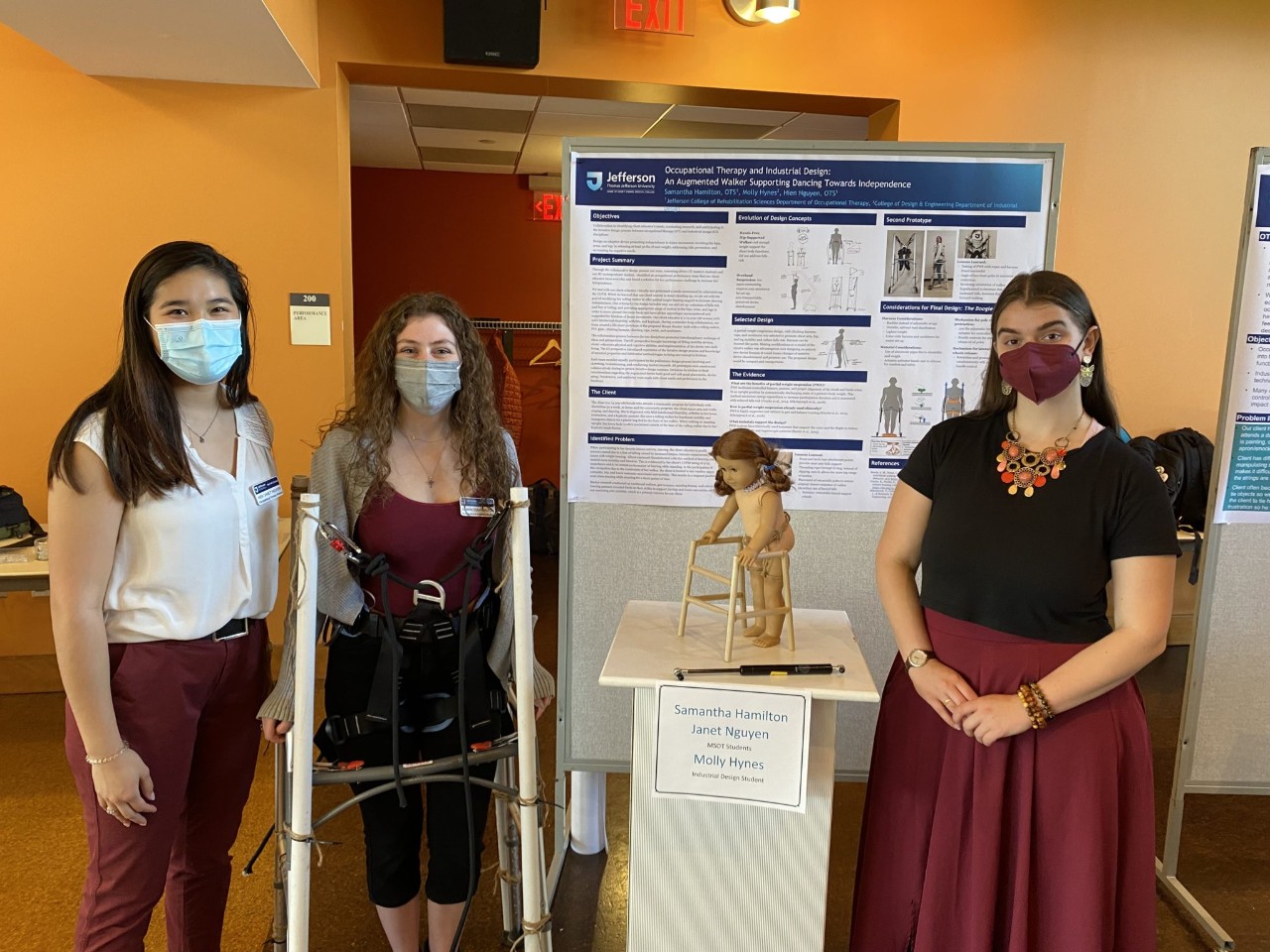 (l-r) Occupational therapy students Janet Nguyen and Samantha Hamilton and industrial design student Molly Hynes developed an augmented walker to help a senior citizen be able to dance again.
The three students developed a novel walker that takes partial weight off her legs. It uses a climbing harness, rope and carabiners to promote arm, hip and leg mobility and reduce fall risk. An American Girl doll served as the first small-scale model before they made a full-size prototype.
“She was elated after we showed her the prototype,” Hynes shares. “She said, ‘I can’t believe anyone would care enough to fix this problem for me.’ It was one of those moments I’ll remember forever. We didn’t know the answer when we started, but through the design process, we found a solution.”
Jefferson’s assistive technology collaboration pairs MS in occupational therapy students in the Assistive Technology Design course with BS in industrial design students in the Design 6 studio. Eighteen teams spent the spring semester together brainstorming, meeting their clients with special needs, iterating and, finally, presenting their concepts at an April 22 event in the Kanbar Performance Space.
We didn’t know the answer when we started, but through the design process, we found a solution.
“I love watching the students understand their personal contributions to the project and seeing how that could be optimized through collaboration,” says Dr. Sarah McNabb, an adjunct industrial design and occupational therapy professor who co-teaches the Assistive Technology Design course. “Industrial design and occupational therapy students bring different, yet complementary, skill sets. When they join forces, the outcomes are incredible. I’m proud to see their projects and the people they help.”
Industrial design student Ismael Caceres and occupational therapy students Joshua Njoroge and Kaden Wilkinson worked with a young client with autism. They developed a mobile water pump to motivate him to clean his family’s turtle tank by making the task fun, easy and efficient.
The trio struggled to communicate with him at first. “Our questions were too complex,” Wilkinson acknowledges. “He wasn’t receptive to them.”
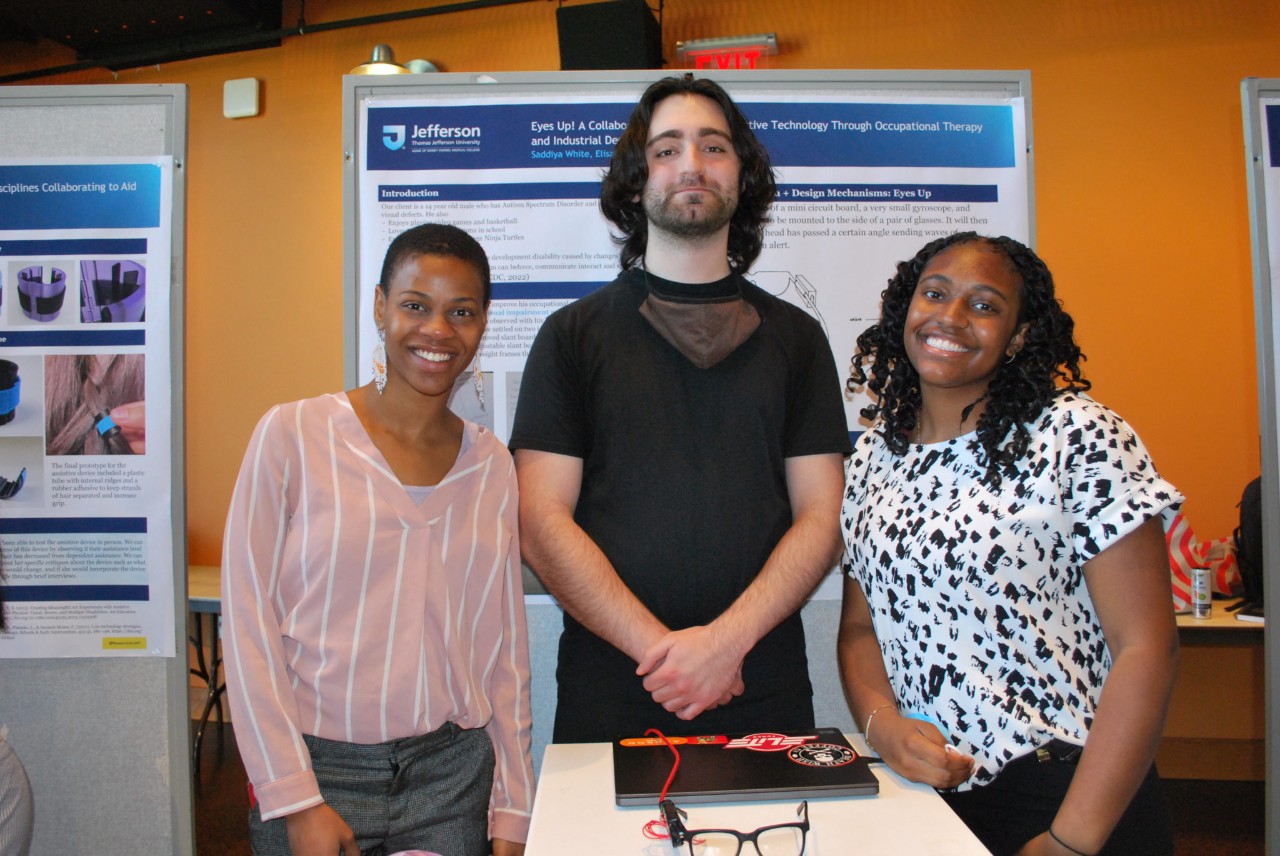 For their Eyes Up prototype, occupational therapy students Elisabeth Pascal and Saddiya White (l and r) and industry design student Aedan Will (center) developed a special pair of glasses for a teenager with autism. He is often observed with his head lowered or sleeping in class. The glasses send a quick vibration when his head passes a certain angle to keep him alert. (Photo/Anita Quain)
That setback forced the team in real-time to change how they asked their questions and presented their ideas. For example, they discovered he was a huge video game fan and used the hit title “Luigi’s Mansion” as inspiration for the green-accented water pump.
“Once we got him excited, he was a different person,” Njoroge says. “He was responding. He was interested.”
Wilkinson adds, “The process speaks a lot to the formation of our professional identity.”
Dr. Kimberly Mollo, occupational therapy associate professor, co-teaches the course with Dr. McNabb. Occupational therapy students traditionally work on a short-term assignment and then move on to the next one, Dr. Mollo explains. The months-long assistive technology project differs.
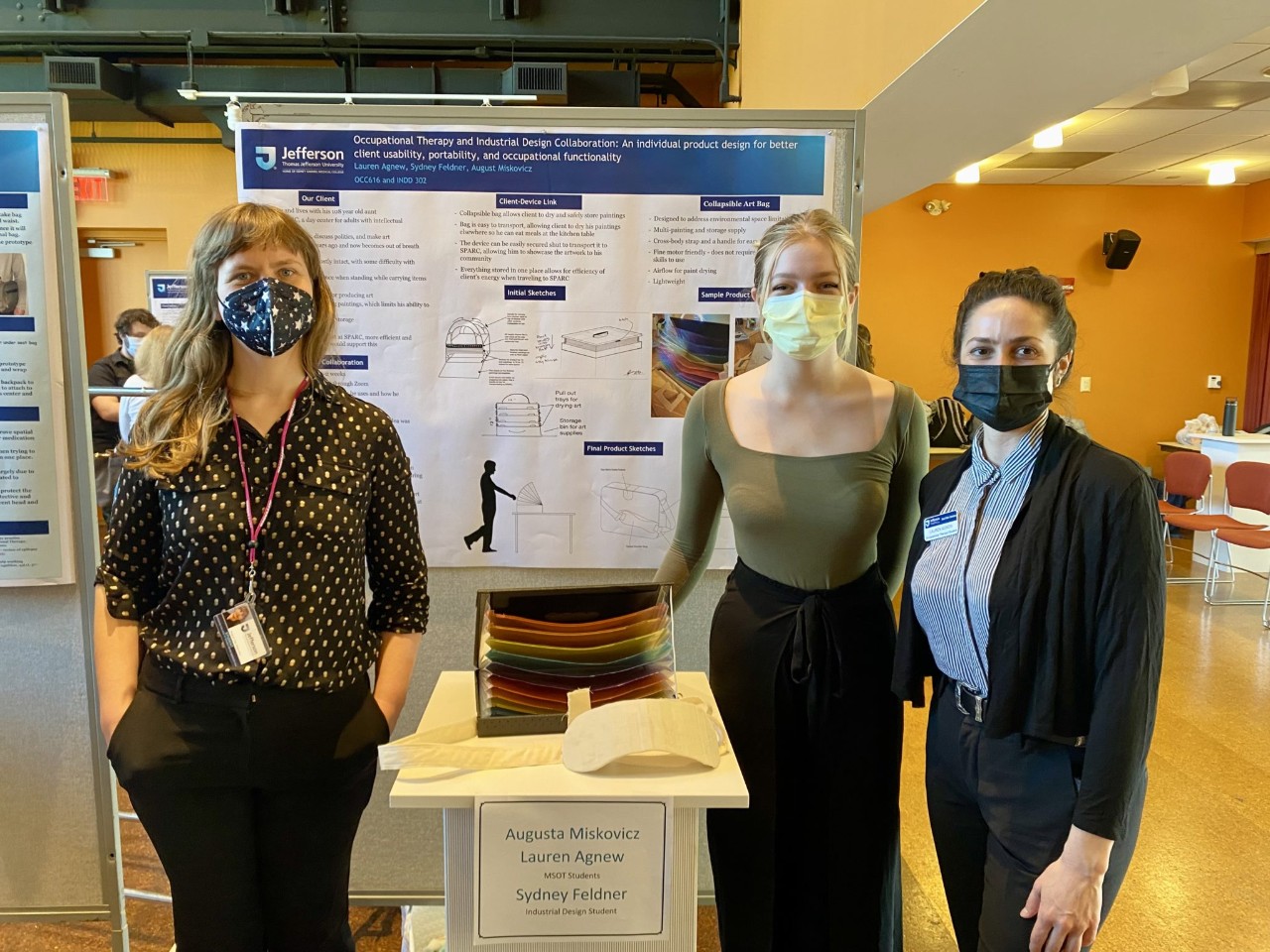 Occupational therapy students August Miskovicz and Lauren Agnew (l and r) and industrial design student Sydney Felder (center) learned from each other in developing a collapsable art bag for their client.
“Everything builds,” Dr. Mollo says. “They learn how to view their work as a process. It’s amazing when that light goes on and they see their idea through to the end.”
The project illustrates how students can approach a design issue from multiple nuanced angles, says Michael Leonard, academic dean of the School of Design and Engineering, who co-teaches the studio with adjunct industrial design professor Brian Orme. It also shows how students can benefit from collaborating with people outside their discipline.
Industrial design student Sydney Felder says feedback from her occupational therapy teammates, August Miskovicz and Lauren Agnew, provided valuable perspective on designing for the end-user.
They created a collapsible bag to allow their client with intellectual disabilities to dry and safely store paintings to bring and sell at his day center. He developed stability issues after a heart attack two years ago, so they added a cross-body strap to keep his hands free.
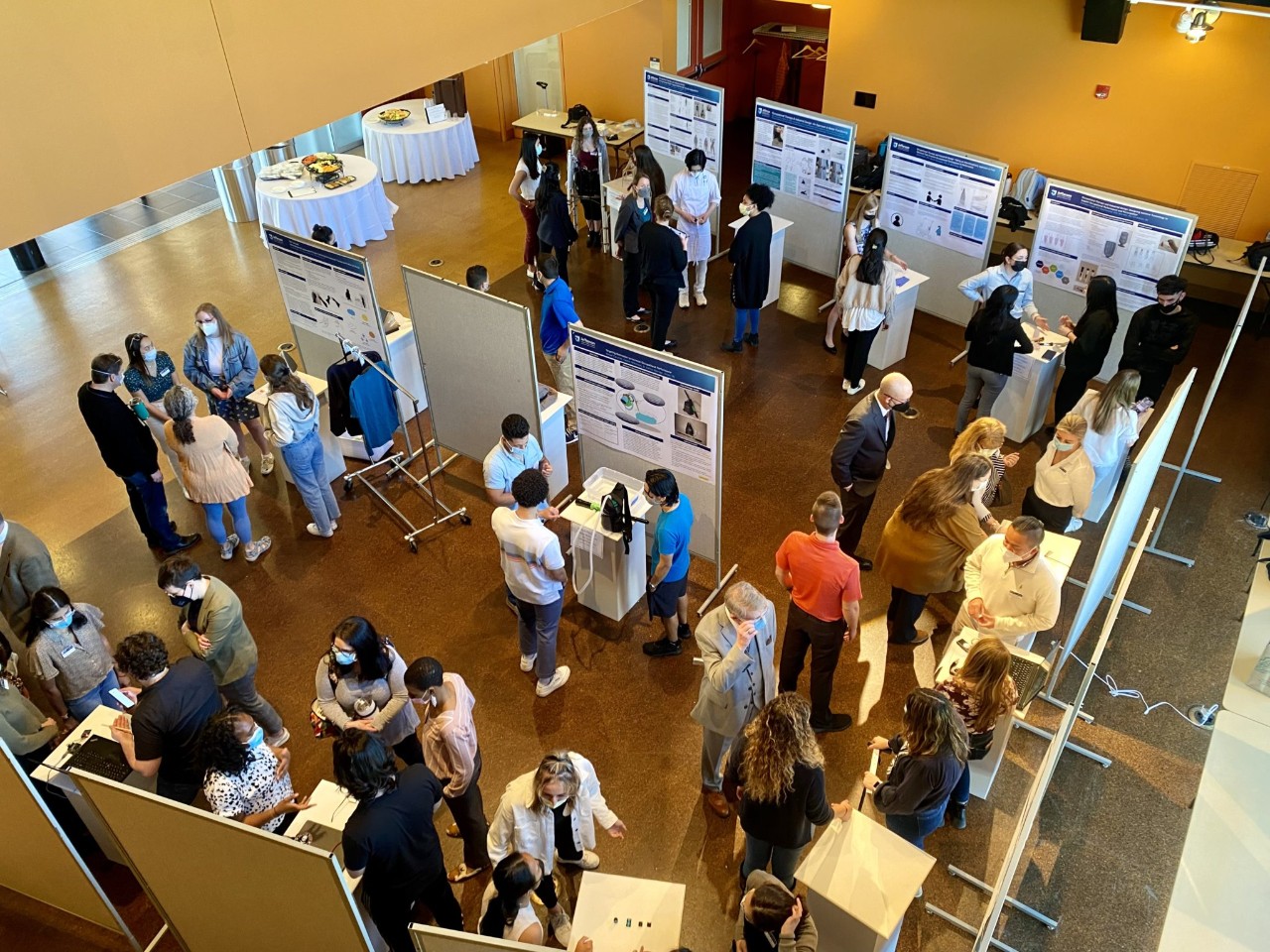 The culmination of a semester of work, 18 teams of occupational therapy and industrial design students presented their projects at the Kanbar Performance Space on April 22.
“I enjoyed the experimentation,” Miskovicz says. “You get better at asking questions to understand the whole person.”
From the needs assessment to the design process, the dance walker team also learned from each other every step of the way—and became better students in their respective fields.
“In the past, I was hesitant to fail,” Nguyen says. “But with this project, I learned you can’t really fail. It always leads somewhere. That was rewarding.”
Industrial design and occupational therapy students bring different, yet complementary, skill sets. When they join forces, the outcomes are incredible.
For reasons like this, Leonard established the assistive technology collaboration project 22 years ago with Dr. Cathy Piersol, now chair of the occupational therapy department.
In the past, Leonard, also an industrial design associate professor, funded the prototype development as the recipient of the David and Lillian Rea Deans’ Term Chair. New this year, the Reas created the David and Lillian Rea Concept-to-Reality Fund to honor Leonard’s continued work on the project. It will offset the costs for students to develop their design prototypes.
“This fund will have a major impact on the scope of the assistive and adaptive devices the industrial designers produce for years to come,” Leonard says.