Graduate Program in Neuroscience
Overview
Research Facilities
|
Student Community
Program Objectives
|
Cost of Study & Student Fellowships
Fellowships are awarded to eligible full-time graduate students as a means of financial support for graduate study. Graduate study involves active participation in academic studies, as well as in laboratory research and teaching. The fellowship is contingent upon maintaining active, full- time status in good standing and ongoing participation in all aspects of the Ph.D. program on a daily basis. For additional details on stipend, tuition, and health insurance, please visit http://www.jefferson.edu/jcgs/stipend.cfm
|
Thomas Jefferson University's interdisciplinary Ph.D. Program in Neuroscience, jointly established by Jefferson College of Graduate Studies and the Farber Institute for Neurosciences, provides hands-on neuroscience training with internationally recognized scientists.
The interdisciplinary Graduate Program in Neuroscience at Jefferson gives students the opportunity to acquaint themselves with a wide variety of research areas in neuroscience. In recognition of the diverse areas of interest and synergy with other disciplines, the program has a core curriculum of courses in neuroscience, cell biology, biochemistry, and molecular biology. These courses provide the student with a thorough background of the major issues in these areas as well as the modern experimental methods by which questions in these areas are investigated. As a trainee in a program faculty member's laboratory, a student pursues a scholarly research project. Faculty from several basic science and clinical departments within Thomas Jefferson University provide classroom and laboratory training.
The Graduate Program in Neuroscience at Thomas Jefferson University is directed toward providing the student with a) formal instruction in both the classroom and the laboratory, b) laboratory experience sufficient to pursue and develop a scholarly scientific research project and c) the opportunity to serve as an instructor in order to acquire skills applicable to becoming an effective teacher. The graduate program provides sufficient flexibility so that graduating students can pursue a career in education, research in an academic setting or industry.
Research Facilities
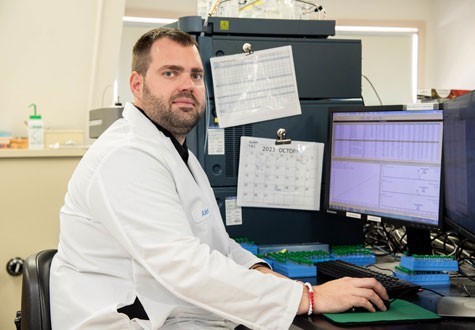
The laboratories of program faculty are housed in modern research buildings that are fully equipped for investigations in all aspects of cellular and molecular neuroscience. These laboratories have active, extramurally funded research programs in a variety of areas. Major research facilities available within the program cover all the contemporary methods of cell and molecular neurobiology, including those for recombinant DNA technology, nucleic acid sequencing, PCR and DNA microarray analysis, protein purification and analysis, cell, tissue culture, electrophysiology; computer analysis; and light and electron microscopy.
Student Community
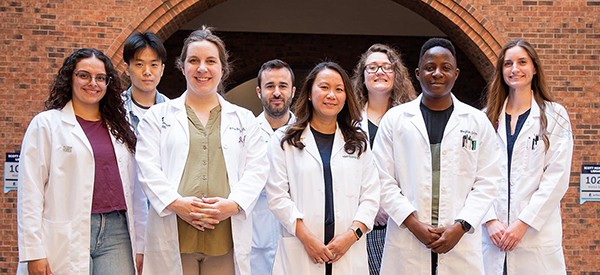
The Thomas Jefferson University student community totals over 2,000 students, including those enrolled in the College of Graduate Studies, which currently has over 600 students including 130 full-time Ph.D. candidates. Other university students are enrolled in the College of Health Professions, with over 700 students, and Jefferson Medical College, with about 225 new students admitted each year. Affordable housing is available on campus or in the surrounding community. The student body is a diverse one, with members from across the country and around the world. Many activities are coordinated by the Graduate Student Association, and a large variety of cultural and recreational opportunities are available within and around the University. Some information about those opportunities is available through LIBERTYNET.