
Dr. Nicole Johnson, director of Jefferson’s community trauma and counseling program, has worked in the counseling field for over 20 years. But before she was a licensed counselor, she was an ordained minister—a role that opened her eyes to the needs of the community around her.
Community Trauma and Counseling Program Reaches Communities Through Faith-Based Leaders
Director Dr. Nicole Johnson shares her knowledge with some of the most impactful voices.
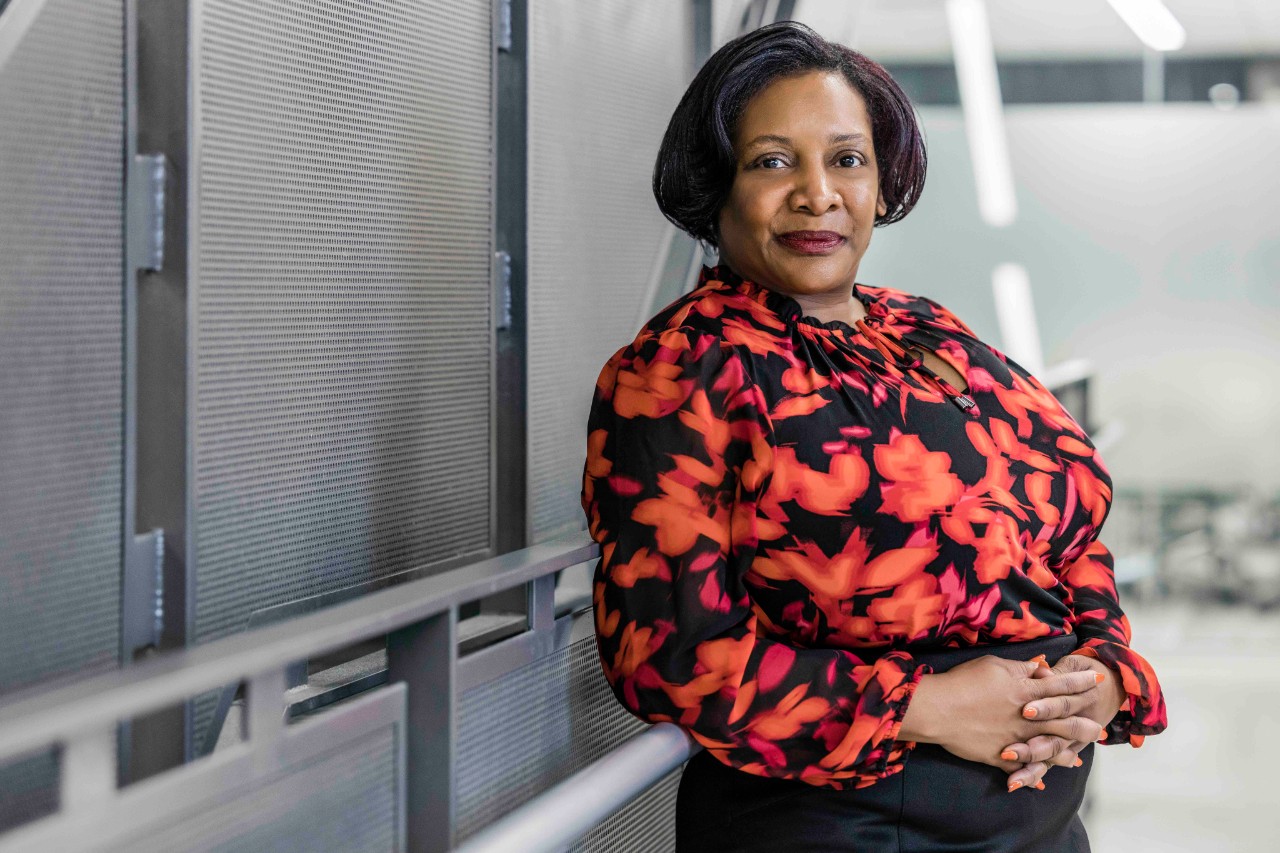 Dr. Nicole Johnson developed the Interfaith Leaders’ Learning Collaborative on Trauma, a Jefferson Trauma Education Network outreach that trains faith-based leaders to support people who have experienced trauma and subsequent behavioral health concerns. (Photos by Steve Belkowitz)
“As a minister at a local church in Germantown, I saw the need for counseling in the community,” Dr. Johnson says. “I felt I should be equipped with the knowledge of how to address mental health issues, like trauma and addiction, to help members of my faith community.”
A Focus on Education and Resilience
Dr. Johnson stumbled on trauma and addiction treatment in graduate school as an intern at a halfway house. “I started hearing stories from the men reintegrating into life after prison,” she says. “And I saw how childhood trauma shaped their experiences and led them on a path to addiction.”
Her interest in helping individuals and families facing trauma and addiction led to a certification in addiction treatment, but it didn’t stop there. She wanted to share her education with every staff member she supervised, not just clinicians.
 As a minister, Dr. Nicole Johnson understands the impact faith-based leaders can have. Many public health initiatives involve them as a catalyst to spread important messages.
“Everybody in the building needed information on how to engage with clients facing addiction, including the people working at the front desk,” Dr. Johnson says. “I believe people enter this field because they want to do this work, but they burn out quickly if they don’t receive good training and support.”
Dr. Johnson wanted to reframe the approach to training counseling professionals, focusing on how trauma manifests and developing skills that help counselors and support staff increase longevity.
The Intersection of Faith and Counseling
As a minister, Dr. Johnson understands the impact that faith-based leaders can have on the population. Many public health initiatives involve faith-based leaders as a catalyst to spread important messages, like getting screened for cancer and diabetes or vaccinated against COVID-19.
This prompted Dr. Johnson to share her vision with Drs. Jeanne Felter and Steven DiDonato, then director and assistant director of the community trauma and counseling program, respectively. With their approval and support, she developed the Interfaith Leaders’ Learning Collaborative on Trauma, a Jefferson Trauma Education Network outreach that trains faith-based leaders to support people who have experienced trauma and subsequent behavioral health concerns.
As a minister at a local church in Germantown, I saw the need for counseling in the community. I felt I should be equipped with the knowledge of how to address mental health issues, like trauma and addiction, to help members of my faith community.
“Faith and counseling have a lot more in common than many realize. Both have a goal of giving people a better life using a wellness model, but they use different languages,” Dr. Johnson says. “Recognition of mental health and counseling services is especially important in Black churches. Historically, there has been a mistrust of clinicians because of systemic racism where people of color have been oppressed and mishandled by some in the medical field.”
This is where Dr. Johnson’s work with faith-based communities comes in. “Faith leaders are already trusted sources of information and advice among their parishioners,” she says. “So why not give accurate and up-to-date information and training to those on the front lines?”
Dr. Johnson’s goal is to educate faith-based leaders about trauma and help them use their power and advocacy to speak to their congregation about suicide prevention, the opioid crisis and how to get help when struggling with mental health.
 “Faith and counseling have a lot more in common than many realize,” Dr. Nicole Johnson says. “Both have a goal of giving people a better life using a wellness model, but they use different languages.”
Overcoming Stigma
One of the biggest challenges that Dr. Johnson has faced in educating faith-based communities about trauma and addiction is overcoming stigma. “Many people look at those who struggle with addiction and think, ‘Why don’t they just put it down?’ But it’s not that simple,” says Dr. Johnson, who often demonstrates how addiction can take hold of people with an exercise during her talks and seminars.
“I ask everyone to turn on or unmute their phones and set them down in plain sight. Then, I tell them to not touch their phones if they ring or beep,” she says. “Inevitably, several people pick up their phones during the seminar, including myself. It’s an example of how even when we tell ourselves to stop something, our brain may continue doing it. It takes time to retrain our brain.”
People don’t wake up and decide to become addicted to drugs or other substances, Dr. Johnson stresses. Many times, addiction stems from childhood trauma, and starting with empathy helps us see the person instead of just their behaviors.
Faith leaders are already trusted sources of information and advice among their parishioners. So why not give accurate and up-to-date information and training to those on the front lines?”
Everyone Can Be Part of Community Healing
The work Dr. Johnson does through the Interfaith Leaders’ Learning Collaborative on Trauma works on multiple levels. “We talk to faith leaders in the community about the needs of their congregations,” she says. “When the pandemic hit, we did a four-part webinar series on dealing with caregiver stress. We’ve also done training for faith leaders on suicide prevention, so they know how to talk to young people about mental health and acute stress. And in January 2022, we participated in the National Day of Racial Healing by holding an interfaith event around racial and community healing.”
The group also provides support for faith-based leaders experiencing burnout and secondary traumatic stress. “We’re constantly posing the question, ‘What do you do to heal yourself?’ As faith leaders work to support the healing of others, they may also experience trauma,” she says.
Ultimately, Dr. Johnson encourages everyone to participate in community healing, even those who aren’t clinicians. “If we arm faith leaders with information about gun violence, suicide, the opioid crisis and anything their community is struggling with, I believe we can span the efforts of healing in communities much more effectively.”