
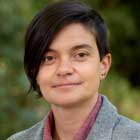
Dr. Tripepi is an interdisciplinary biologist and educator whose research explores how organisms respond to biogenic and abiogenic stresses within the constraints of their environments across systems ranging from the microbial to whole ecological systems.
Her early research focused on motility and cell surface structures in the archaeon Haloferax volcanii, with particular emphasis on archaella, pili, and the molecular basis of movement and adhesion. Currently, she contributes to microbial and environmental research through collaborative work examining organismal interactions within changing environments, including genomic analyses of microbial communities living in soil and artificial turf, particularly in sports field environments.
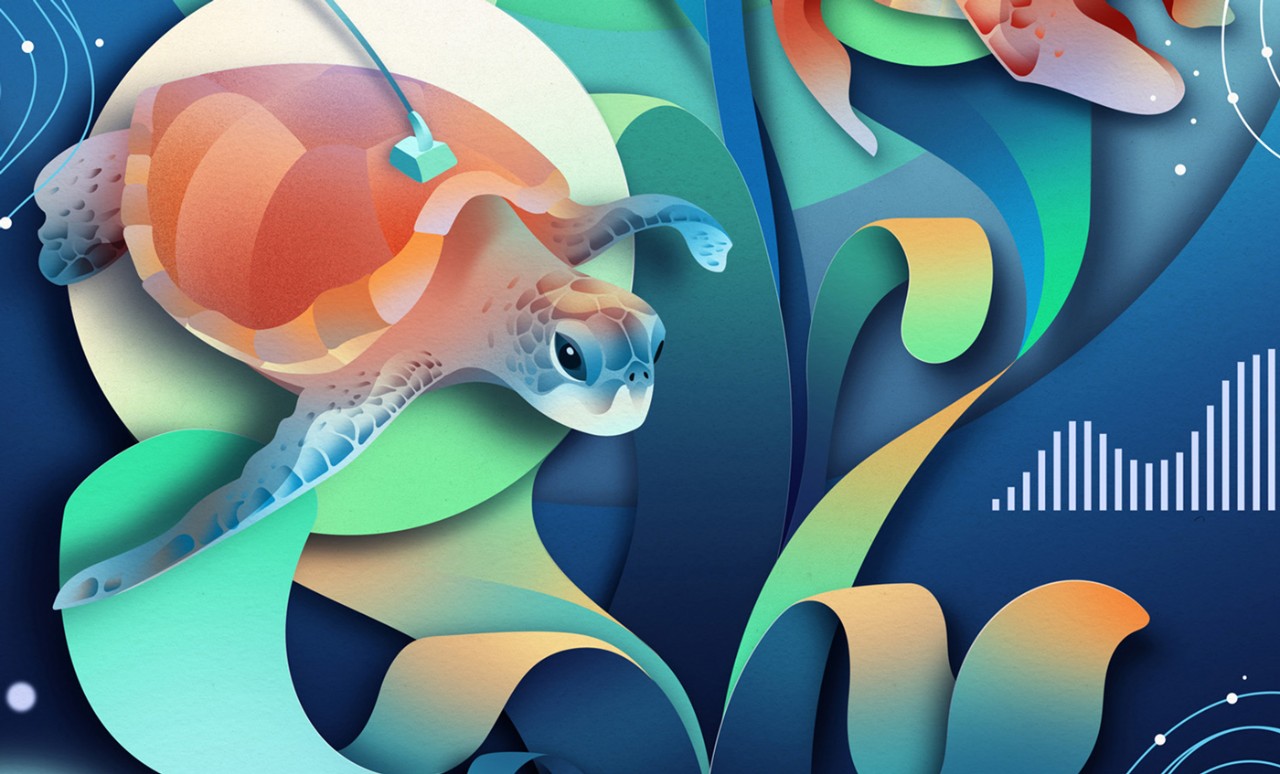
Most recently, her work has expanded into wildlife and conservation biology, with a focus on sea turtle health and habitat use in Curaçao. Her current research investigates marine turtle movement patterns, critical habitat use, fibropapillomatosis, and environmental factors that may influence turtle health and disease. She authored the first published report on fibropapillomatosis in Green sea turtles (Chelonia mydas) within this region and serves as the chair of the scientific committee for Sea Turtles Conservation Curaçao. As part of this work, she has led immersive field experiences, bringing undergraduate students to Curaçao to participate directly in research and conservation efforts.
In parallel, Dr. Tripepi is actively engaged in curriculum development and biology education research, with a strong emphasis on inclusive, accessible teaching practices that broaden participation in STEM. Her pedagogy-focused scholarship centers on designing inquiry-based laboratory and classroom experiences that help students engage deeply with biological concepts through active learning, creativity, and authentic scientific practice. She has brought course-based undergraduate research experiences (CUREs), including Tiny Earth and SEA-PHAGES, to Jefferson, expanding equitable access to authentic research experiences in microbiology and genomics. During the COVID-19 pandemic, she developed a flexible protocol that introduced students to wildlife research in their local environments through direct observation and literature review, removing barriers to participation and expanding access to undergraduate research. Her work includes the development of innovative and accessible teaching activities, such as using origami and Shrinky Dinks to teach core microbiology concepts, as well as projects that bring students into direct observation-based research, including the use of AI-powered Bird Buddy technology to support undergraduate learning and campus wildlife engagement. Her scholarship also examines how traditional approaches to biology education can be reimagined to better support diverse learners, including work related to the “dogma of biology” and student engagement with scientific writing. Her teaching and curriculum innovations have been published in peer reviewed journals like the Journal of Microbiology & Biology Education, and her students are often involved as co-authors. Dr. Tripepi’s interdisciplinary perspective is supported by broad and extensive academic training, including separate doctoral degrees in Plant Biology and Microbiology earned in Italy and the United States, as well as a master’s degree in Community and Trauma Counseling.