

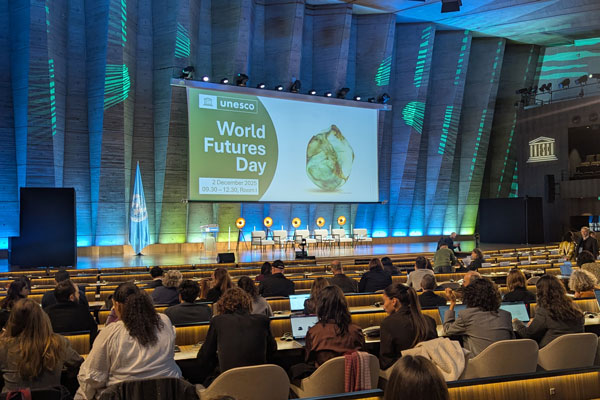
Katie DiSantis, PhD, MPH, Represents Smart & Healthy Cities at UNESCO World Futures Day 2025, in Paris

UNESCO World Futures Day 2025 Highlights

On December 2, Katie DiSantis, PhD, MPH, UNESCO Co-Chair for Smart and Healthy Learning Cities, participated in UNESCO World Futures Day in Paris, joining global scholars, policymakers, and practitioners to explore how societies can strengthen their capacity to anticipate and shape change amid rapid technological transformation, climate instability, and geopolitical uncertainty.

The convening featured keynote sessions and workshops focused on ethical futures, education, and open knowledge systems. Philosopher Éric Sadin delivered a keynote address that challenged technocratic assumptions about the future, emphasizing the ethical responsibilities surrounding artificial intelligence. He cautioned that without clear frameworks, AI-driven solutions risk prioritizing the interests of those who design and control the technology rather than serving the broader public. He also underscored the importance of protecting human creativity, culture, and agency.

Addressing higher education, Sadin highlighted concerns around the growing reliance on oral examinations as a workaround for generative AI. He argued that writing supports distinct cognitive and creative processes that cannot be replicated by AI tools or oral assessments, and warned against abandoning these opportunities for intellectual development.

Workshops throughout the day emphasized the importance of acting on emerging trends before systems fully crystallize. Discussions on education, open science, and ecosystems reinforced that the future is already present but unevenly distributed, and that co-design with learners, community-driven research, and open knowledge infrastructures are essential for navigating uncertainty and fostering more equitable outcomes.

UNESCO staff also highlighted the role of UNESCO Chairs as knowledge hubs that connect academia, civil society, communities, and policymakers. Proposed actions included short-term intensive courses and training programs to build capacity in Chairs’ thematic areas. These discussions identified opportunities for future collaboration, including the potential development of a course on “Health and Learning in Future Cities.”

The event also provided opportunities for global exchange and partnership-building, including conversations with UNESCO leadership and representatives from the Lifelong Learning network. Participation in UNESCO World Futures Day reflects Smart and Healthy Cities’ ongoing engagement with global dialogue on ethical innovation, education, and inclusive approaches to future urban development.

Share This