

In the 1930s, architecture and branding were separate and distinct. By the 1960s, they were completely integrated. During the interim years, architects and their corporate clients together crafted buildings to reflect the brand of the company, carefully considering consumer perceptions and their emotions towards the architecture and the messages they communicated.
How Do Architects and Their Corporate Clients Influence Branding?
Researching the concept of “branded environments” to promote and market institutions.
 Grace Ong Yan, PhD, assistant professor of Interior Design at Jefferson's College of Architecture and the Built Environment.
This evolution of corporate modernism is the focus of Building Brands: Corporations and Modern Architecture, the latest book by Grace Ong Yan, PhD, assistant professor of Interior Design, Jefferson College of Architecture and the Built Environment. The book is the result of Dr. Ong Yan’s copious archival research of historical case studies, as well as her own experience designing branded environments for corporate clients. Find out more about Dr. Ong Yan’s research and the questions she’s trying to answer.
Q: What is your research focus?
A: As an architectural historian, my field of research is 19th- and 20th-century industrial and commercial architecture. I study how interdisciplinary forces including architecture, design, critical theory, and technology, shape and cultivate media and modernity.
Q: What’s one question you’re investigating?
A: I’m interested in determining how clients of architecture not only contribute to the design process but shape it. For example, I discovered archival evidence in 20th-century modern architecture that supports the fact that clients saw their building projects as opportunities for promoting and advertising their institutions’ identities. How they discussed this opportunity with their architects, and how those architects approached the design of those identities was fascinating and wildly varied.
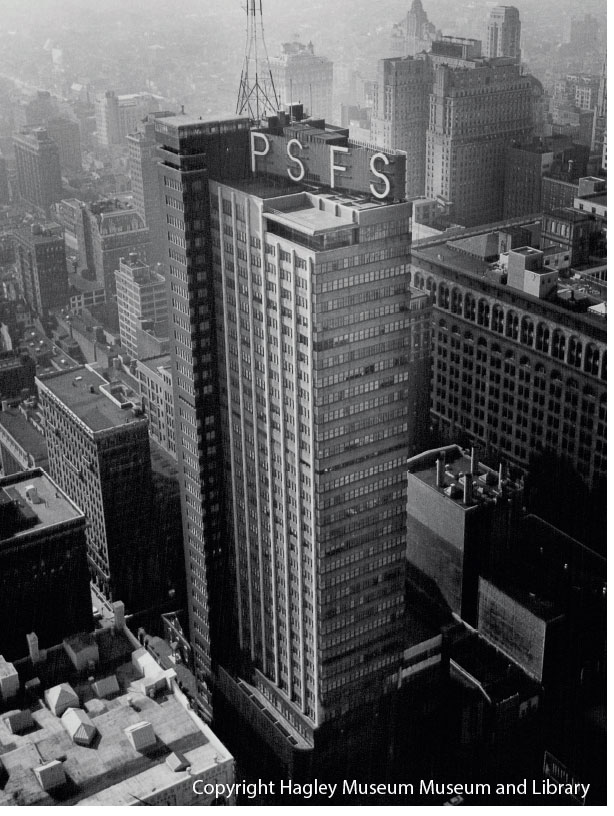
One approach was commercial signage, which resulted in many design nuances. There are audacious signs, from the neon sign atop the PSFS building, to otherworldly media-saturated urban environments like Times Square and Venturi Scott Brown’s sign designs based on research and the aesthetic of Las Vegas, which we see throughout Philadelphia and many cities.
Another approach was to hire a famous architect as an instant promotion of the institution through co-branding, as we saw with the Johnson Wax Building in Wisconsin, designed by Frank Lloyd Wright. This strategy is seen a lot today with the rise and fall of the “starchitect” phenomenon in real estate.
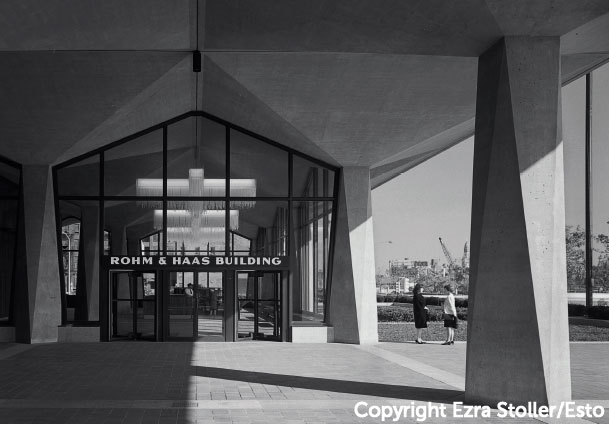
Yet another strategy is the creation of spectacle with architectural form. The exuberant forms of Frank Gehry’s Guggenheim Bilbao were said to catalyze an urban renaissance for the economically depressed Spanish city. Finally, client desire to market new materials instigated the experimentation of design with proprietary materials like the headquarters for Röhm and Haas with Plexiglas, Reynolds Metals with aluminum, and Pittsburgh Plate Glass with glazing.
Q: What first sparked your interest in your area of research?
A: The topic of architectural branding grew out of an interest in how design and architecture engage people and shape human activities. I became involved with branding as a practicing architect and interior designer at Gensler’s Studio 585 in New York. Together in an interdisciplinary team, we designed branded environments for companies like Toys R Us, International Center for Photography, and Bally.
I was immediately fascinated by the practice of branding as an alternate lens of design. I found brand design to be in many ways more creative, interdisciplinary and service-oriented than the world-renowned architecture firms that I had worked in previously. Architecture firms, especially those led by famous architects, approach design as the development of a signature design. By comparison, I found that with brand design, the script was flipped—the process was not a realization of an architect’s vision, but about coming up with new design ideas to define the client's identity.
This invigorating and very freeing experience left deep impressions on me. As I embarked on my doctoral studies in architectural history and theory with these insights, I knew I could offer a unique perspective.
Q: What’s an interesting fact about your study subject?
A: The greatest challenge of researching corporations is accessing their archives as they generally do not welcome outside researchers. Yet this is what I needed to do in order to bring a new interdisciplinary lens to architectural history by seeking to answer my initial question: Did the clients seek advertising and branding through the architecture that they commissioned? For my research on how architecture served as branding, it was imperative to reveal the company’s motivations about the architecture it commissioned. I quickly discovered that the best way to research a company’s papers is to study defunct companies. When a company goes out of business or gets bought out by another company, its extant archival papers— inter-office memos, board meeting minutes, letters between clients and architects, annual reports, employee magazines, in short, all the documents it leaves behind, in positive scenarios, end up in a publicly accessible repository. In negative scenarios they end up in dumpsters. What I unearthed from the abundant Philadelphia Saving Fund Society and Röhm and Haas archives were just such fine-grained documents that informed and supported my hunch that architecture in the form of corporate headquarters served their clients as far more than offices to house their employees, but as important promotional tools and as a communication medium to the public.
Q: Many researchers have superstitions. Things they’ve done to cosmically help their research work succeed. What are yours?
A: While I am quite rational with my professional life, including my research and archival work, I dabble in the mystical art of feng shui. I’ve been known to do a bit of energy adjustment to my living environment, which can, at times, be at odds with my design sensibilities. That part can be challenging. Feng shui is a practice that aims to balance one’s life, which, in turn, can benefit my research work.
Q: What’s the best part of your job?
A: I enjoy the multifaceted nature and challenges of my job, which include teaching and advising the next generation of designers, developing my research agenda, serving on the college curriculum committee, and curating the college’s lecture series. I feel very fortunate to be doing my job within a supportive context for research and the spirit of collegiality among my fellow faculty and staff members.
Q: What’s something people would be surprised to find out about you?
A: I’m an avid indoor spinning cyclist, which has been key to helping me stay healthy and balanced during the pandemic. For those of you who aren’t already familiar with it, spinning is a high-energy, music-infused, endurance and choreographed indoor cycling workout. I’ve been spinning for decades, from its beginnings in the 1990s, to current SoulCycle and Peloton workouts. Over the summer, I attended socially distanced outdoor spinning classes in a parking garage. Though it was the last thing I thought I would ever be doing, it was worth it to come together as a community with my favorite instructor and fellow riders.