
The pandemic has further shown the intense need for and value of mental health providers, including clinical mental health counselors with specialties in art therapy.

Using Art to Heal
Upcoming show celebrates the creative efforts of art-therapy students, alumni and faculty.
Clinical mental health counselors with advanced training in art therapy are masters-level trained clinicians who employ visual art materials to help clients, explains Dr. Rachel Brandoff, professor and coordinator of the art therapy concentration in the Community and Trauma Counseling (CTC) program.
The CTC program trains clinical mental health counselors who have an additional specialization in art therapy. These students—who ultimately will be able to be credentialed as licensed professional counselors and art therapists—tap into people’s inherent creativity to help them process trauma, identify goals, increase self-awareness, gain coping skills, minimize symptoms, improve self-esteem, develop communication strategies and better their quality of life.
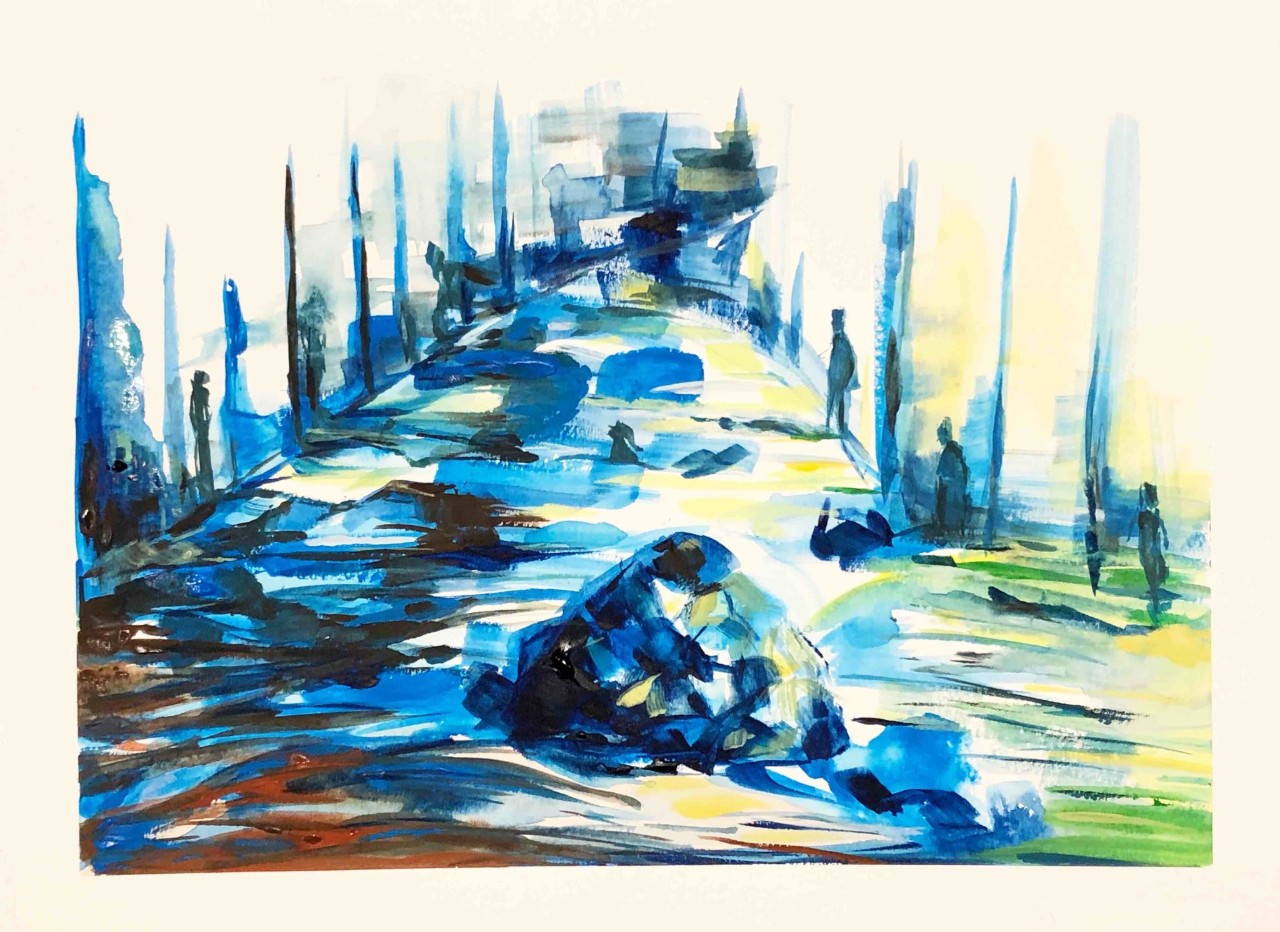 Alumna Isabelle Hsu’s “River of Encounters.” She writes of the piece: “During quarantine, I met and departed with people at work and school. The termination of relationships felt particularly isolating due to the loss of physical intimacy. The drawing seeks to illustrate the new normal and that there is always a room where we store memories with people whom we encountered in life.”
“At Jefferson, students merge an understanding of ethical practice in art therapy, studio techniques, art assessments, the neurobiology of trauma and advanced interventions,” Dr. Brandoff says. “They emerge as trauma-trained clinical mental health counselors who are shifting the balance on what it means to be trauma-prepared in our field.”
The work of CTC faculty, alumni and students will be featured in an upcoming virtual art show. The April 5 event highlights a variety of media, techniques and intentions in art; several of the artists also will be discussing their work.
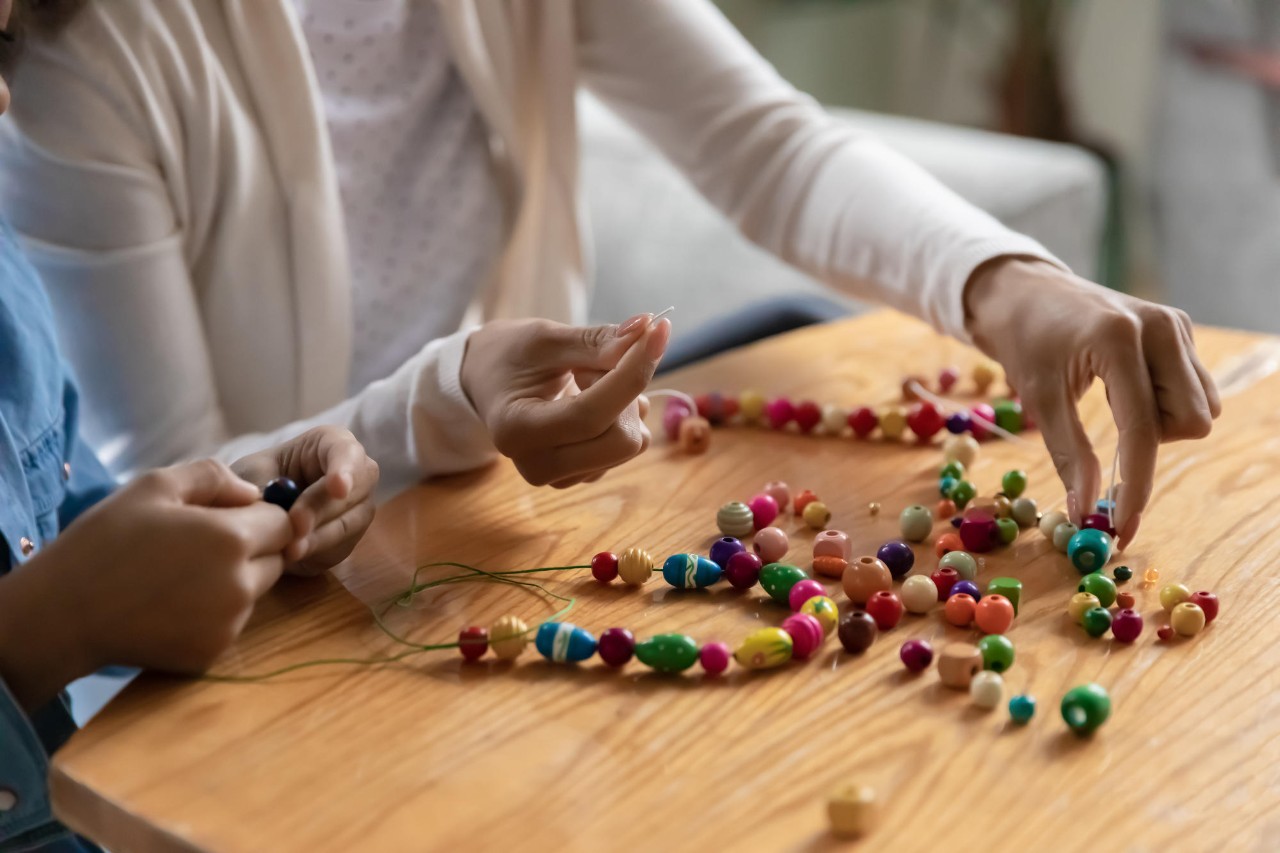
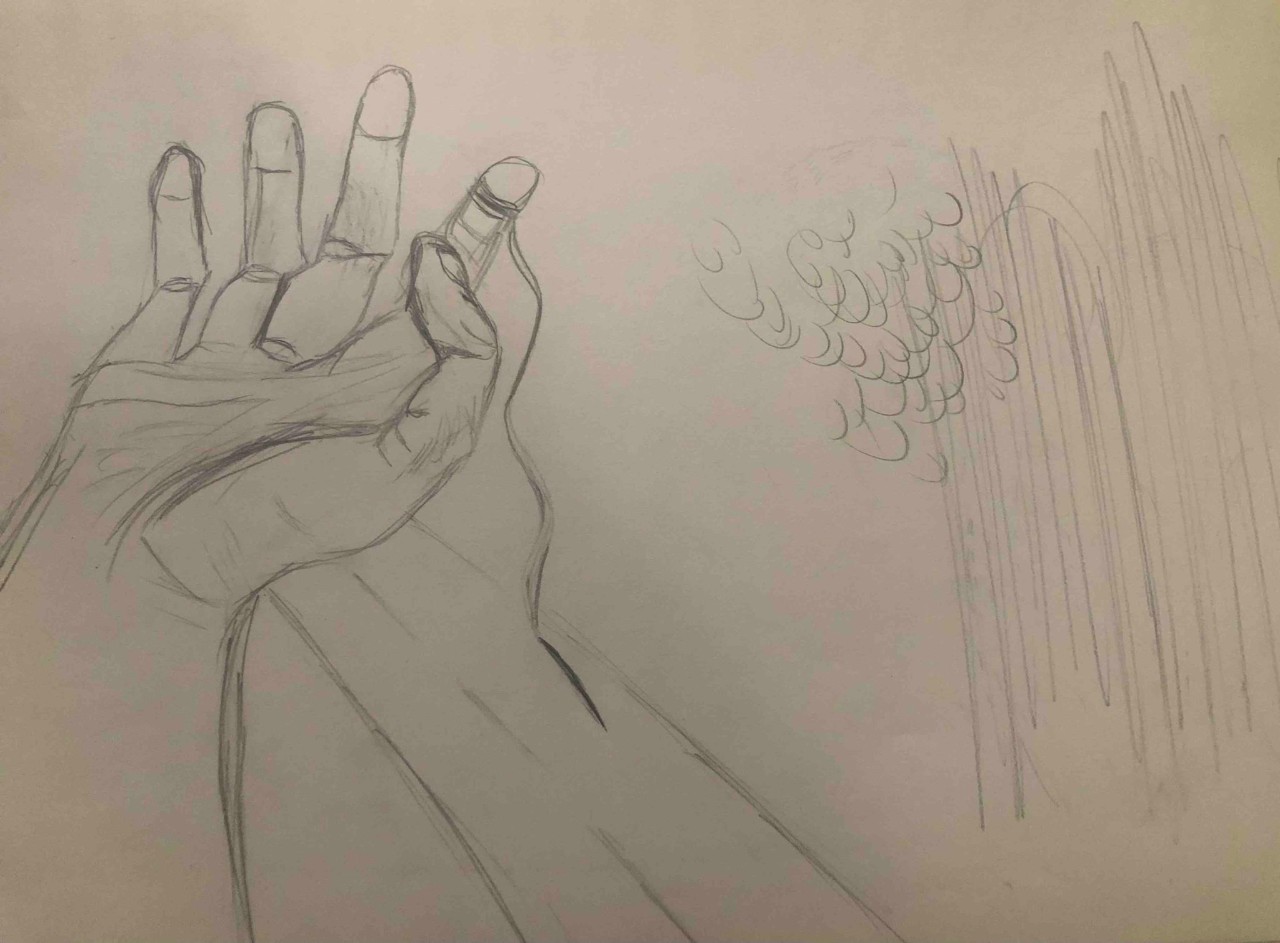 Student Shea Andrews' "Loss of Control." She writes of the piece: "Although the index finger is keeping the thread secure, the needle feels a loss of control. Although the needle feels a loss of control, it is still moving forward on its path. Where does the road lead?"
The pieces exemplify some ways art can be used as a tool to increase self-awareness, relieve stress, problem solve, communicate with self and others, process constructs and experiences and understand ourselves, Dr. Brandoff says.
“The artwork here was inspired by personal growth and clinical learning in art therapy,” she says. “Through artmaking, art therapists deepen their appreciation and understanding of the human experience.”
See a selection of pieces and the artist statements below:
-
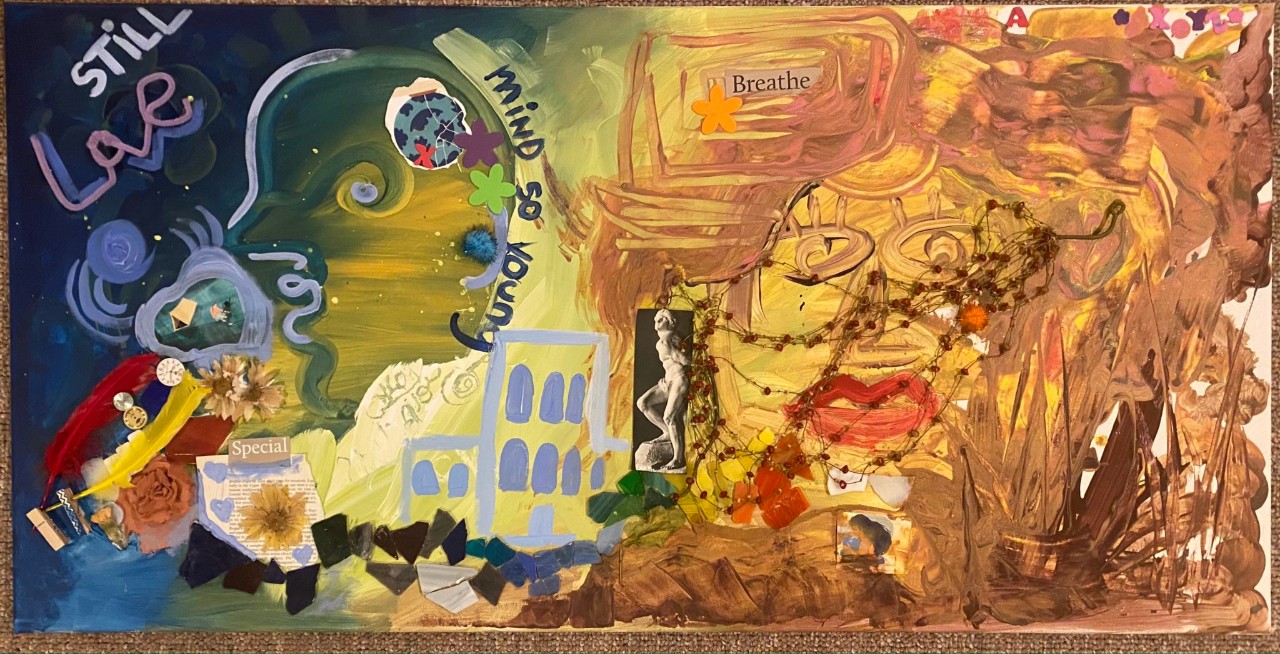
“Childlike With a Taurus Sun Sign” by student Kelsey Paparo This piece was created to depict my childlike state (left) and how I am on the outside (right). The blue colors show what is going on in my mind and how I feel stuck in my childlike state. The yellow and browns represent how I come off to others.
-
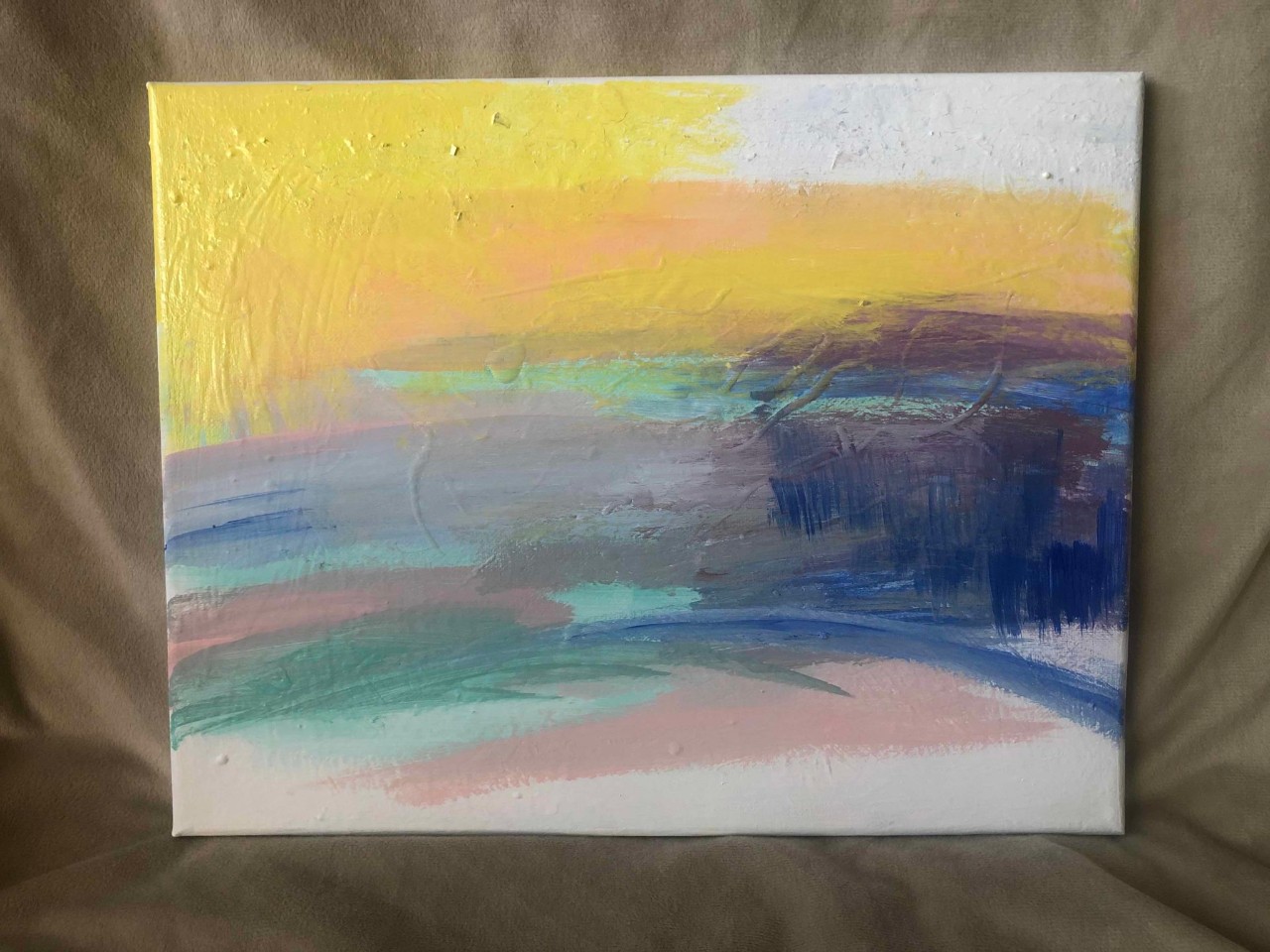
“Fragmented” by student Shea Andrews I created this painting to represent the feelings I had during the week of Dec. 12. The colors are tranquil and the sun is shining in the upper left corner. I remember feeling happy during this particular week and confident in myself, which doesn’t come naturally to me. I am continuously reflecting on my progress as a graduate student and intern. I am looking forward to what lies ahead for me in the field of counseling and art therapy.
-
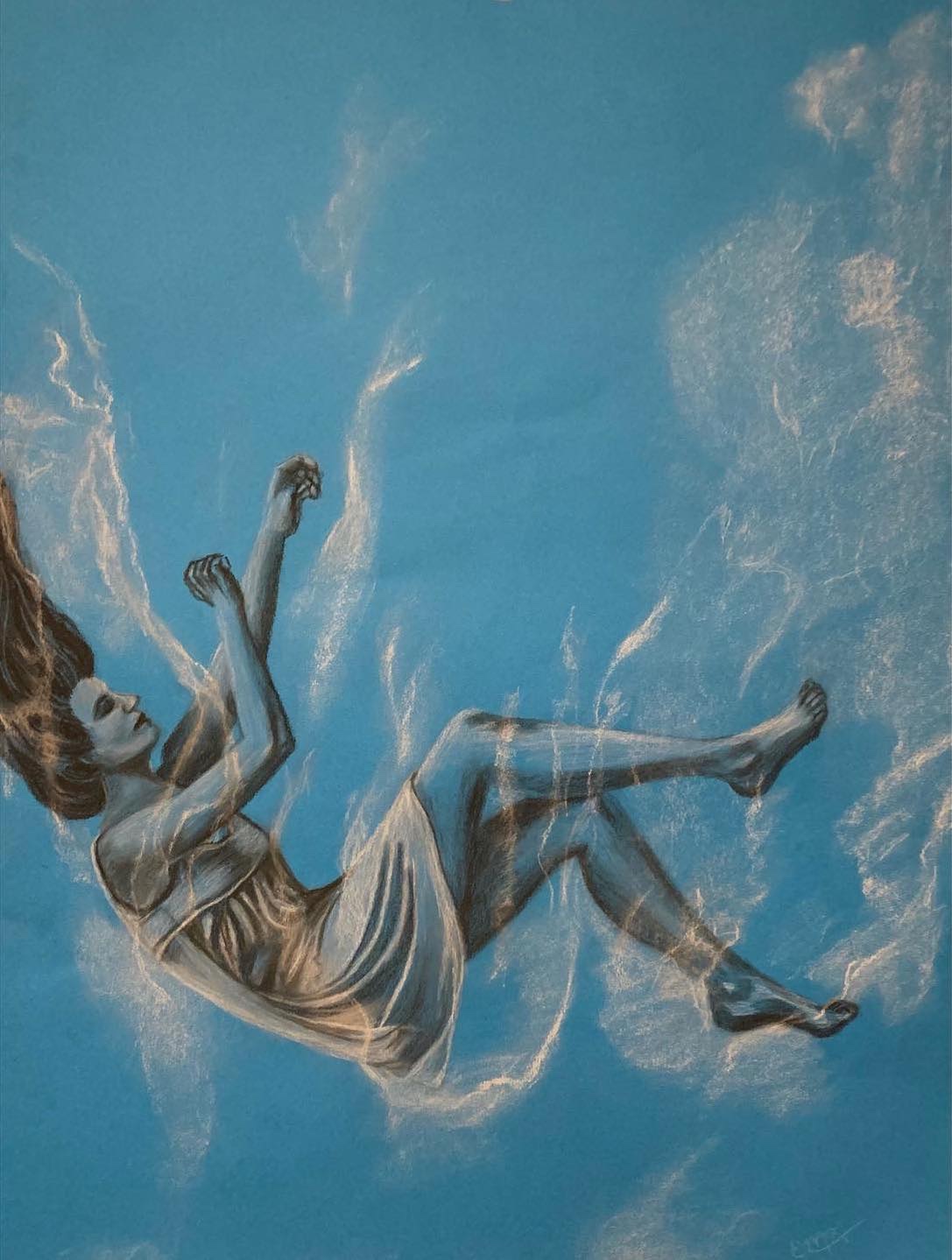
“Just a Dream” by student Emily McGuigan Focusing on the human figure has allowed me to understand and appreciate my own body throughout the years. The practice of seeing shapes, values and colors, instead of flaws, shows me that each body is its own art form. My work is a celebration of the human figure, which continues to be my biggest inspiration. By drawing on colored paper, I can bring life to a flat surface and static form. I focus heavily on the physicality of the body and the direction of the pose to translate the mental state of the figure. While creating “Just a Dream,” I debated on having the figure either drowning or floating—complete opposite emotions. I decided on the state of free falling. I often have stressful dreams that make me feel like I am in limbo between reality and the dream when I wake up. The simple composition of the piece and ambiguity of the negative space draws the question on why the female figure is falling and where she will end up, if anywhere.
-
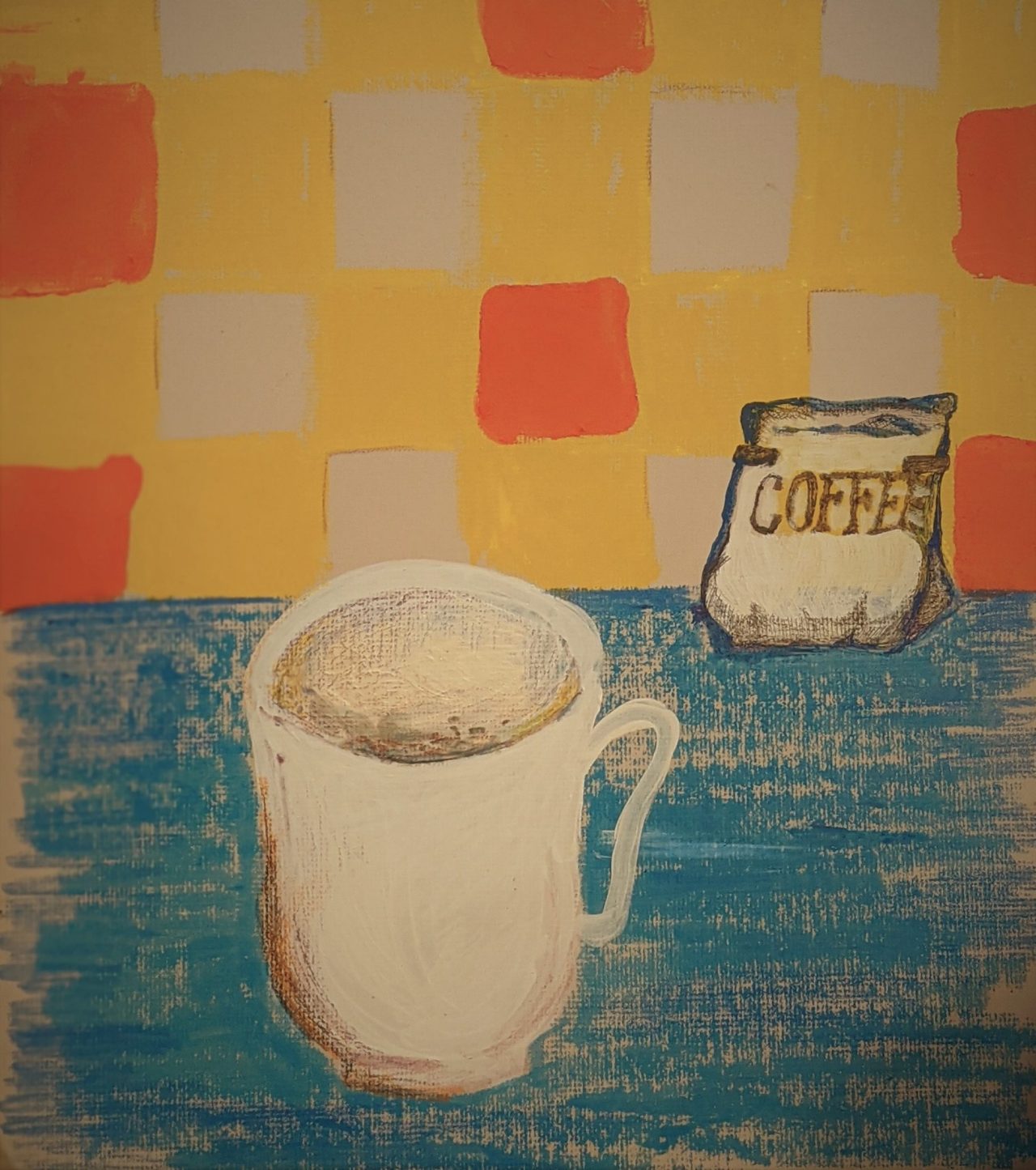
“The End” by faculty member Dr. Rachel Brandoff I made this piece in an art therapy class in 2020, when students were exploring the meaning of termination in therapy through metaphor. I considered the idea of endings through one of my favorite comforting rituals—a cup of coffee in the morning. Every cup comes to the end, and while there may be future cups of coffee, effective practice in therapy means acknowledging endings and finding ways to make them tolerable or even productive.
-
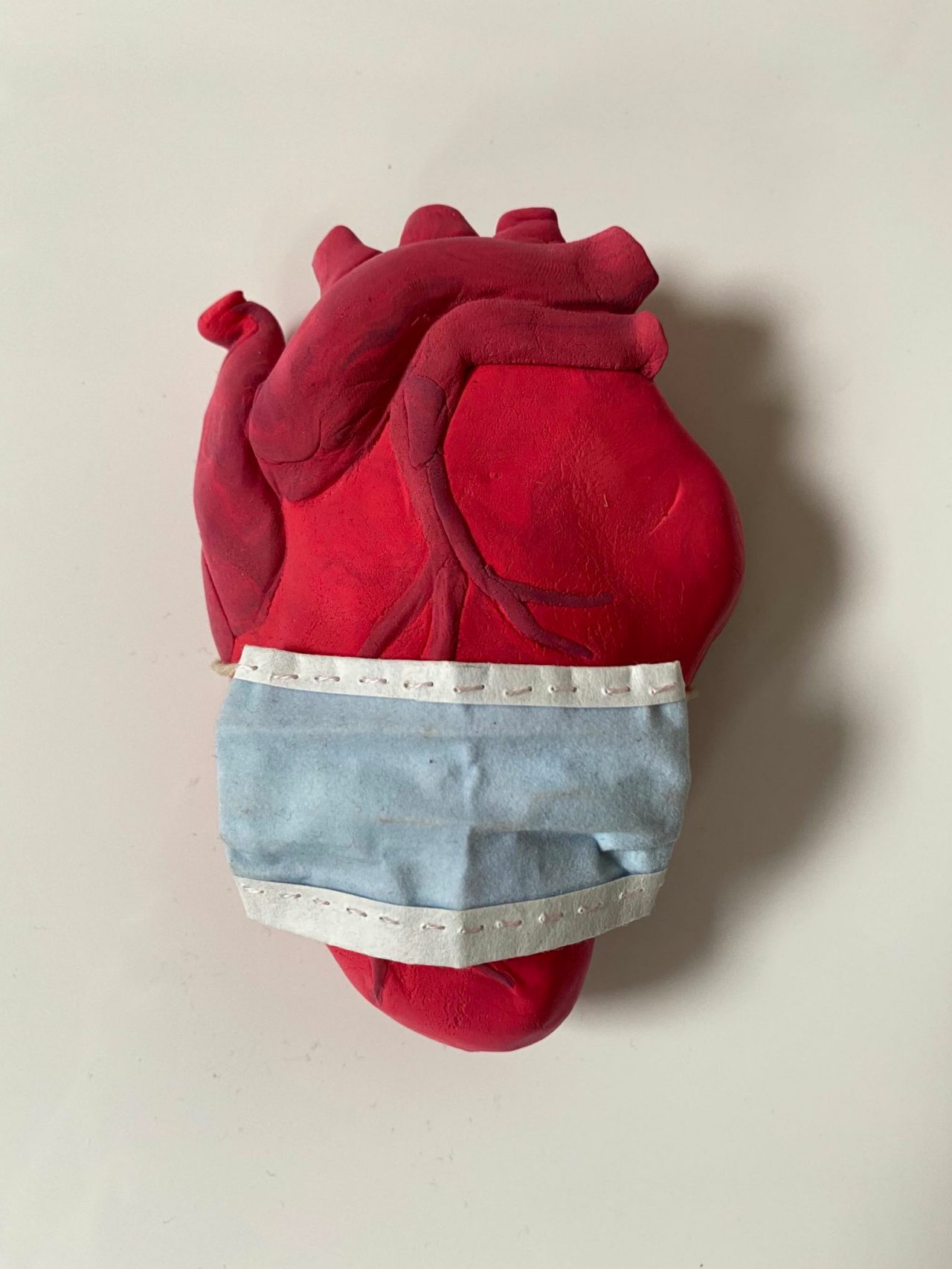
“Kinkeeper” by alumna Kristina Lohre Kinkeeper – n. Someone who is the glue of the family, the host, the historian, the thoughtful. I created this piece a few months into the COVID pandemic when nervous and creative energies were running high. Our caretakers, kinkeepers and first responders were on my mind. As a therapist and a parent of young children, I felt utterly depleted and making this piece was a hopeful meditation on how our keepers might protect themselves while continuing to pour themselves into others. This idea of healing oneself while helping others is at times paradoxical and impossible, and at other times, a perfect pairing.
-
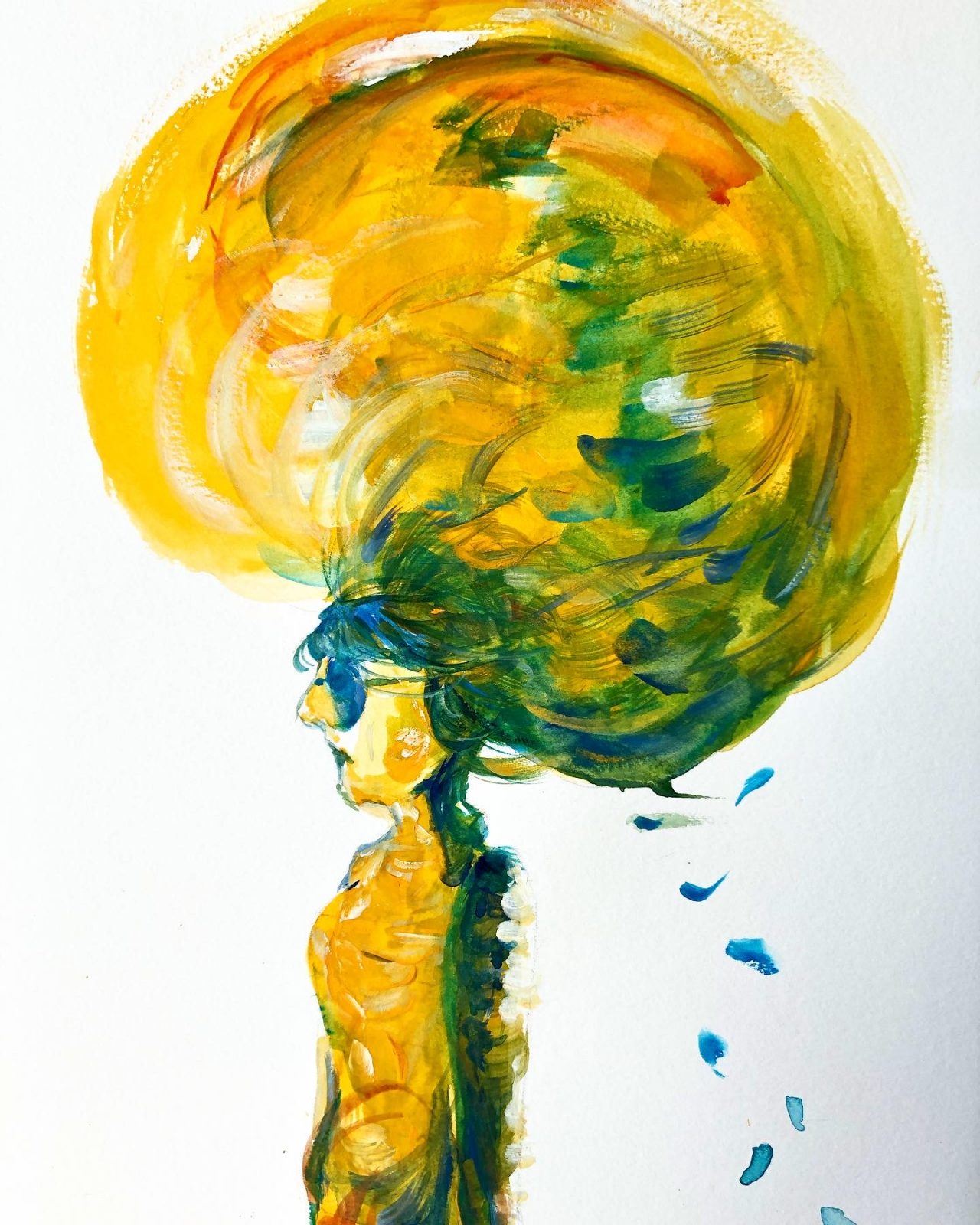
“Swollen Head” by alumna Isabelle Hsu The drawing is a depiction of burnout when I felt overwhelmed with feelings of inadequacy, loneliness and disconnection. The swollen head seeks to illustrate the experience of stress that can be manifested on a physical level.
-
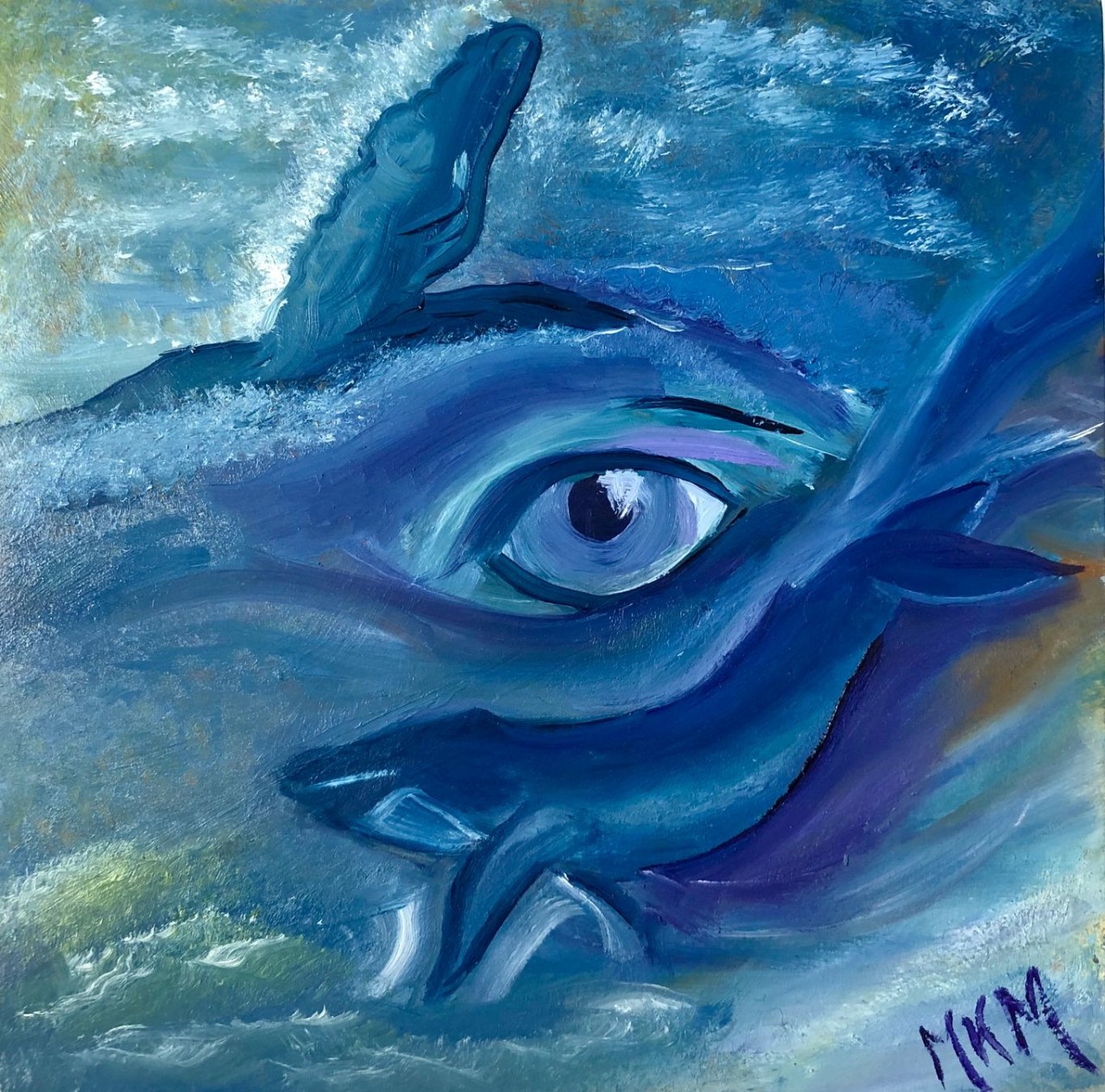
“Breath” by faculty member Marie Mauro This piece, created during the COVID-19 pandemic, reminds us to be mindful of our breath. As water is ecologically shared through weather patterns, so is the air that we breathe. Our collective consciousness and collective energies unite and differentiate, as I become we and we become me.
-
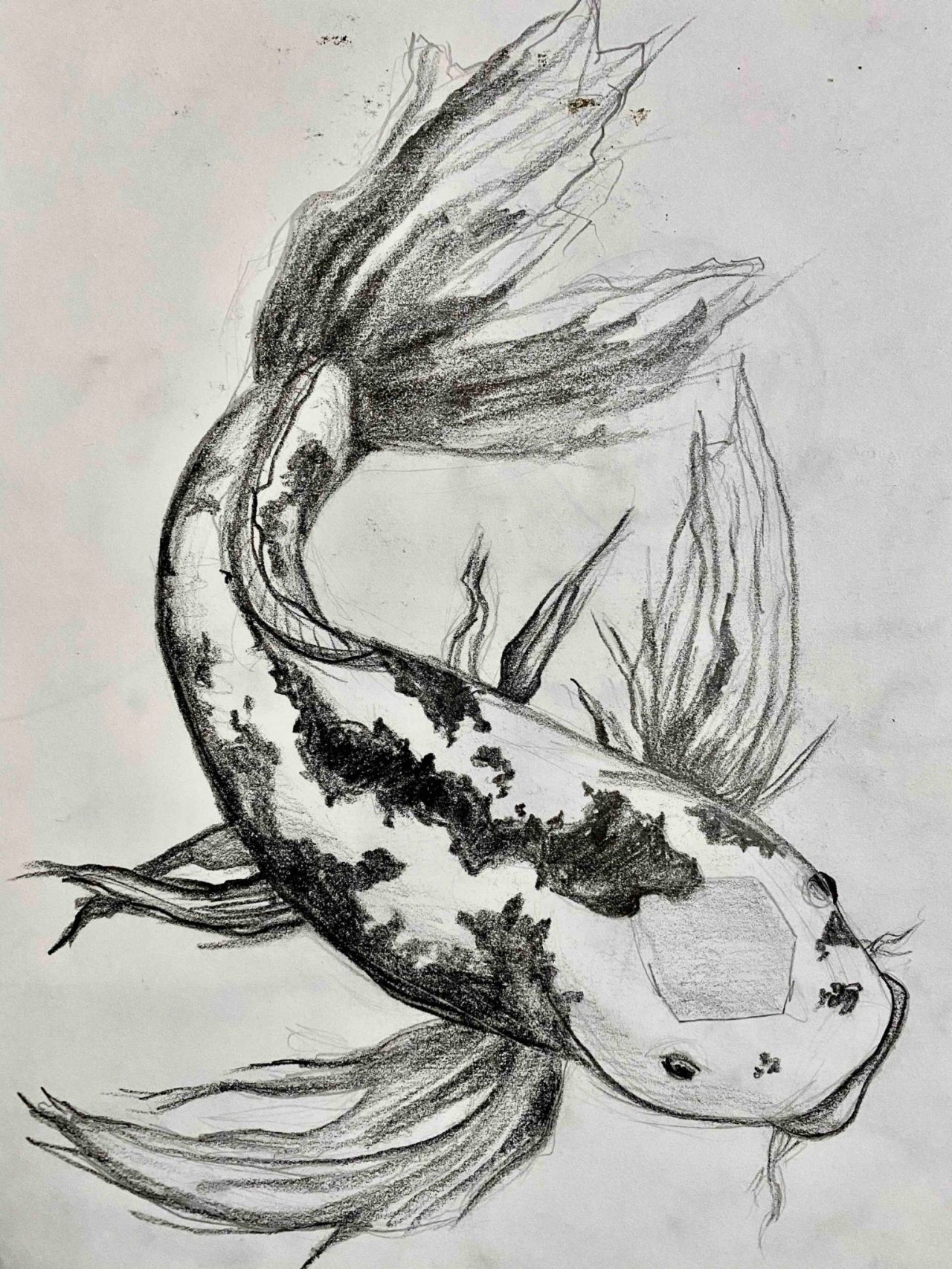
“Koi” by student Kelly Abramowitz Since the beginning of my journey as an art therapy student, I have been drawn to drawing koi as a way to gain peacefulness and calmness. This was the first koi I drew, right before joining the program. I turn to this imagery to help stay grounded when overwhelmed by school or clients.
Showing 3 items.