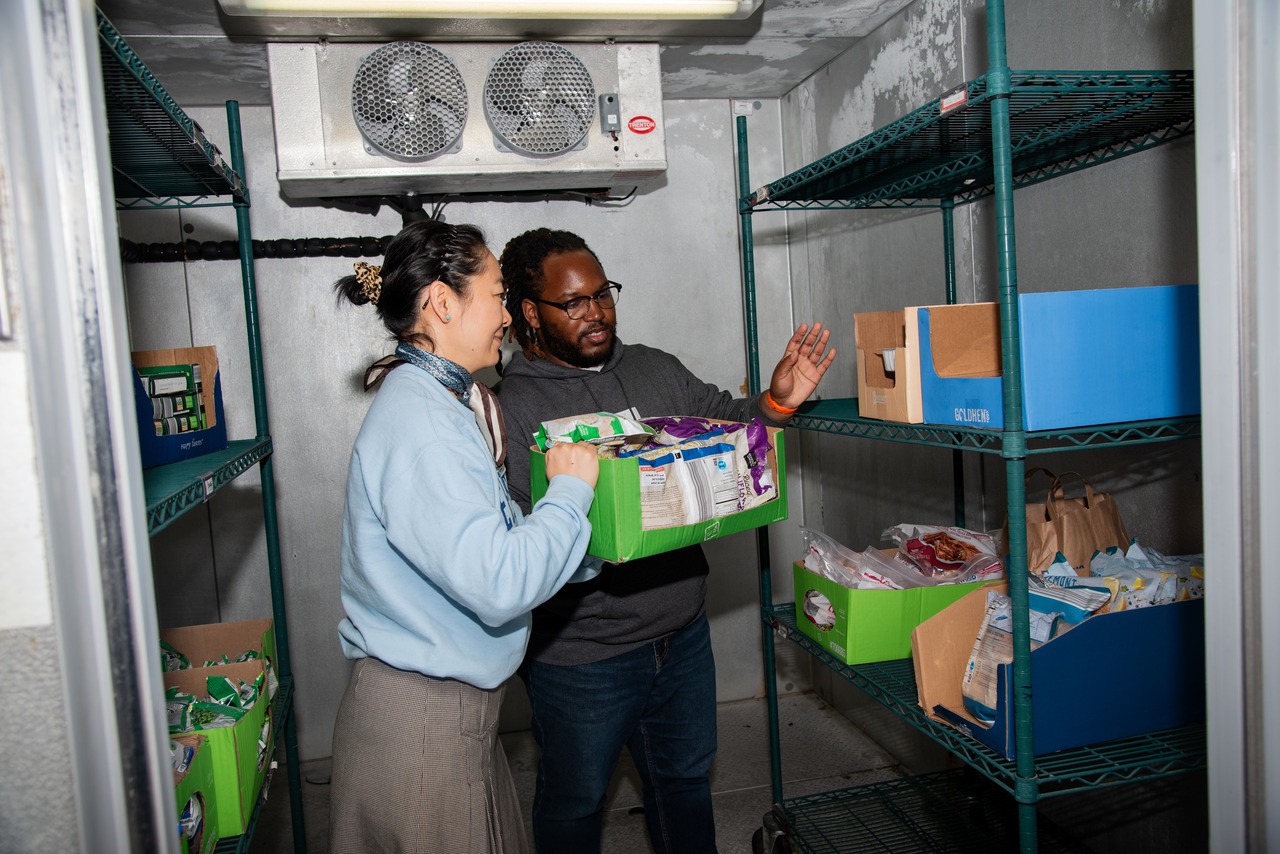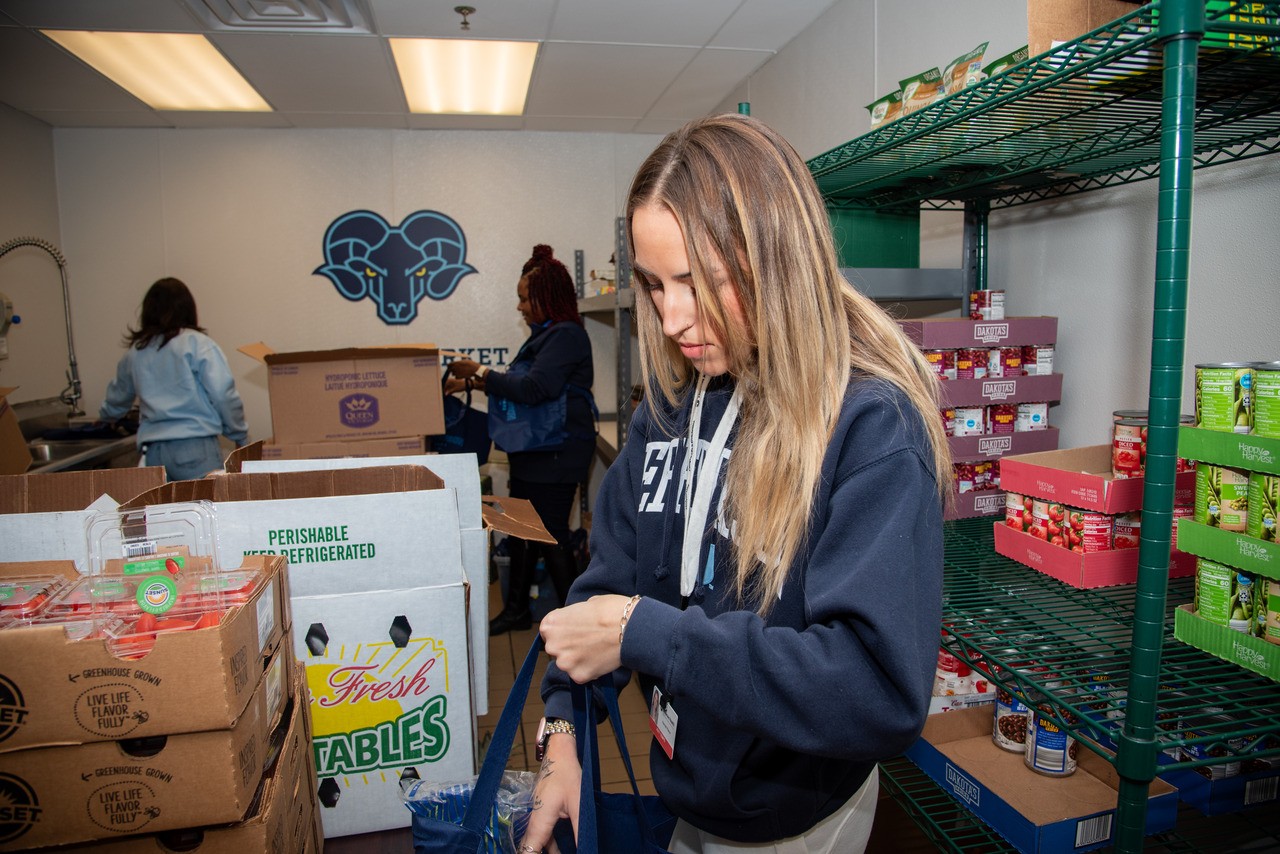


Nearly one in four college students experience food insecurity, according to the U.S. Government Accountability Office.
Students eating less than they should or skipping meals because they can’t afford enough food can have far-reaching consequences, says Dr. Je’Nai Righter, assistant provost for student affairs on Jefferson’s Center City and Dixon campuses.
“Over time, even the smallest amount of food insecurity creates a psychological and physiological detriment that impedes students’ progress and creates barriers for them to focus academically, socially and emotionally,” she says, “and it impacts their holistic well-being.”
The cost of living has increased dramatically since the pandemic, only compounding the issue.
“Because we’re here to improve lives, we want to make sure we’re improving the lives of our students by addressing food and basic need insecurity,” Dr. Righter says.