
Jefferson Fashion Merchandising and Visual Communication Design Students Team Up for Special Pop-Up Shop
The transdisciplinary project with Sidney Kimmel Medical College delivered anti-stigma, harm-reduction messaging through fashion and design.
For over a decade, the annual fashion merchandising and management pop-up shop has provided students with valuable real-world experiences in team building, brand development, marketing, display design and more.
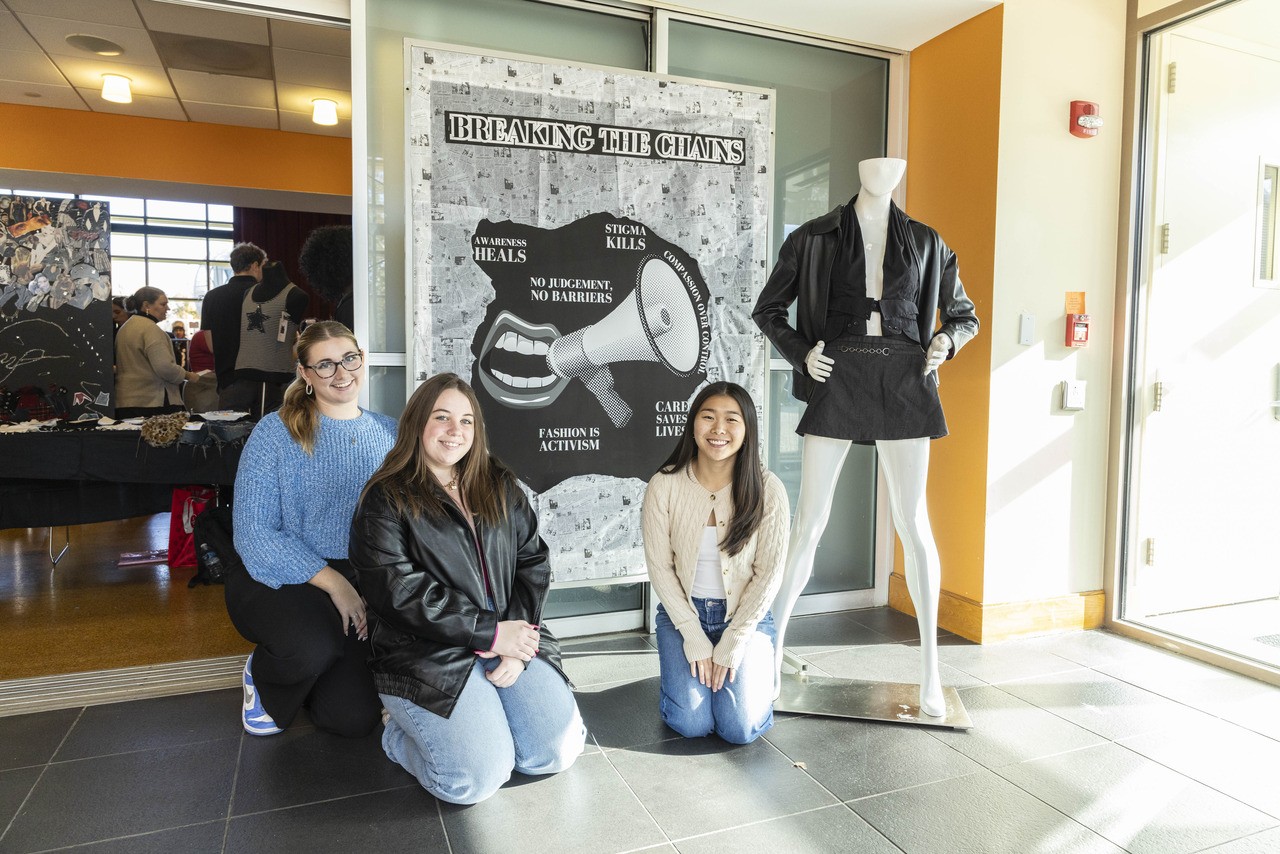
This year’s event, held on Nov. 18 in the Kanbar Performance Space, continued to offer Jefferson students these prime-time skills—with a new wrinkle. The fashion program partnered with visual communication design (VCD) students and Sidney Kimmel Medical College faculty member Dr. Gregory Jaffe to deliver anti-stigma, harm-reduction messaging linked to the opioid overdose epidemic.
“Our fashion students translated research and empathy into design and storytelling in real time, just as they would in industry,” says Dr. Juliana Guglielmi-DeRosa, fashion merchandising and management assistant professor. “I’m proud to support students who create meaningful products, imagery and marketing that challenge misrepresentation and celebrate acceptance of all voices.”
The pop-up shop’s theme, “Breaking the Chains,” has its roots in a recent transdisciplinary Jefferson project involving medical, health communication design, and user experience and interaction design students. Here, they developed stickers with Gen Z slang and meme-friendly graphics as a low-tech way to highlight Narcan and other related topics on the effectiveness of opioid use disorder treatment. (Read more on CBS News Philadelphia.)
VCD Associate Professor Renee Walker played an active role in the sticker project and subsequent pop-up shop. The latter received a grant from Jefferson’s Institute for Smart and Healthy Cities to support the creation of student-designed harm-reduction kits, as well as digital and physical interactive games and activities.
“Harm reduction is really about caring,” Walker says. “This collaboration with fashion and harm-reduction education offers a powerful way to see how design can drive social change. They’re learning to use visual storytelling, empathy and creative strategy to challenge stigma and make conversations about harm reduction more open and accessible.”
As part of the project, VCD students visited the Everywhere Project, a Philadelphia-based nonprofit. They made harm-reduction kits here and listened to organization founders discuss their work to reduce the stigma against people who use drugs.
“It was a great experience,” says Roman Reed, VCD student and Rams baseball player. “It was one of the major reasons we were able to hit this on the head.”
Dr. Jaffe congratulated all the students on the pop-up shop and their continued work to explore harm-reduction concepts. Along with Walker, he brought the sticker project to life last year.
“Building on this base allowed us to dive deeply into the relationships of people with lived experience,” says Dr. Jaffe, clinical assistant professor and co-director of JeffMD’s Population Health Research Scholarly Inquiry Track. “This caught fire, and the learners took ownership.”
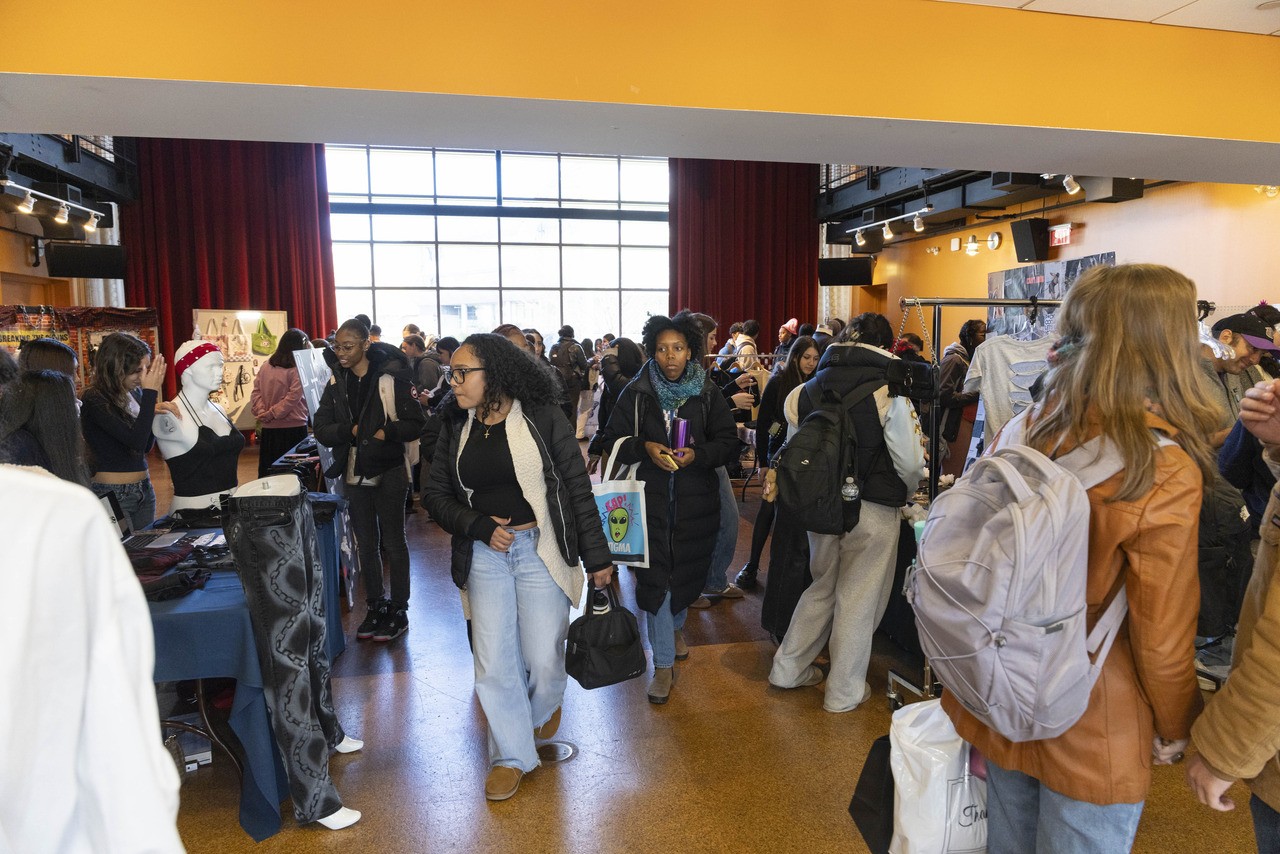
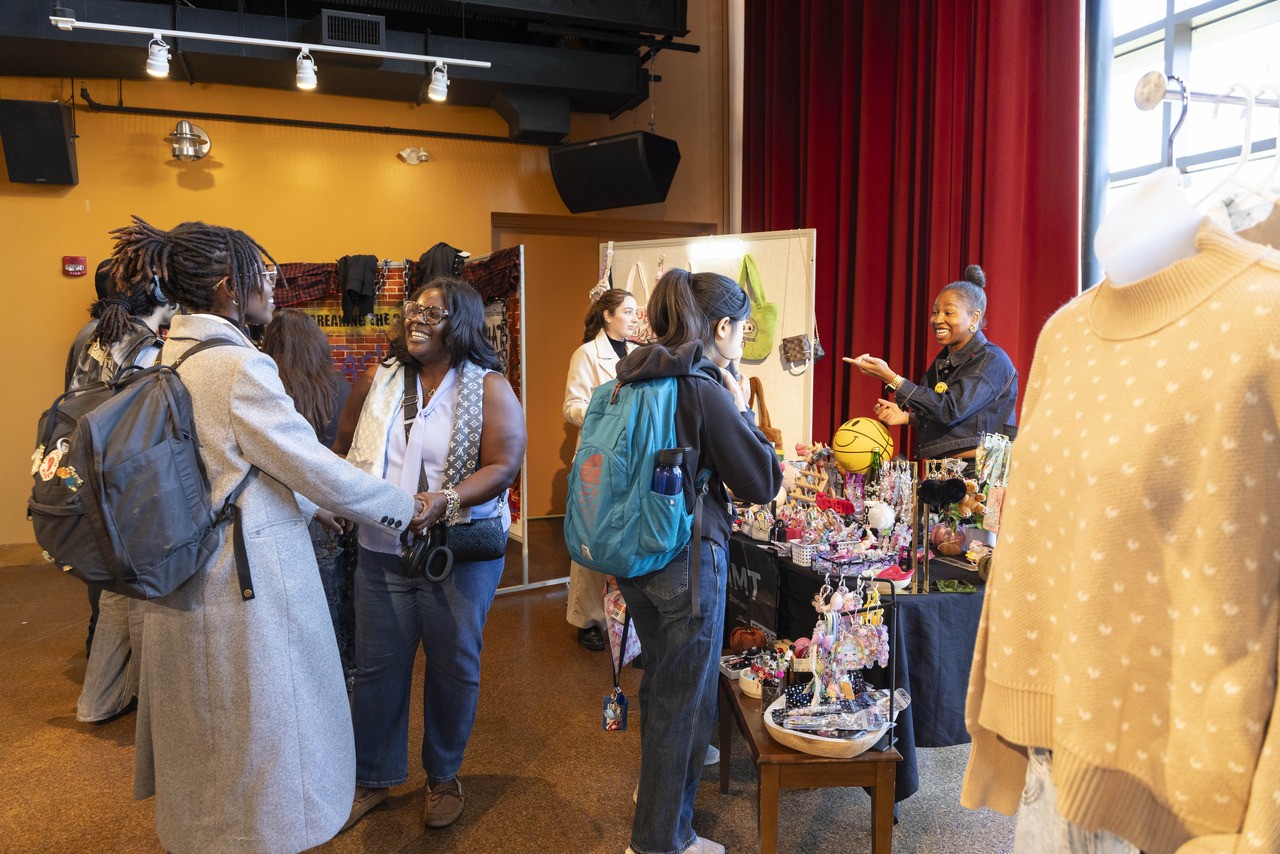
When the pop-up shop opened at 10 a.m., Jefferson colleagues and students poured in to explore the educational booth and browse merchandise, including shirts, purses, jackets, hoodies and ties, from seven student teams. An additional seven tables featured the work of student and alumni entrepreneurs. Net proceeds from student sales will support the Everywhere Project and attendance at the upcoming National Retail Federation Conference.
Fashion merchandising students in three courses worked closely together over the fall semester to develop the show and each table’s concept.
For example, students taking Retail Strategies and Structures ran the shops, developed the overall trend, theme and marketing, posted on social media and monitored sales for potential markdowns; Visual Merchandising students elevated the event by handcrafting eye-catching visuals for windows and in-store displays; and Global Fashion Insight students brought the broader harm-reduction framework to life through the design, development and construction of their products.
“By grounding their business plans in the theme, their designs thoughtfully and creatively addressed the fight against stigma, transforming complex social issues into wearable pieces that allow consumers to express their voices through fashion,” says Dr. Joohye Hwang, fashion merchandising and management assistant professor. “This collaborative project provided students with a hands-on, meaningful experience, offering insight into how such themes are explored and executed in the fashion industry.”
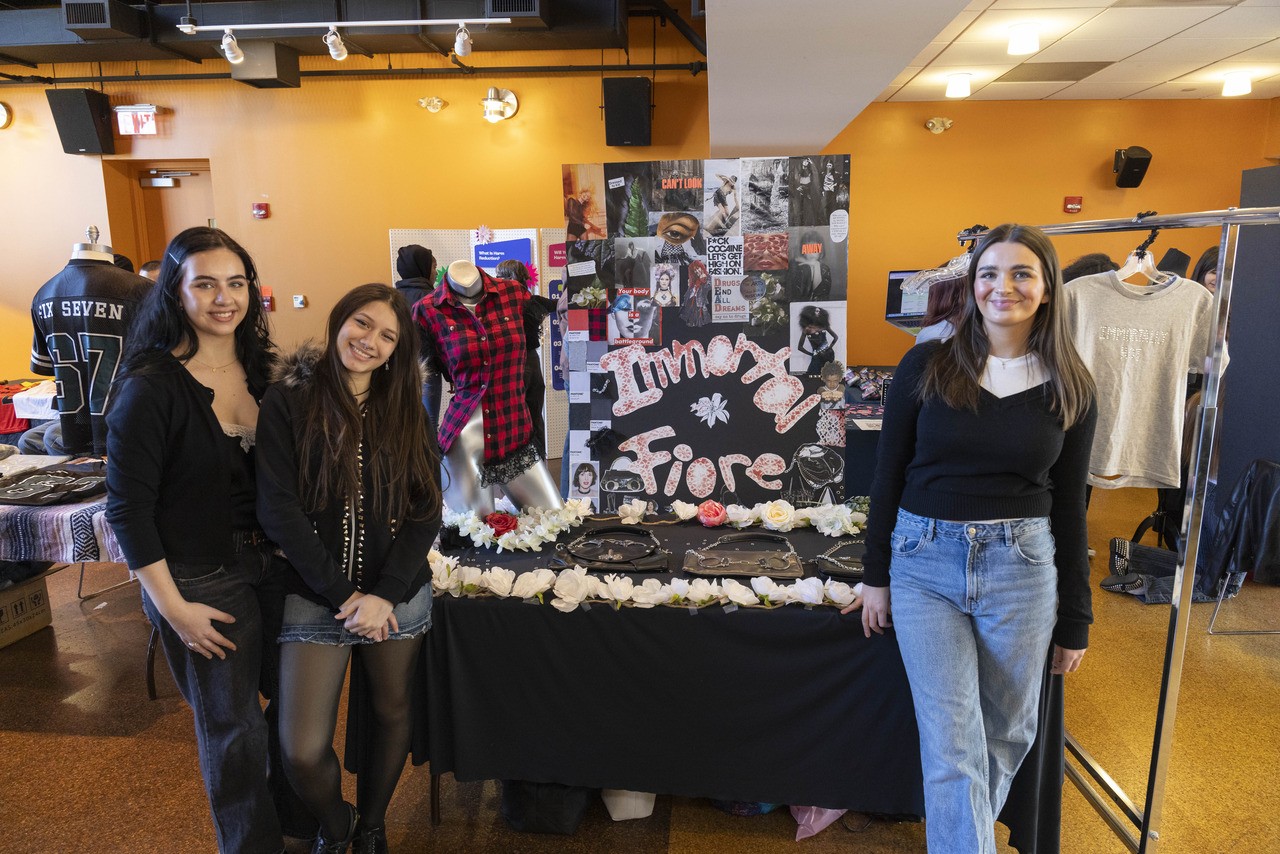
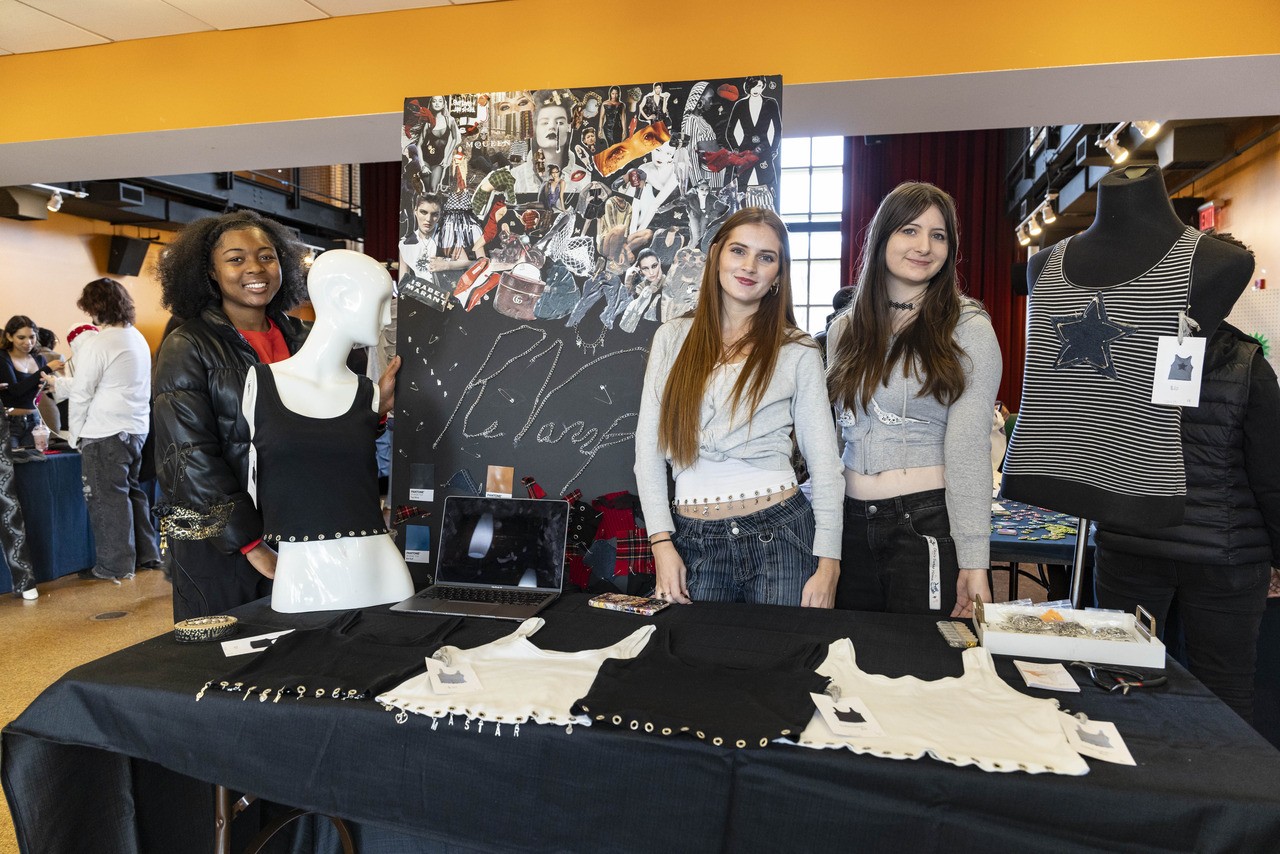
As part of the student team Immortal Fiore with Olivia Johnstone and Alexis Lorenz, Adriana Molina designed punk-inspired tops and bags, honing her chainmail and sewing talents.
“I’m very proud of what we accomplished together,” Molina says. “With these skills, I’m excited to take them forward in my career and any other projects I do.”
The Refaire Group leaned into an alternative-goth theme for its looks, aiming to appeal to people in the party culture, says fashion merchandising student Josephine Bickmore. Teammate Alanna Kaffenberger reminded customers that the theme “Breaking the Chains” doesn’t mean damaged. “You’re bringing something back to life,” she says.
November’s pop-up shop served as a prototype for potentially a larger experience beyond campus, Walker says.
“We’re trying to prove this is something that we can do in Philly—use visual communication design and fashion as entry points for harm-reduction education,” she says. “The next step is to bring this concept to other communities and neighborhoods. Right now, everything has been designed for this audience at Jefferson, targeting Gen Z and college students.”
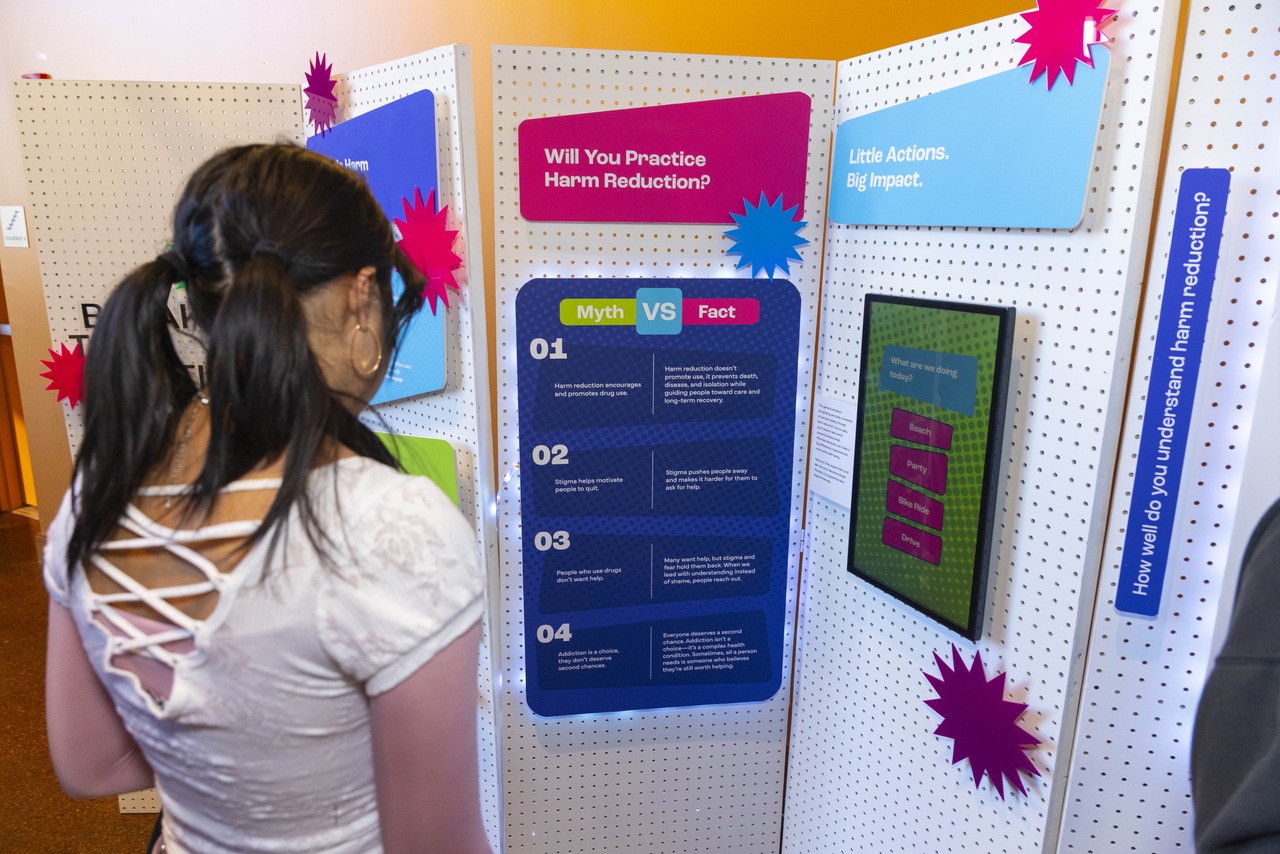
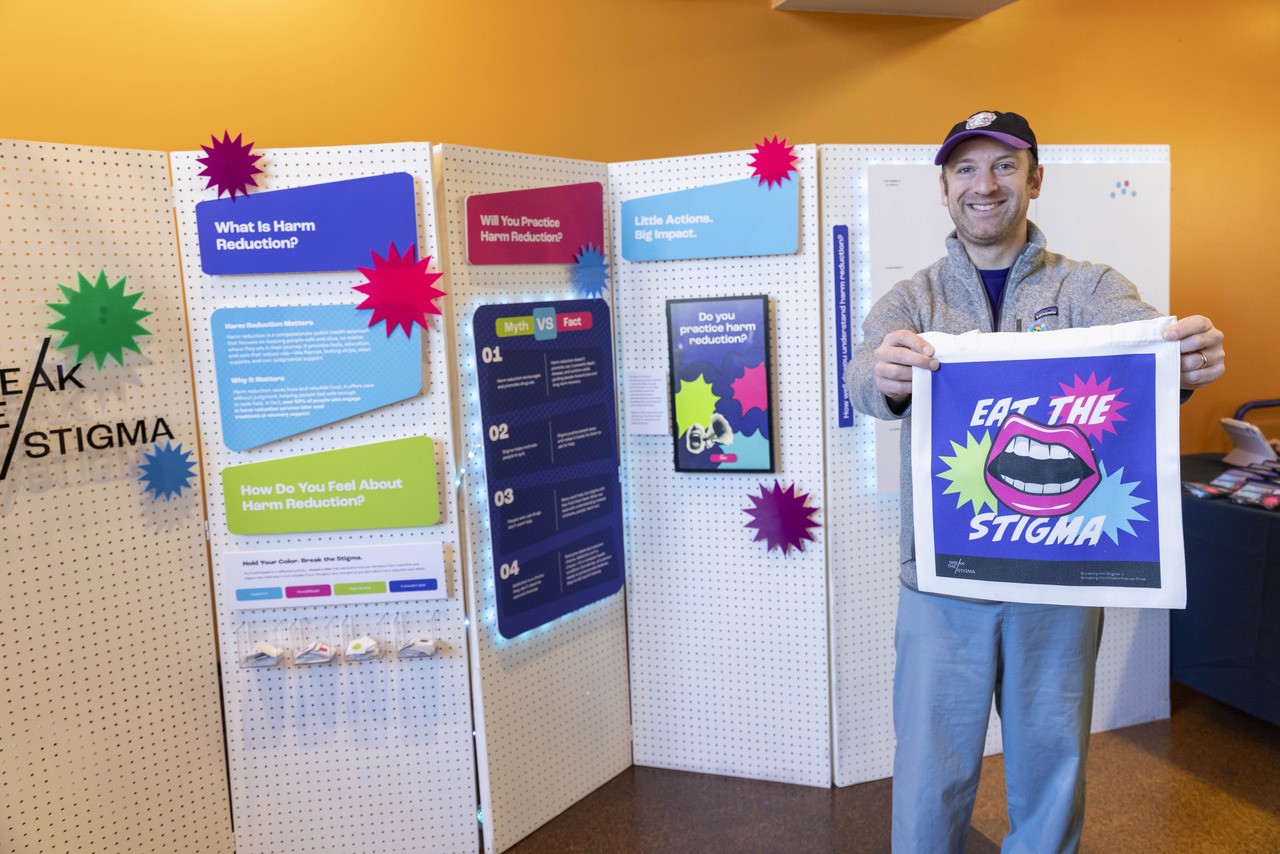
Through the Everywhere Project visit, VCD students learned that people often associate harm reduction with “scary, dark language,” Walker says. As an alternative, students used an approachable punk-pop style, mixing advocacy punk language with bright pop art.
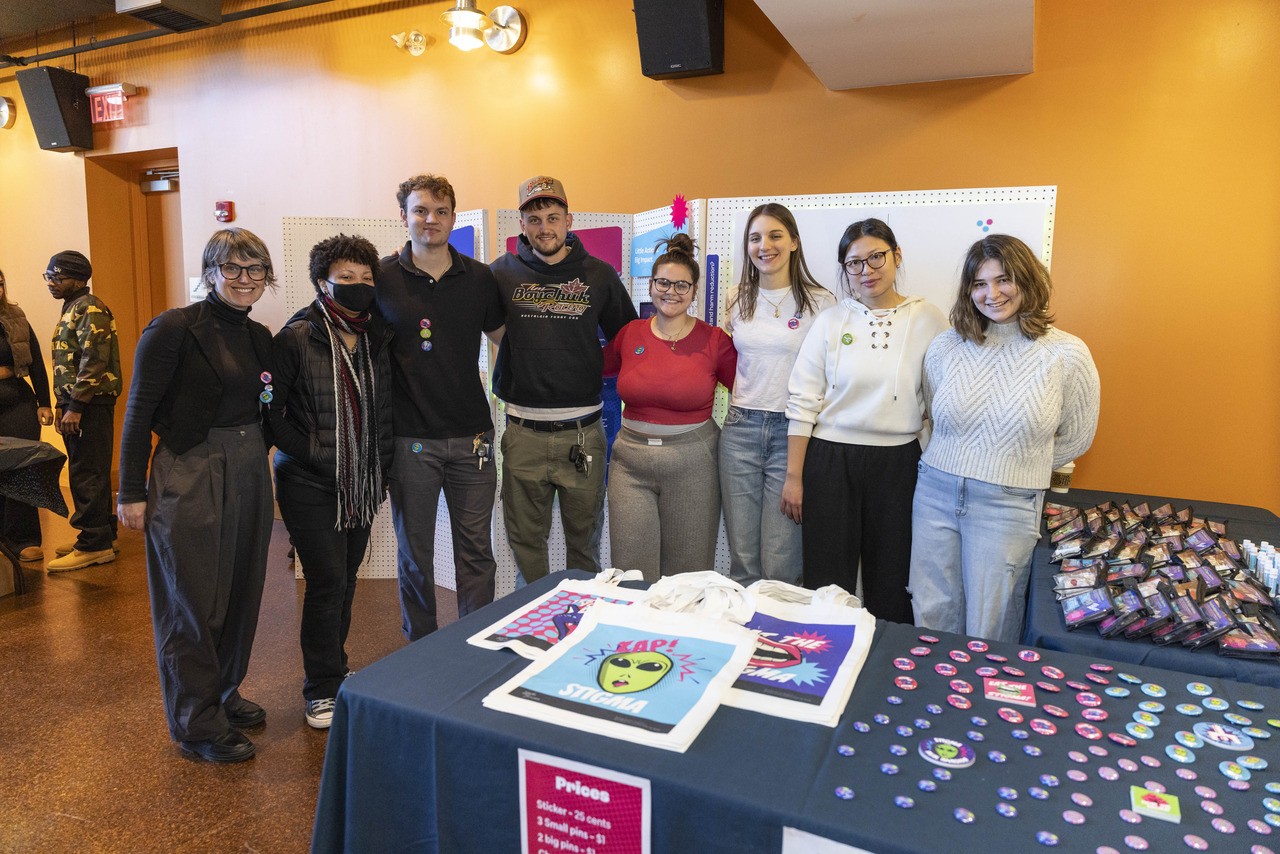
In the Kanbar Performance Space, VCD students distributed harm-reduction kits that included a branded lip balm, info card and sticker. Along with the kits, they created colorful, interactive signage on harm-reduction principles, as well as coded and designed a video game that demonstrates harm-reduction tactics in various scenarios, including a bike ride (wear a helmet) and beach trip (apply sunblock).
“Our goal is not necessarily to change people’s minds but to inform them with what we know, and that, in turn, will help grow into acceptance,” says VCD student Sam VandenHeuvel.
The project also expanded VCD student Anna Leonard’s knowledge of harm reduction and gave her a new perspective on the people impacted by drug use.
“They struggle,” she says. “They deserve the same humanity as everyone else.”