
Center for the Preservation of Modernism

Modernism: The Next Preservation Frontier

Expressive of a “form follows function” ethos and devoid of ornamentation, mid-century modern architecture is often undervalued as heritage worthy of preservation. While presenting unique challenges in terms of material conservation, structural stabilization and facade retrofitting, this style embodies distinctive social, cultural and technological significance.

The Center for the Preservation of Modernism builds upon Thomas Jefferson University’s legacy in preservation education. Jefferson is the steward of the Hassrick House (1958-61), an exemplar of mid-century modern architecture and a significant design by celebrated, mid-century modern architect, Richard Neutra. The house serves as the public face of the Center and a learning laboratory for students in the MS Historic Preservation program.

Early and mid-century modern architecture is the next preservation frontier as these buildings age. Housed within Jefferson’s College of Architecture & the Built Environment, The Center for the Preservation of Modernism and Jefferson are at the forefront in preserving our modern heritage, nationally and internationally.

Our Mission

  • Educate Serves as a meeting ground for the larger preservation community, offering tours, lectures and symposia that address pressing issues facing modern structures and sites
  • Advocate – Supports nominations to the local and national registers
  • Archive – In partnership with Docomomo Philadelphia, the Center is mapping modernist buildings in the Delaware Valley area
  • Document – MS in Historic Preservation students are documenting mid-center modern buildings while developing skills in new technologies including Lidar, photogrammetry, and GIS
  • Research  The Center sponsors competitive grants to support research and publications to advance and disseminate scholarship in history, theory, conservation of mid-century modern materials and systems; adaptive reuse, etc

In recent decades, our modern architectural heritage has faced increasing danger of demolition. The charge of the Center for the Preservation of Modernism is to initiate, support, and disseminate research that addresses the protection and conservation of early and mid-century modern buildings and sites.

Student Work

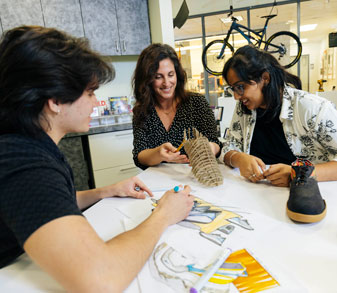
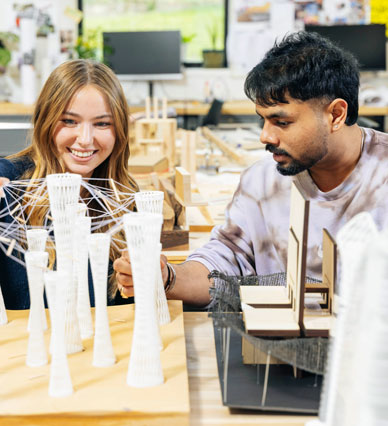
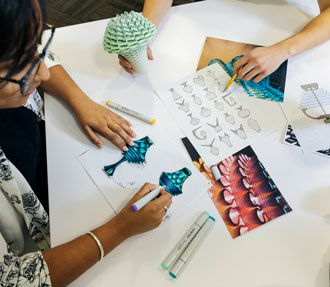
Students have the opportunity to learn the historic preservation process from beginning to end in real world environments.

Past Events

View recordings of our previous events by clicking the links below. 

DOCOMOMO SYMPOSIUM Jefferson Kicks off Docomomo U.S. National Symposium

On May 31, the University’s Center for the Preservation of Modernism hosted Yo! Richard Neutra! A Modern House Conservation Panel and Workshop, which served as the kick-off event for the 2022 Docomomo US National Symposium, the organization’s annual conference that focuses on the preservation of modern buildings and sites, held this year in Philadelphia.

Historic Preservation Program Director & Professor Publish Book on Hassrick House

The College of Architecture & the Built Environment is pleased to announce the publication of Emergence of a Modern Dwelling: Richard Neutra’s Hassrick House, sponsored by Thomas Jefferson University’s Center for the Preservation of Modernism.

The book meets the Center’s mission, which is to support the protection and stewardship of buildings and sites of the modern movement through research, outreach and advocacy. Preview images from the Hassrick House book below. 

    Emergence of a Modern Dwelling: Richard Neutra’s Hassrick House, Suzanne Singletary and Suzanna Barucco, authors and editors, Oro Editions, 2022.

    In-depth analysis of the Hassrick House, designed by celebrated architect and icon of mid-century modernism with emphasis on his collaboration with his clients, and the unsung role of his collaborator, architect Thaddeus Longstreth.

    Renzo Piano: Space - Detail - Light, Edgar Stach, Birkhäuser, 2022.

    The Pritzker laureate Renzo Piano is recognized worldwide as one of the most renowned architects of our time. Central elements of his aesthetics include the playful use of natural light, the transparency of his buildings and their fine detailing.

    Building Brands: Corporations and Modern Architecture, Grace Ong Yan, Lund Humphries, 2020 UK; 2021 US.  Examines the role of architectural branding in the design of corporate modernism and tells how business strategies, modern architecture, urban conditions, and conceptions of society shaped the ambitious branding goals of corporate clients.

    “Plexiglas for Sale: Engaging the Open Work,” Grace Ong Yan in INTERIORS Design/Architecture/

    Culture, Volume 12, 2002, Issue 2-3 Openness, May 2, 2023. Taylor and Francis, DOI: 10.1080/20419112.2022.2157148.

    Explores the transparent wonder material known as plexiglass, analyzing not only its transformations from the everyday and generic to the more elevated forms of art and design, but how innovative design and artistic experimentation with plexiglass engages design, transparency, and human engagement.

    “From Interior Supergraphics to Participation in the Public Sphere,” Grace Ong Yan in Public Interiority: Exploring Interiors in the Public Realm, edited by Liz Teston, Routledge, 2024.

    Fragmenting and juxtaposing large scale urban billboards and signage into interior spaces were specific tactics of the late 1960s and early 1970s Supergraphics moment. The designs aimed to empower inhabitants to act on urgent societal issues: and offer a unique study of image, communication, and theories of modernity and Postmodernism as well as suggest the transformative potential of human participation in public space.

    Louis Kahn. Space – Material – Landscape, Edgar Stach: forthcoming Birkhäuser 2026 ( En)

    This book examines the architectural philosophy of Louis I. Kahn through the integrated lenses of light, space, material, structure, and landscape. Tracing the evolution of Kahn’s thinking across his major works, from the Yale University Art Gallery and the Salk Institute to the National Assembly in Dhaka, the essay reveals how Kahn sought to create architecture that transcends function and engages the deeper dimensions of human experience. His concepts of material honesty, spatial hierarchy, the “unmeasurable,” and light as a generative force are analyzed in relation to both built projects and pedagogical practices. By synthesizing these themes, the book positions Kahn’s work as a profound and enduring inquiry into architecture’s capacity to shape meaning, evoke contemplation, and elevate the presence of the individual within the built environment.

    Neutra in Pennsylvania, Suzanne Singletary and Suzanna Barucco: Follow-up to Emergence of a Modern Dwelling: Richard Neutra’s Hassrick House.  

    Neutra has 7 built residences in PA in addition to the Hassrick House—he also has 5 unbuilt, proposed houses, plus one built apartment complex and one proposed, in addition to the ill-fated Cyclorama, demolished 2009. Research is responding to questions about Neutra’s work in the region and expands upon the role of architect Thaddeus Longstreth in these designs. Exhibition/book.

    School Lane Hills: A Modern Bottom-Up Community in Postwar Philadelphia, David Breiner (book proposal submitted to Routledge, Nov 2025).

    Adopting a bottom-up developmental framework, School Lane Hills presents a compelling challenge to prevailing scholarly narratives surrounding post-World War II suburbanization in the United States.  These dominant accounts have largely emphasized top-down paradigms—characterized by expansive tracts of homogenous, developer-constructed housing or by meticulously planned communities rooted in the austere aesthetics of International Style architecture.  Initiated in Philadelphia through a partnership that included sculptor Dr. Alma Morani and architect Norman Rice, the School Lane Hills project diverged from these models by offering individual lots to private buyers, who in turn commissioned a diverse array of architects to design bespoke residences.  This grassroots, market-driven approach—shaped by the decisions of multiple stakeholders—fostered collaborative processes that departed from both the architectural uniformity typical of speculative tract housing and the ideological ambitions of utopian suburban planning.

     After Purism: Le Corbusier’s Architectural Polychromy between 1931 and 1965. Barbara Klinkhammer (book proposal under consideration with Birkhäuser)

    Architecture in the Raw: the Past, Present, and Future of Brutalism, symposium in collaboration with DocomomoPHL, scheduled for February 27, 2026, focuses on exploring Brutalism, the often-controversial architectural style known for its raw materials and monumental forms — from its historical origins and cultural impacts to how it’s viewed and reinterpreted today and going forward.

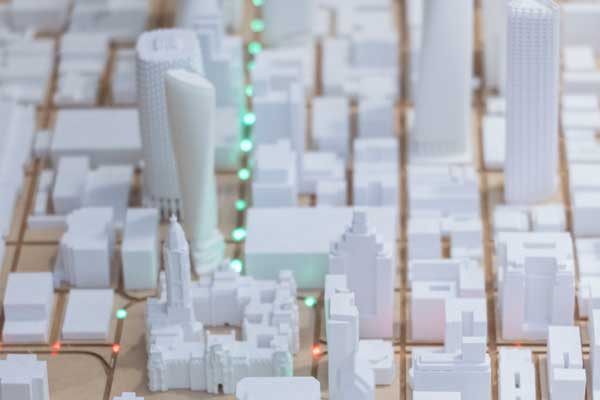
    Modernism Map, Philadelphia Metropolitan Area is a collaboration with DocomomoPHL on an interactive map that would allow scholars and students of modern architecture to search for information by name of the site, architect, and location. using the ARC-GIS Experience Builder software; the map will live on both websites.

    Archive—Center for the Preservation of Modernism: Hassrick House.    This collection contains research compiled by faculty and Historic Preservation students and consists primarily of first-hand research sources, including newspaper articles, letters, and an important collection of oral histories, compiled about the Hassrick House, but also includes several Conservation Management Plans for other mid-century modern buildings completed by students in the Restoration and Rehabilitation of Modernism course, taught by Suzanne Singletary and Suzanna Barucco. There is a physical collection stored in Gutman Library Archives and Special Collections and a digital collection of student and faculty research that will be available via the  Jefferson Digital Commons, open access database. The archive is expanded on a regular basis. 

    Nomination of Modern Buildings to Philadelphia Register of Historic Places.  Part of the Center’s advocacy efforts is  support of nominations to the local register in consultation with frequent collaborator, the Preservation Alliance for Greater Philadelphia.  Properties considered for listing are those that hold value within the local community due to their ability to convey information about its local history, identity, or social and cultural heritage.  Through this collaboration students gain experience writing nominations.

    “Emergence of a Modern Dwelling,” Suzanne Singletary and Suzanna Barucco, DesignPhiladelphia,  accompanied by a tour of Hassrick House, October 2022.

    “Emergence of a Modern Dwelling,” Suzanne Singletary and Suzanna Barucco,  Preservation Alliance Spring Speaker Series, accompanied by tour of the Hassrick House, March 2023.   

    Jefferson Kicks off Docomomo U.S. National Symposium

    The University’s Center for the Preservation of Modernism hosted Yo! Richard Neutra! A Modern House Conservation Panel and Workshop, which served as the kick-off event for the 2022 Docomomo US National Symposium, the organization’s annual conference that focuses on the preservation of modern buildings and sites, held in Philadelphia.

    2025: “DISTRIBUTED MONUMENTS,” presentation by Jorge Otero-Pailos, Director and Professor, Historic Preservation, Columbia University GSAPP.

    2022 — 2025: Preservation Alliance for Greater Philadelphia Annual Preservation Achievement Awards

    2022 — 2025: Young Friends of the Preservation Alliance for Greater Philadelphia

    2023: Panel Discussion, Chinatown’s Community Activism: Past, Present, Future, CABE Lecture Series

    2022 — 2023: Preservation Alliance Spring Speaker’s Series.

    2025 Sponsorship by VOITH & MACTAVISH ARCHITECTS LLP, Architecture, Preservation, Planning, & Interiors, for Architecture in the Raw: the Past, Present, and Future of Brutalism, symposium in collaboration with DocomomoPHL, scheduled for February 27, 2026.

    2023 — 2024: Grace Ong Yon, Emerging Fellow, AACSRE Academic Advisory Council for Signage Research & Education to study protest signs and urban space.