
Thomas Jefferson University Home Thomas Jefferson University Home
Thomas Jefferson University Home
  • Apply
  • Visit
  • Give
  • Thomas Jefferson University Home
  • Academics
    Back

    Academics

    • Academics Home
    • Program Finder
    • Areas of Interest
    • Registrar's Office
    • Online Programs
    • Continuing & Professional Studies
    • Study Away
    • Academic Calendars

    Colleges, Schools & Institutes

    • Sidney Kimmel Medical College
    • College of Architecture & The Built Environment
    • Kanbar College of Design, Engineering & Commerce
      • School of Business
      • School of Design & Engineering
    • College of Health Professions
    • College of Humanities & Sciences
    • College of Life Sciences
    • College of Nursing
    • College of Pharmacy
    • College of Population Health
    • College of Rehabilitation Sciences
    • Institute of Emerging Health Professions
    Find Your Program

    Prepare yourself for what’s yet to come.

  • Admissions
    Back

    Admissions

    • Admissions Home
    • Undergraduate Admissions
    • Graduate Admissions
    • Continuing & Professional Studies Admissions
    • Sidney Kimmel Medical College Admissions

    Admissions Quick Links

    • Request Information
    • Schedule a Visit
    • Take a Virtual Tour
    • Apply for Admission
    • Financing Your Education
    • Contact Admissions
    Apply

    Start your Jefferson journey today.

  • Tuition & Financial Aid
    Back

    Tuition & Financial Aid

    • Tuition & Financial Aid Home
    • Tuition, Fees and Room & Board (2026-27)

    Tuition & Financial Aid Quick Links

    • Financial Aid Office
    • Student Accounts Office
    Contact Us

    Expert Center City and East Falls staffs are here to help.

  • Life at Jefferson
    Back

    Life at Jefferson

    • Life at Jefferson Home
    • Center City Residential Life
    • East Falls Residential Life
    • Virtual Tours

    Life at Jefferson Quick Links

    • Explore Philadelphia
    • University Catalog & Handbooks
    • Commencement
    • Consumer Information & Disclosures
    Plan Your Visit

    Each of our locations offers a unique learning environment.

  • Research
    Back

    Research

    • Research Home
    • Labs & Service Centers
    • Research Resources
    • 2025 Research Magazine

    Research Quick Links

    • Applied Research
    • Basic Research
    • Clinical Research
  • Athletics
    Back

    Athletics

    • Athletics Home
    • Visit jeffersonrams.com
    • Athletic Facilities
    • Shop Official Store

    Athletics Quick Links

    • Health & Wellness at Jefferson
    • Jefferson Recreation & Fitness Center
  • News
    Back

    News

    • News Home

    News Quick Links

    • Design & Style
    • Science & Technology
    • Business
    • Health
    • Life at Jefferson
    • Podcasts
  • Apply
  • Visit
  • Give
  • Apply
  • Visit
  • Give

Current Students & Faculty

  • Center City Campus
    • Banner
    • Campus Store
    • Canvas
    • Commuter Services
    • Campus Life & Current Students
    • Faculty & Staff
    • JeffMail
    • Library
    • Office 365
    • Student Portal
  • East Falls Campus
    • Banner
    • Campus Store
    • Canvas
    • Faculty & Staff
    • Giving
    • JeffMail
    • Library
    • Starfish
    • Student Life & Resources
    • Student Portal
  • YouTube
  • Instagram
  • Facebook
  • Twitter
  • LinkedIn
  1. Return to Home
    • Thomas Jefferson University News
  2. Thomas Jefferson University News
  3. 2024
  4. 07

Racism in China

Jul 12, 2024
By Moriah Cunningham

Exploring racism that the Black community in China experiences and how Western racial ideology impacts a non-Western part of the globe.

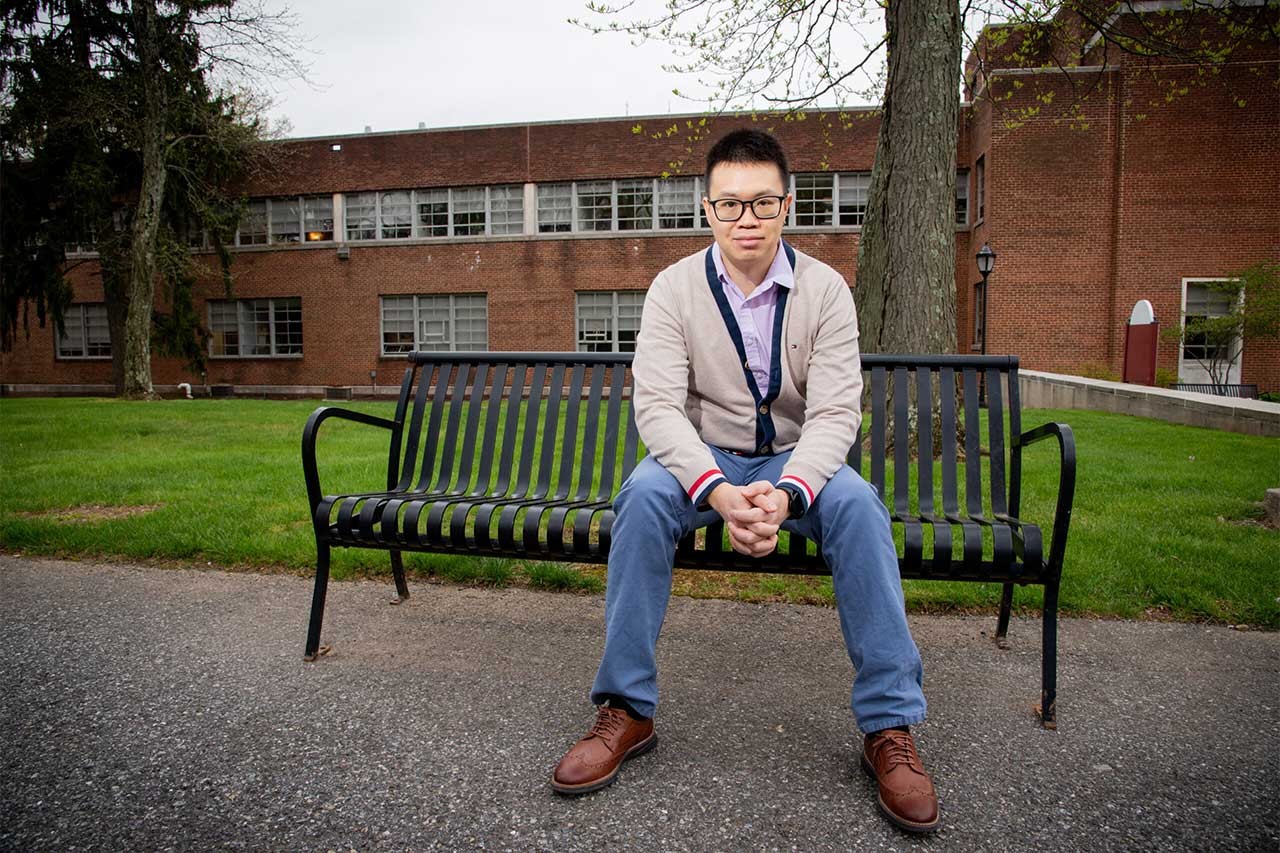
Dr. Guangzhi Huang, Assistant Professor and Director of Interdisciplinary Studies. Photo Credit: ©Thomas Jefferson University Photography Services.

Injustice anywhere is a threat to justice everywhere.

Martin Luther King Jr.

In the late 1990s, thousands of African traders traveled to Guangzhou, China to provide financial stability for their families; but with that came the brutal cost of racism that still persists today. There are reports of discrimination, policing and gentrification within the Guangzhou community. Africans in Guangzhou often feel neglected by the government, one report stating that the government rules change often, almost always to the disadvantage of African residents.

Intrigued by foreign studies and interactions between people, humanities researcher Guangzhi Huang, PhD, studies the roots and development of racism in China. He seeks to better understand how it intersects with urbanization, and how Western ideas of whiteness and blackness operate in a non-western context. Learn how Dr. Huang uses his research to undercut the negative stereotypes against Africans in China.

Q: Can you describe the topic of your research?

A: Perhaps many people are not aware that there’s a Black community in Guangzhou, China. There are people from every country in sub-Saharan Africa living in China. They’re mostly sojourning traders who export manufactured goods from China back to Africa. However, their experience in China has not been all positive. Black people experienced racial profiling, stop-and-frisk, VISA raids and targeted evictions, something their white counterparts do not usually share. I want to understand the anti-Black racism unique to China. I have found that their treatment has a lot to do with the local government’s efforts to modernize the city’s urban landscape.

Q: Can you elaborate on how anti-Black racism is linked to urbanization?

A: China’s urban planning and design are heavily influenced by the West. Lots of new urban spaces cater to what Chinese imagine to be white Western culture such as cafes, boutique stores and Western hotel chains.

The Black community I studied lived right next to the city’s first Central Business District.  Because of the high concentration of businesses in the district, the city was able to market expensive real estate. The government saw a lower-class, Black community nearby incompatible with their efforts to “modernize” – often times synonymous with “Westernize”— the city’s landscape. As a result, all the anti-Black racism practiced by law enforcement can be interpreted as attempts to disband the community so as to gentrify it.

Q: What are you currently researching regarding racism in China?

A: The one question I’m currently asking is: What is the relation between race, particularly whiteness and blackness, and urban development in contemporary China? My research sheds light on how racial ideas such as whiteness and blackness can impact a non-Western society like China, a seemingly race-neutral area. Answering this question helps deepen our understanding of the legacy of colonialism and of the power of racial ideologies. Racial ideas are global and have traveled with colonial powers in the 19th century. Through this research, I try to contribute to a relatively new area of study: understanding white privileges and anti-Black racism in China. We want to understand how these notions are exercised, rationalized and imagined in this non-Western context.
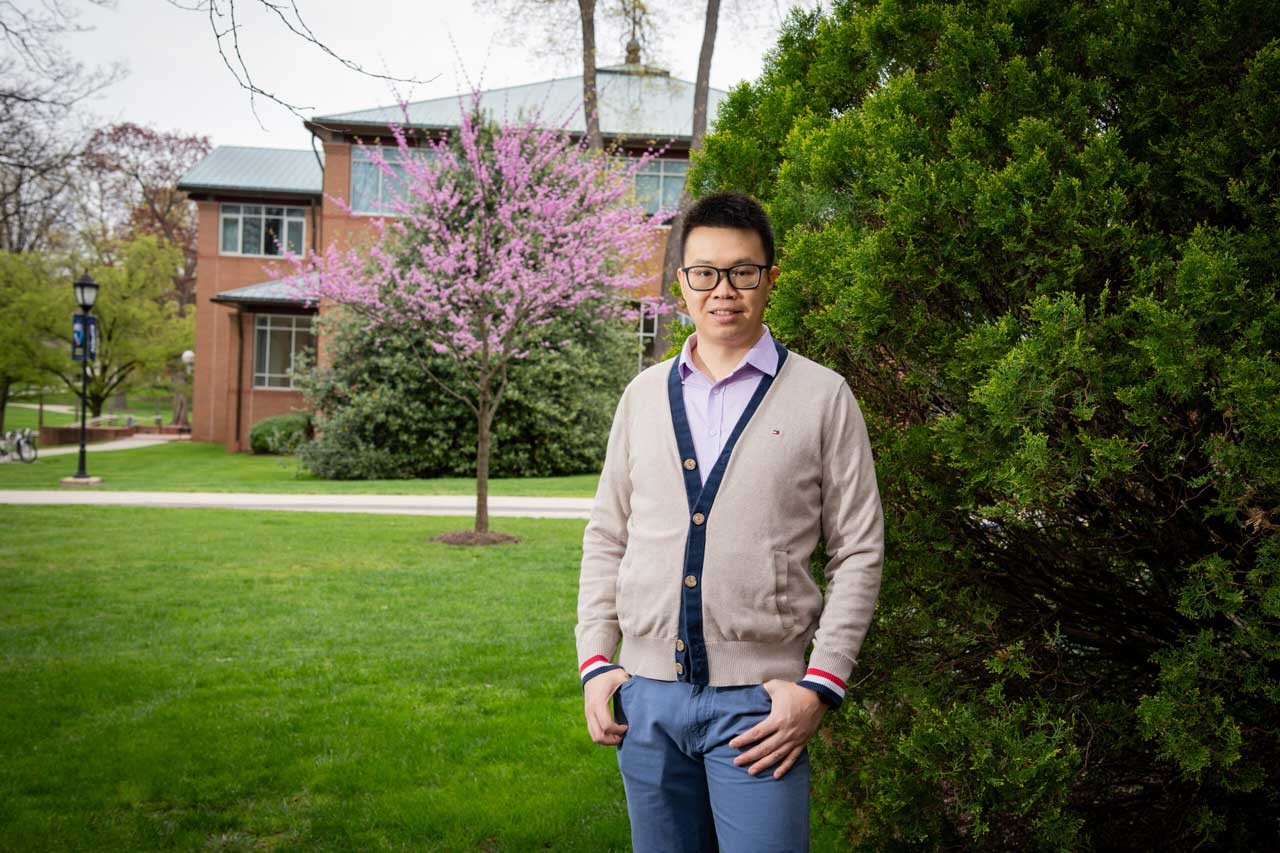
©Thomas Jefferson University Photography Services

Q: What gave you the idea to study the Black community in China?

A: I became interested in the Black community in Guangzhou in college. My bus ride to college passed through this rapidly growing community. In the early 2000s, more and more Africans were attracted to the booming wholesale markets in Guangzhou after leaving other southeastern Asian countries because of the Asian Financial Crisis. The community where I conducted my research was usually their first stop after they landed in Guangzhou. As a student specializing in foreign studies, I was just curious. Every time I passed through the community, I wondered to myself, “Where did these people come from, what motivated them to come to China, and – more importantly – what was their experience in China?

Q: What is the best memory you have from your research?

A: There are many. I met some amazing people who were very generous in helping me. One moment does stand out.  Africans, like other foreigners, had to apply for temporary residential permits, but the local office in the African community made it extremely difficult to obtain documents. I saw firsthand the great lengths they went through to maintain their legal status, despite all the draconian regulations. The lengths Africans went through not only contradicted the image in the news media that most Africans in China were aliens, but also made me reflect on my own struggles as a foreigner in the U.S. I realized at that moment that ultimately, my topic was about a universal human experience. That motivated me even more to continue my research.

Q: What’s a unique fact, surprising statistic, or a myth about your study subject?

A: I would turn this question around and say that in many ways the subjects of my research are just human beings trying to make the best decisions based on their circumstances. In this sense, they are not unique at all. In our studies of race and ethnicity, we are constantly fighting against exoticization of racial and ethnic “others.”

A myth we are always trying to bust is that people from different cultures, regions or racial backgrounds are very different, with no moral compass, and they are a threat to whoever the dominant group is. Africans in China are just traders trying to spend the least amount of resources and generate the largest amount of profit.

Sometimes they purchased knockoffs, sometimes they found creative ways to obtain their immigration documents and sometimes they overstay their visas when China’s draconian immigration regulations make it too costly to comply.

I have seen white foreigners do the same in China and I have seen Asians do the same in the U.S. There is really nothing unique. Yet, often times, these actions become tied to blackness, and that’s what my research tries to understand and combat.

Q: What’s something you’re passionate about outside of your research?

A: I am passionate about politics, especially urban politics. I am also a food fanatic. I like cooking and exploring different cuisines and food, particularly non-Western cuisines. Some of my favorite dishes are Feijoada, Tonjiru, and Kimchi Jjigae. I also love fishing.

Q: Is there someone who helped shape your journey?

A: I benefited from many people throughout my career, but my thesis adviser, Dr. Carl Nightingale, has been my inspiration. His commitment to racial justice, his knowledge, and his mentorship all imprinted on me in major ways.

Q: Is there a piece of advice you want to pass on to young researchers?

A: Attend as many conferences and meet as many other researchers as possible. By sharing your research with others and hearing from others’ research, you learn and grow as a scholar, and you hone your own research. You also build up an important professional network that can be a huge asset down the road in your career.

Share This


Tags

  • Research
  • College of Humanities and Sciences
  • East Falls

Categories

  • Science and Technology
Showing 3 items.

Related Articles

Jefferson Honors Long-Time Employees
lungs
Jefferson Investigates: Cannabis & ADHD, Improving Recovery for Opioid Use Disorder, Small RNAs in COPD
Treating Schizophrenia Through Dance Therapy
Explore More Jefferson News
Thomas Jefferson University Home
  • Apply
  • Visit
  • Give
  • Facebook
  • Twitter
  • YouTube
  • Instagram
  • LinkedIn
  • Jefferson Health
  • Innovation
  • Philanthropy
  • Contact Admissions
  • Privacy Policy
  • Consumer Information

Jefferson holds itself accountable, at every level of the organization, to nurture an environment of inclusion and respect, by valuing the uniqueness of every individual, celebrating and reflecting the rich diversity of its communities, and taking meaningful action to cultivate an environment of fairness, belonging & opportunity.