
Thomas Jefferson University Home Thomas Jefferson University Home
Thomas Jefferson University Home
  • Apply
  • Visit
  • Give
  • Thomas Jefferson University Home
  • Academics
    Back

    Academics

    • Academics Home
    • Program Finder
    • Areas of Interest
    • Registrar's Office
    • Online Programs
    • Continuing & Professional Studies
    • Study Away
    • Academic Calendars

    Colleges, Schools & Institutes

    • Sidney Kimmel Medical College
    • College of Architecture & The Built Environment
    • Kanbar College of Design, Engineering & Commerce
      • School of Business
      • School of Design & Engineering
    • College of Health Professions
    • College of Humanities & Sciences
    • College of Life Sciences
    • College of Nursing
    • College of Pharmacy
    • College of Population Health
    • College of Rehabilitation Sciences
    • Institute of Emerging Health Professions
    Find Your Program

    Prepare yourself for what’s yet to come.

  • Admissions
    Back

    Admissions

    • Admissions Home
    • Undergraduate Admissions
    • Graduate Admissions
    • Continuing & Professional Studies Admissions
    • Sidney Kimmel Medical College Admissions

    Admissions Quick Links

    • Request Information
    • Schedule a Visit
    • Take a Virtual Tour
    • Apply for Admission
    • Financing Your Education
    • Contact Admissions
    Apply

    Start your Jefferson journey today.

  • Tuition & Financial Aid
    Back

    Tuition & Financial Aid

    • Tuition & Financial Aid Home
    • Tuition, Fees and Room & Board (2026-27)

    Tuition & Financial Aid Quick Links

    • Financial Aid Office
    • Student Accounts Office
    Contact Us

    Expert Center City and East Falls staffs are here to help.

  • Life at Jefferson
    Back

    Life at Jefferson

    • Life at Jefferson Home
    • Center City Residential Life
    • East Falls Residential Life
    • Virtual Tours

    Life at Jefferson Quick Links

    • Explore Philadelphia
    • University Catalog & Handbooks
    • Commencement
    • Consumer Information & Disclosures
    Plan Your Visit

    Each of our locations offers a unique learning environment.

  • Research
    Back

    Research

    • Research Home
    • Labs & Service Centers
    • Research Resources
    • 2025 Research Magazine

    Research Quick Links

    • Applied Research
    • Basic Research
    • Clinical Research
  • Athletics
    Back

    Athletics

    • Athletics Home
    • Visit jeffersonrams.com
    • Athletic Facilities
    • Shop Official Store

    Athletics Quick Links

    • Health & Wellness at Jefferson
    • Jefferson Recreation & Fitness Center
  • News
    Back

    News

    • News Home

    News Quick Links

    • Design & Style
    • Science & Technology
    • Business
    • Health
    • Life at Jefferson
    • Podcasts
  • Apply
  • Visit
  • Give
  • Apply
  • Visit
  • Give

Current Students & Faculty

  • Center City Campus
    • Banner
    • Campus Store
    • Canvas
    • Commuter Services
    • Campus Life & Current Students
    • Faculty & Staff
    • JeffMail
    • Library
    • Office 365
    • Student Portal
  • East Falls Campus
    • Banner
    • Campus Store
    • Canvas
    • Faculty & Staff
    • Giving
    • JeffMail
    • Library
    • Starfish
    • Student Life & Resources
    • Student Portal
  • YouTube
  • Instagram
  • Facebook
  • Twitter
  • LinkedIn
  1. Return to Home
    • Thomas Jefferson University News
  2. Thomas Jefferson University News
  3. 2024
  4. 10

The Art of the Sock

Oct 17, 2024
By Marilyn Perkins

Using knitwear to find creativity and innovation in everyday materials.

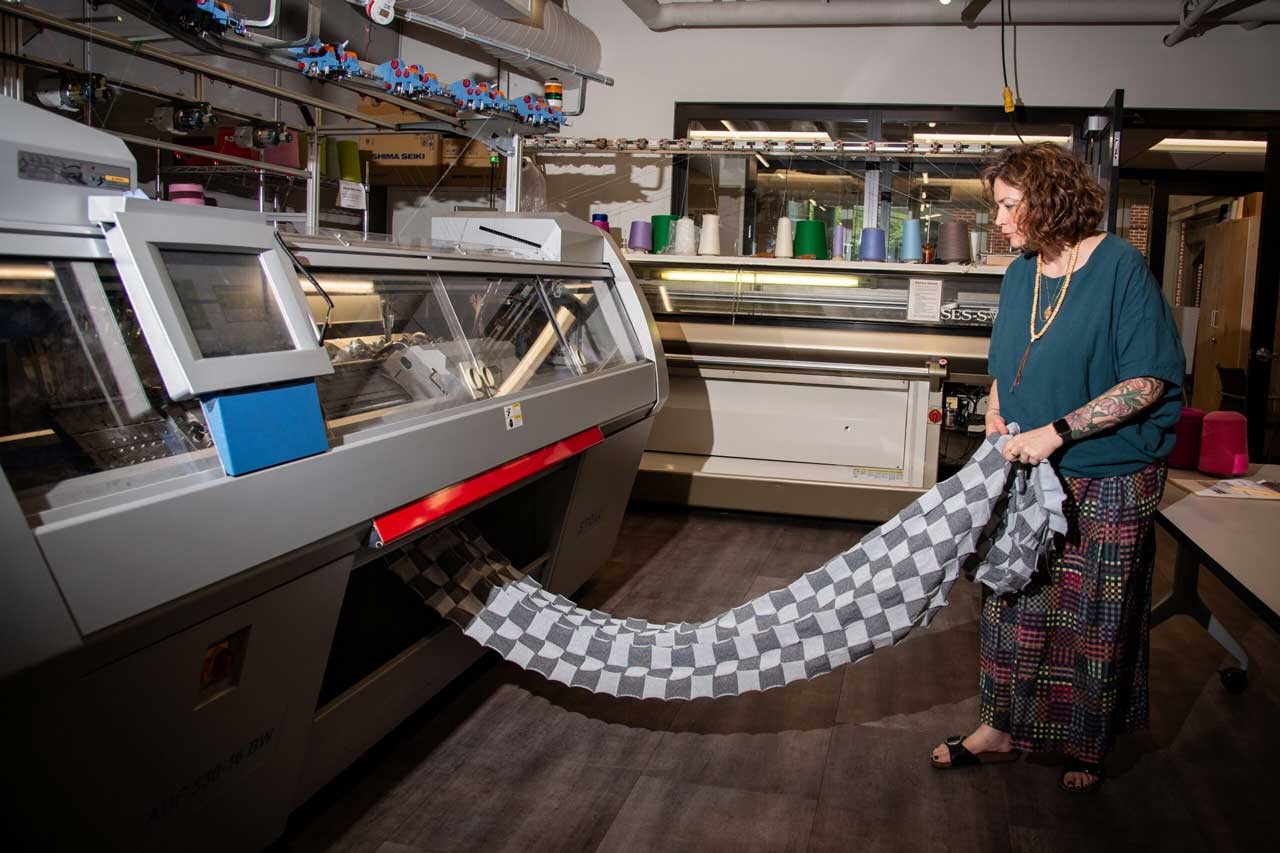
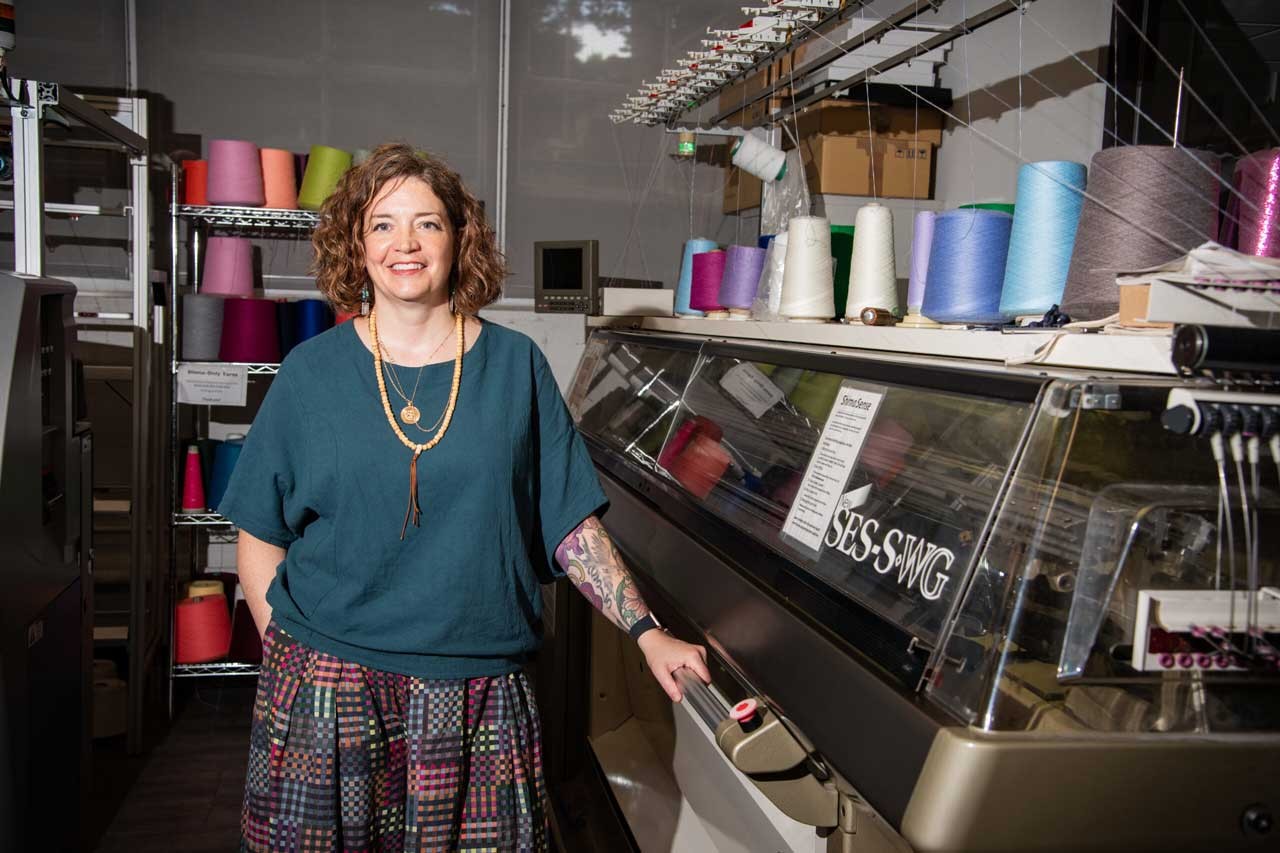
Meghan Kelly, MS, Assistant Professor of Textile Design. Photo Credit: ©Thomas Jefferson University Photography Services.

Textiles are all around us — making up our clothes, our furniture and even the insides of our cars — but it’s easy to take them for granted. In a world full of low-cost manufacturing techniques that often take place thousands of miles away from where end products are sold, most people don’t have to think about how the wool of their sweater is spun and knit into a three-dimensional structure, or how a woven polyester seat cushion goes through months of prototyping and performance testing to ensure durability.

Meghan Kelly, MS, on the other hand, thinks about textiles every day — and she encourages her students to do the same. In both her own artwork and her teaching practice, she’s curious about how bringing a fresh lens to a simple, everyday object, like a sock, can foster new skills and open up a deep well of creativity. In this Q&A, Professor Kelly reveals what she and her students have learned from the humble sock.

Q: What questions do you explore in your work?

A: One of my creative passions is the idea of exceptional accessibility, or the idea that something commonplace can also live in the realm of extraordinary. Between my dual focus of machine knitting and pedagogy (the science of teaching), I research ways I can expand on simple knitting concepts to create lessons that provide my students with foundational techniques and procedures they can build upon. My current manifestation of this idea is socks; socks are very commonplace and not necessarily innovative in themselves, but that familiarity helps students explore how to build 3-dimensional shapes using knit stitches.

Q: So what goes into making a sock?

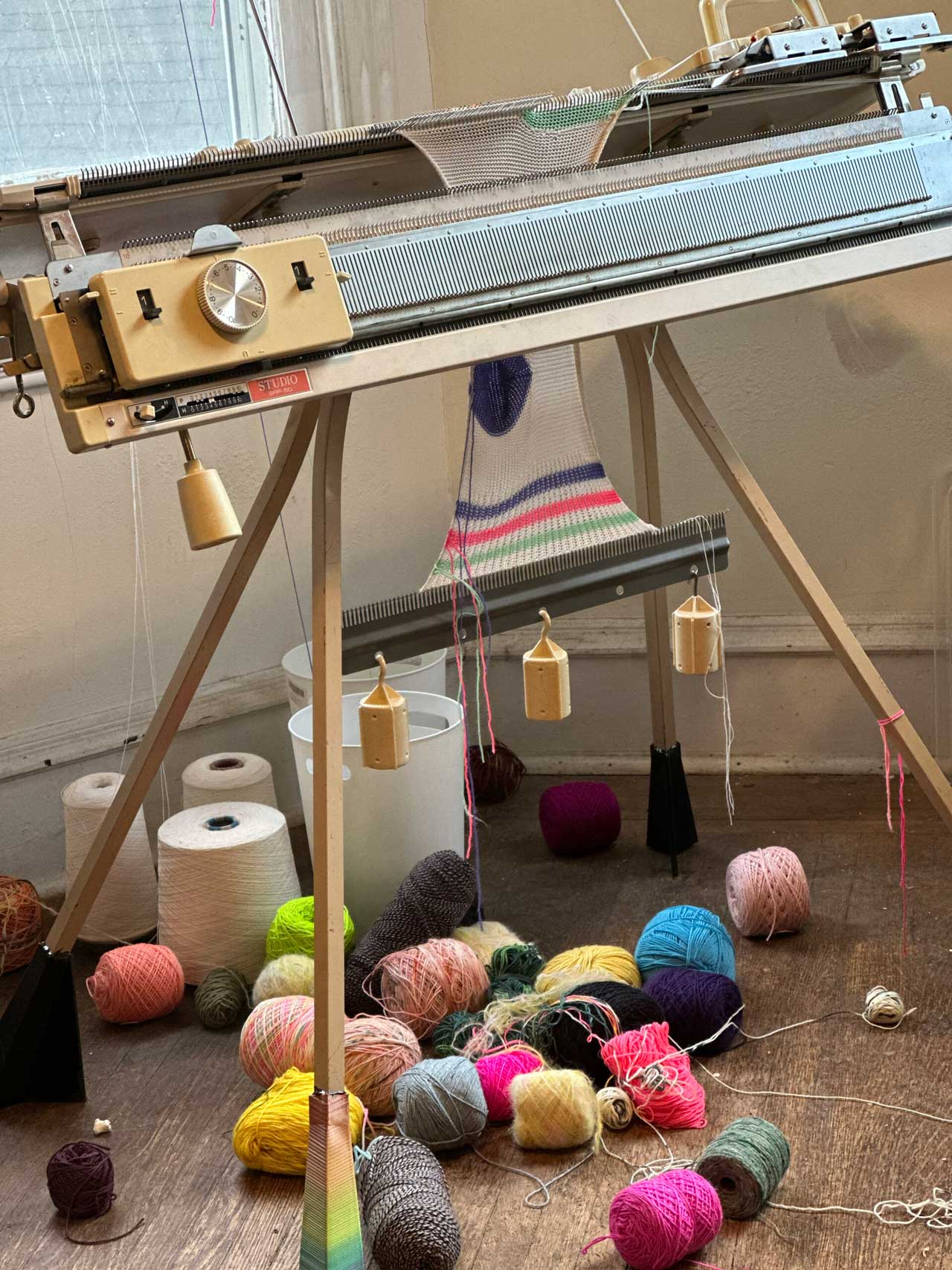
A: When I’m making socks on domestic knitting machines, I construct them flat, so that when I take them off the machine, I need to seam them up the side to make a tubular shape. The “toe box” and “heel pocket” are made by building up knitted rows in small designated areas, commonly called “short rows”, creating small knitted peaks. These “peaks” are the toe box and heel pocket. This isn’t how commercial socks are made, and this is not an attempt to reinvent the wheel, so to speak, but rather an exercise for building 3D shapes in knitted fabric without cutting and sewing. When fresh off the machine, these socks are almost unrecognizable as socks, but as they are seamed up, they magically become a sock like any other, with a rounded toe, a ribbed cuff, and a heel that allows the sock to be shaped like a boomerang when lying flat.
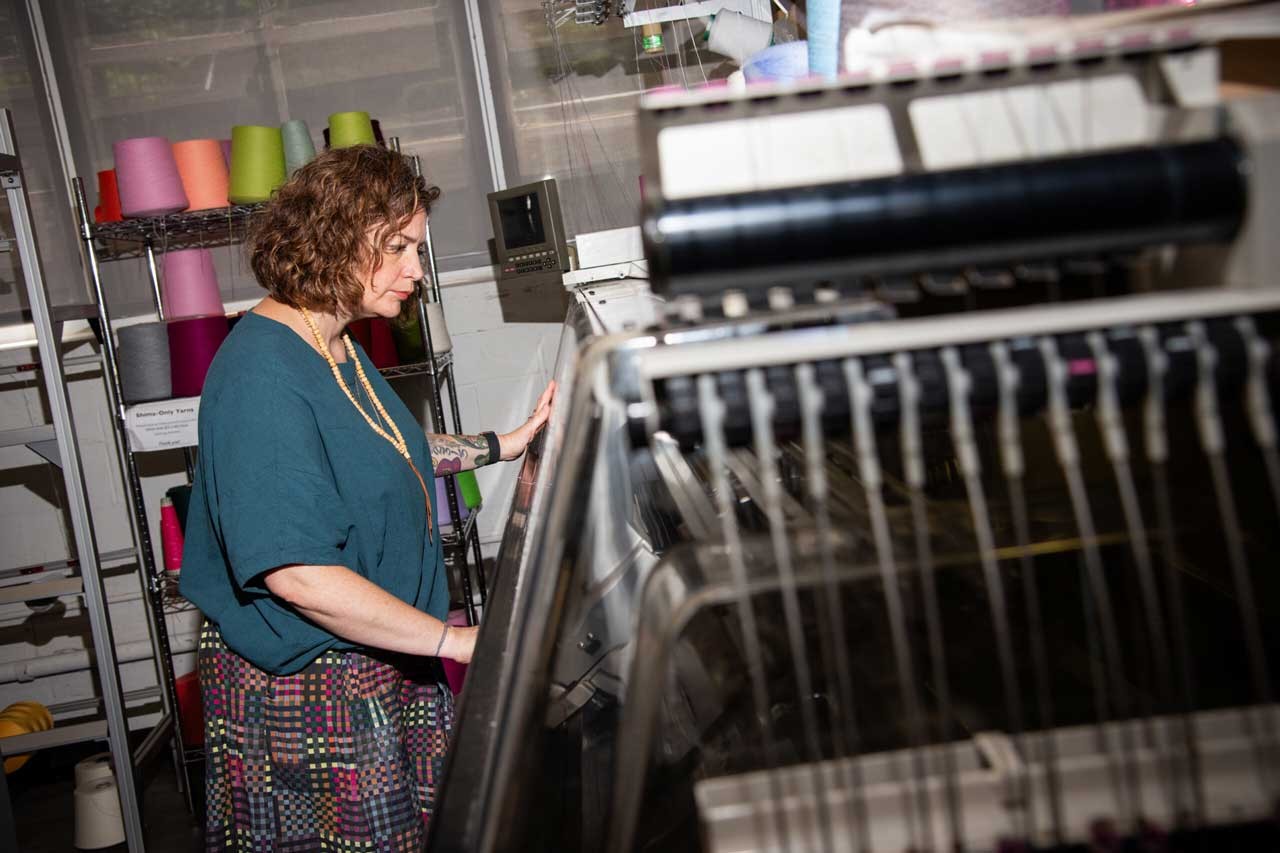
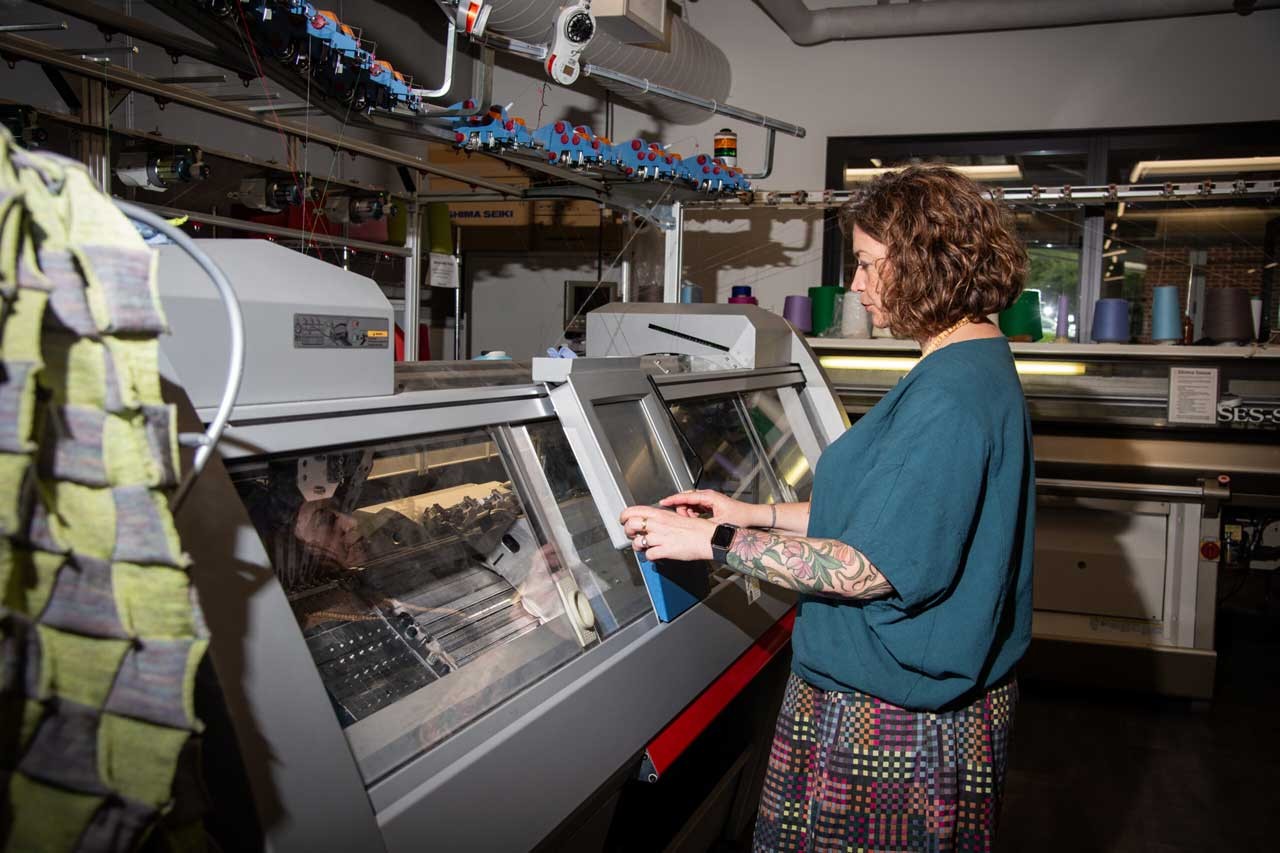
  • Meghan Kelly programming a flat-bed knitting machine. Photo Credit: ©Thomas Jefferson University Photography Services.
  • Meghan Kelly programming a flat-bed knitting machine. Photo Credit: ©Thomas Jefferson University Photography Services.
  • Meghan Kelly programming a flat-bed knitting machine. Photo Credit: ©Thomas Jefferson University Photography Services.

Q: What do you and your students learn from the sock-making process?  

A: My research focuses on developing and analyzing formulas of knit stitch configurations to create increasingly complex shapes, but it is fundamentally rooted in communication and skill-building: how can I clearly communicate the complex movement of a knitted loop, important machine parts, and the various dynamics of machine knitting to students who learn differently? We’re fortunate to have two electronic, flat-bed knitting machines that represent the two major knitting machine manufacturers, and we also have two different, proprietary software programs used to program the knitting machines. This means that students who are learning both software programs need to translate techniques between them. Using a simple, familiar object to design around acts as a translator of sorts for the different program keys and system protocols. If I’ve done my job, the student can identify the component parts of the sock, the stitches used in each section and apply that knowledge to any program.

Q: How do your students make this project their own?

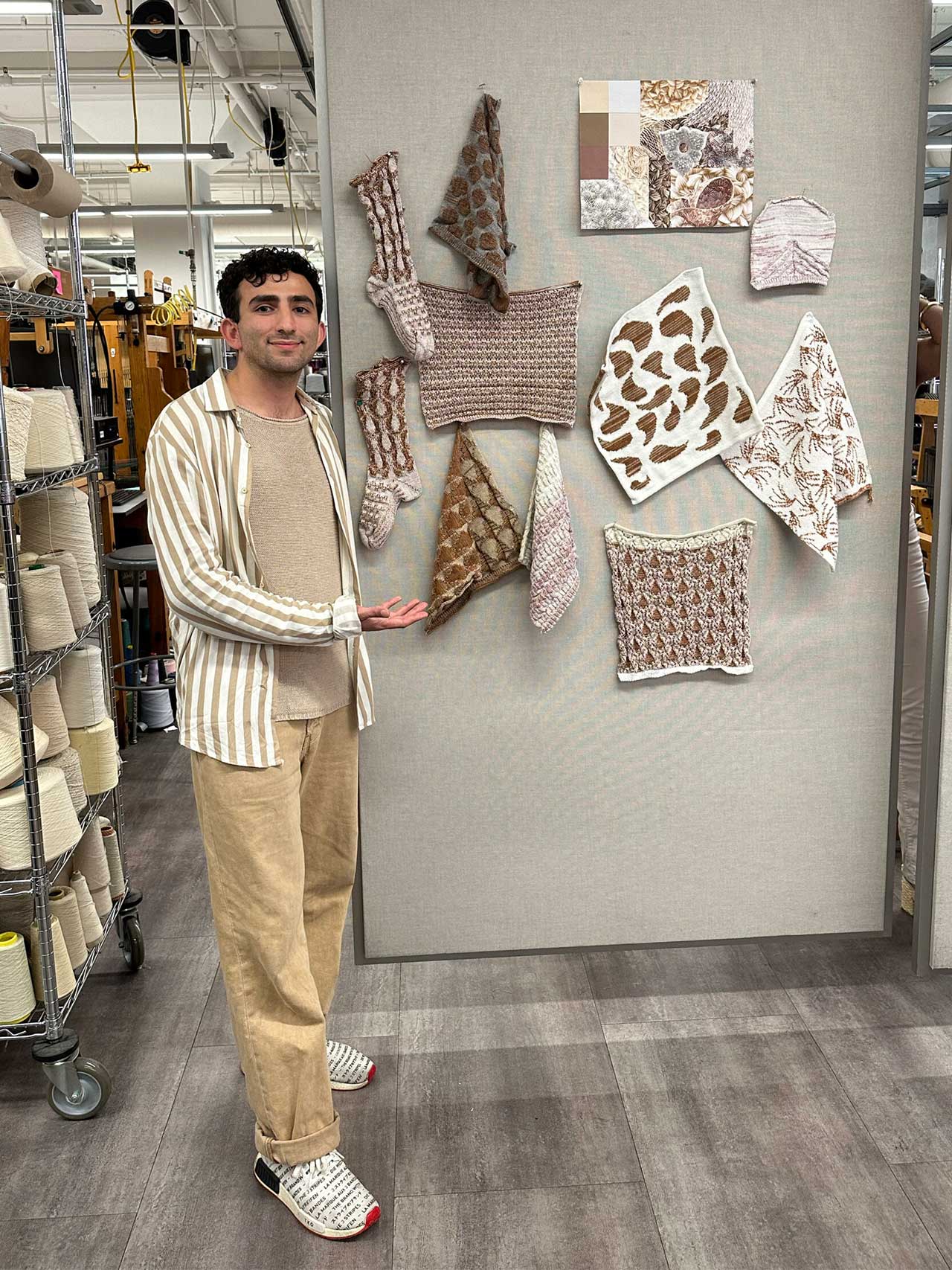
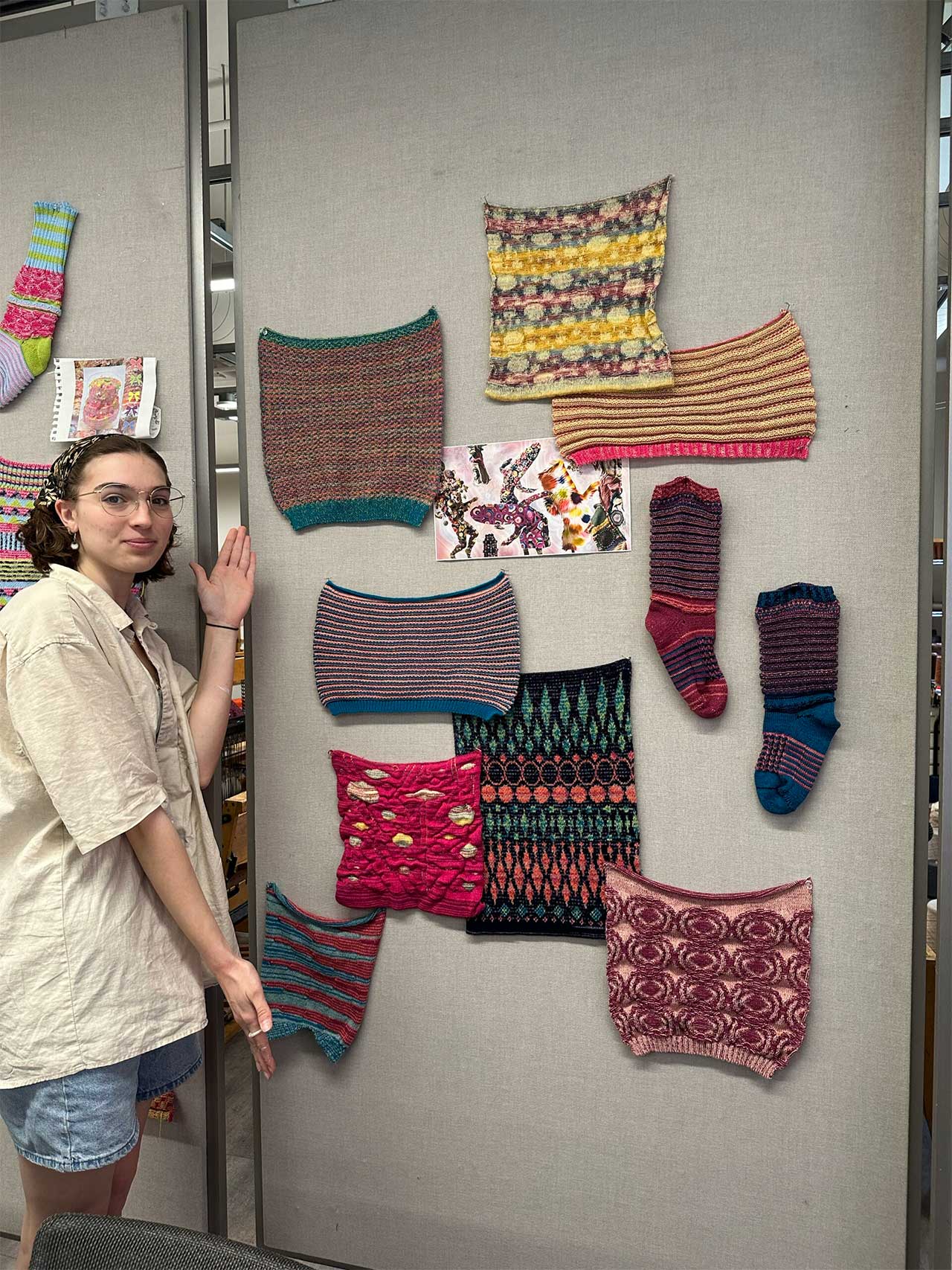
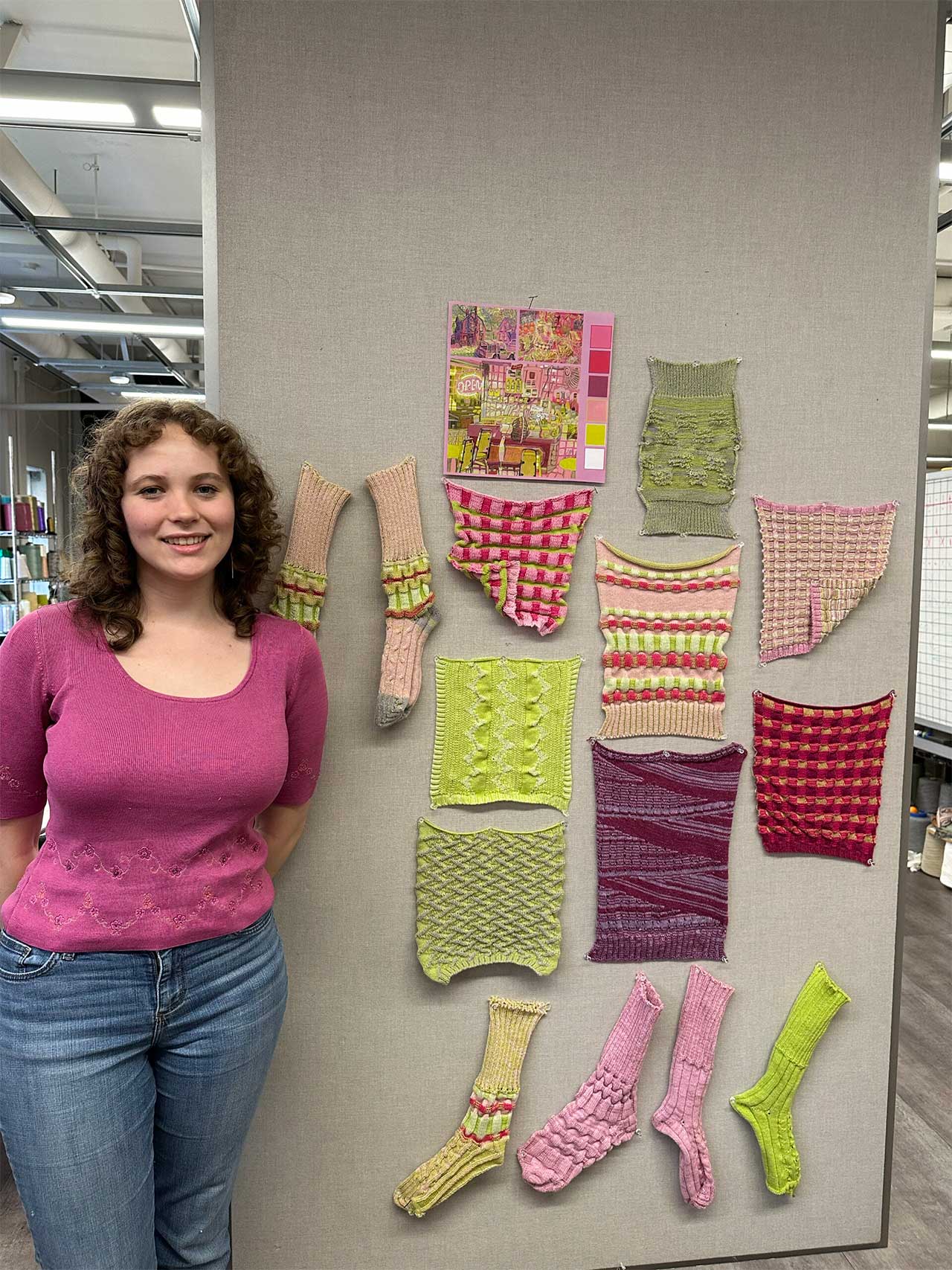
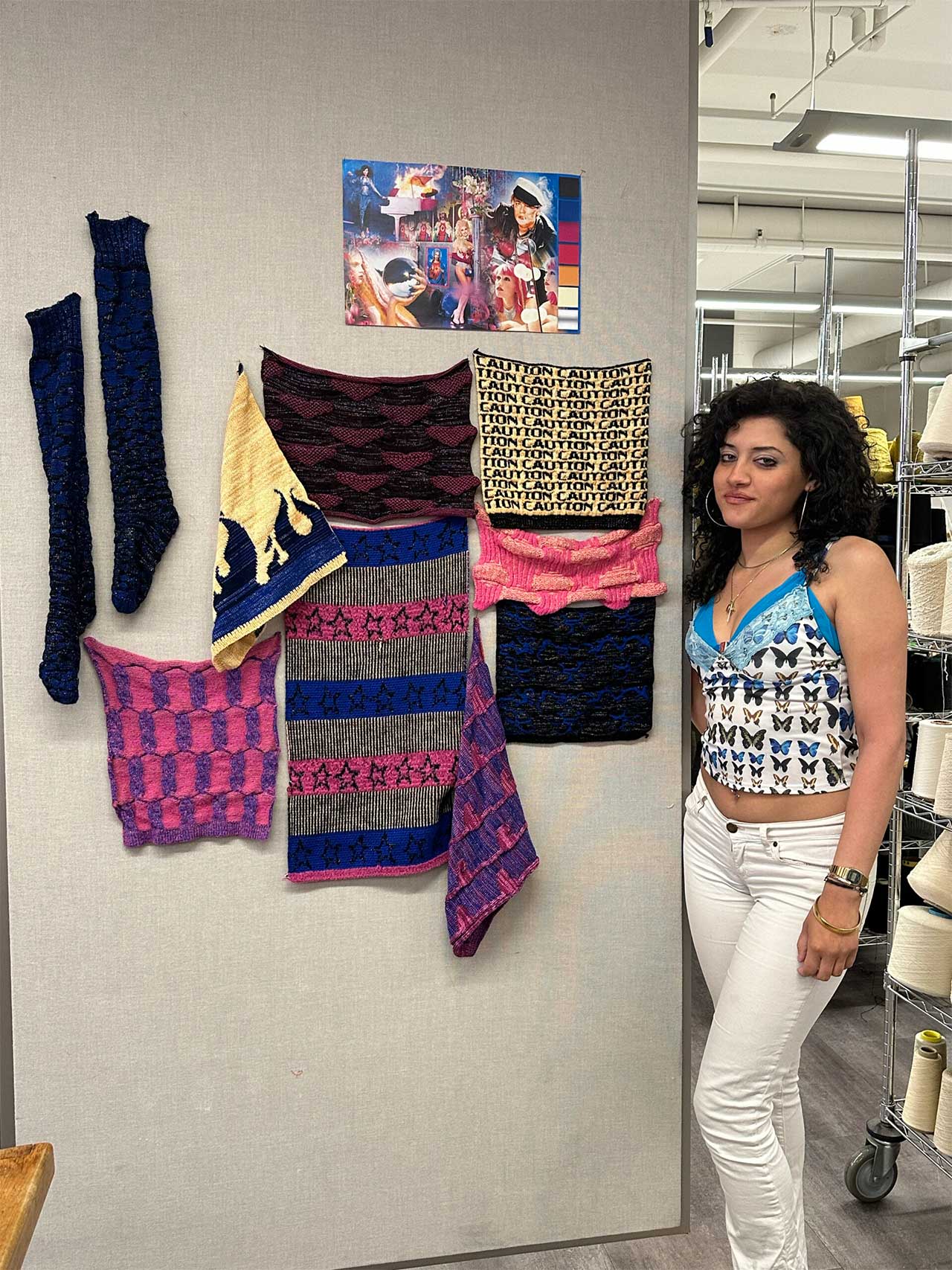
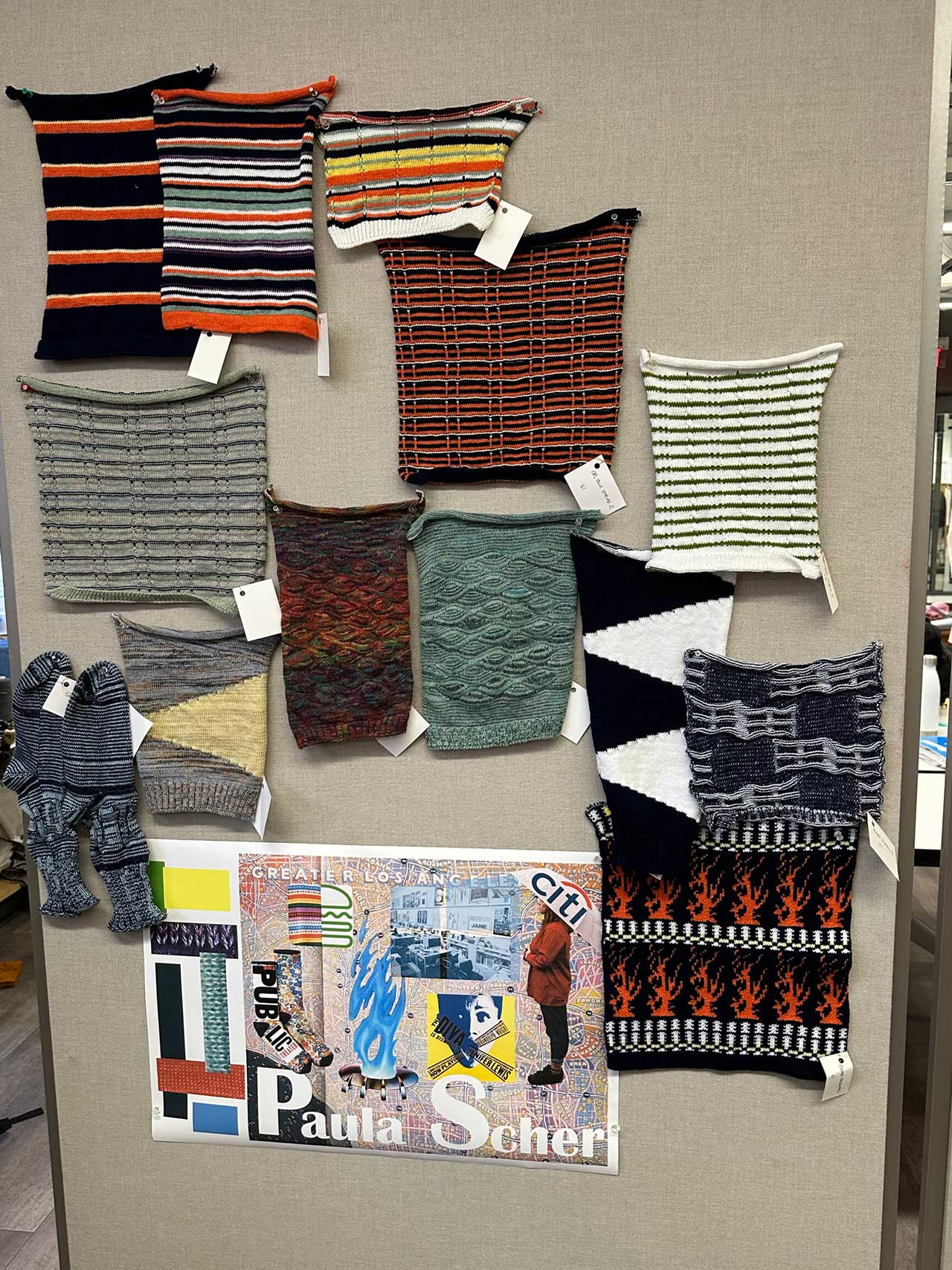
A: Because I’m using this method of flat-knit socks as a teaching tool, I keep my instructional socks very simple and let the yarn color be the designing force. But as part of the assignment, the students are encouraged to add design interest such as lace, cables, stripes or color blocking to make their socks unique and reflective of their mood board and design collection. All of the students’ socks follow the general shape of a classic crew sock. Some add classic cables and stripes. Others throw the proverbial kitchen sink at the sock and apply every learned stitch and color design tool they can at their pair. The ultimate test of success is if they can comfortably wear their pair, and so far, we’ve got a 100% success rate.

  • Atillahan Ozturk
  • Hope Porter
  • Skylar Strouss
  • Bel Moreno
  • Compilation of projects in Meghan's advanced weft knitting class.

Q: What first sparked your interest in socks in particular?

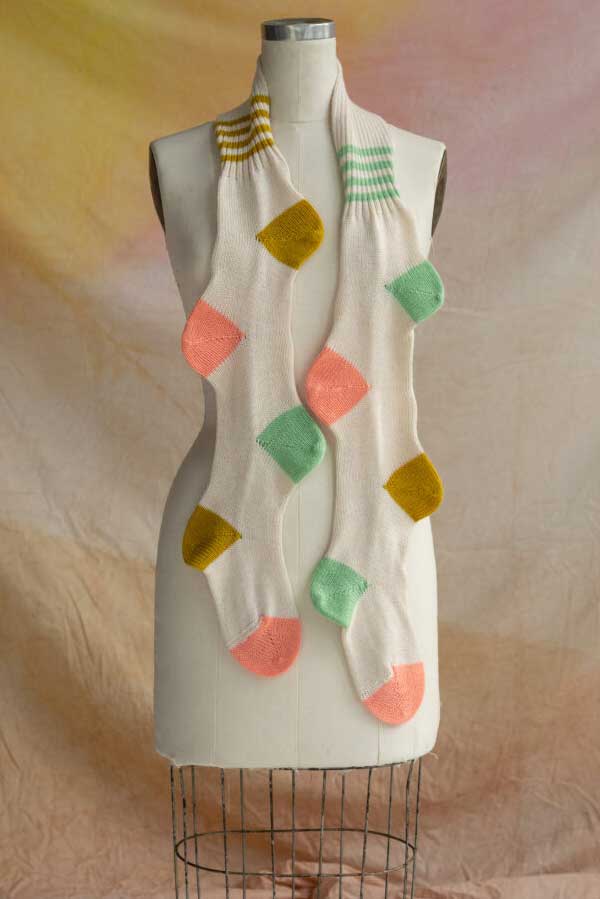
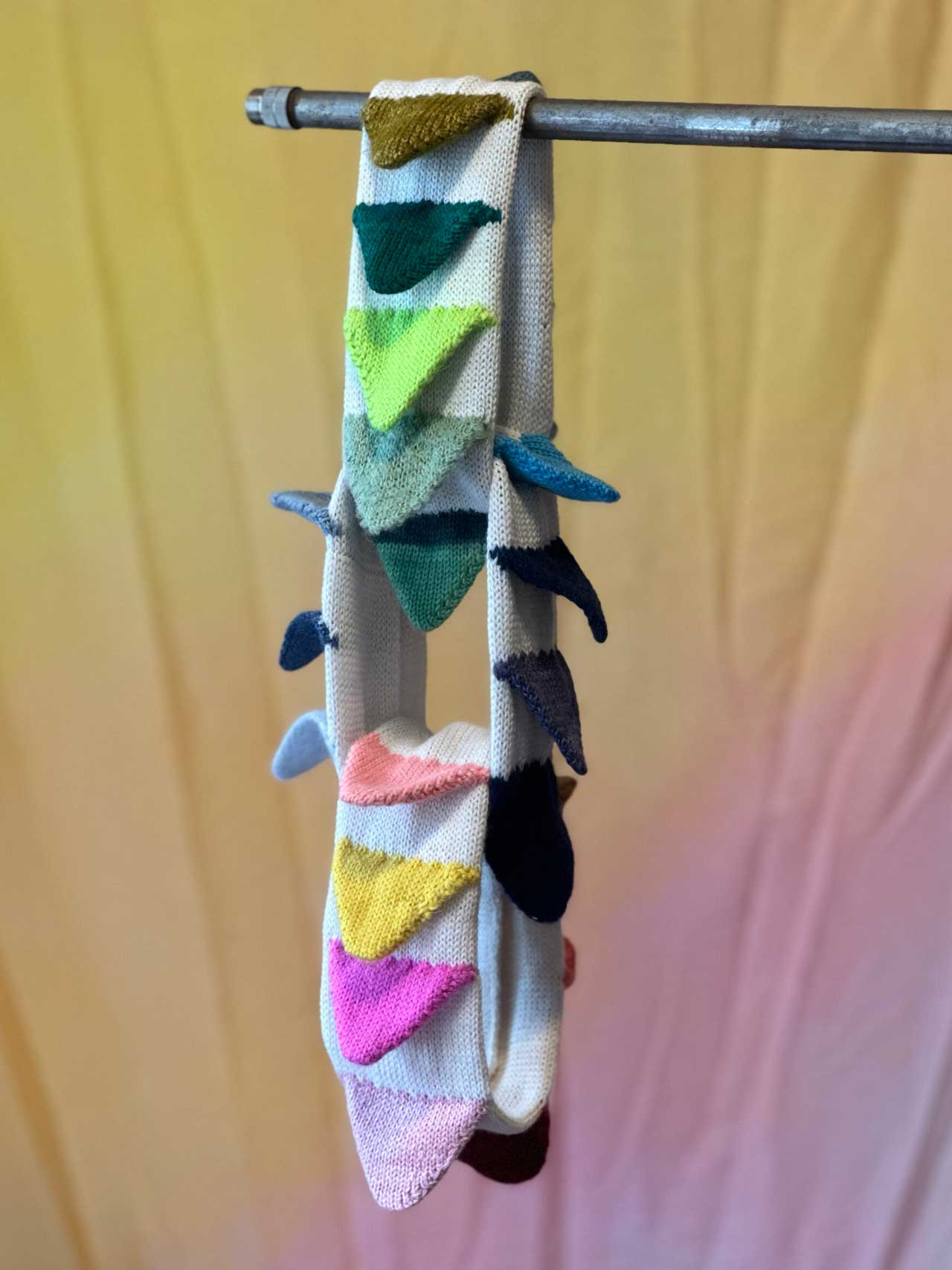
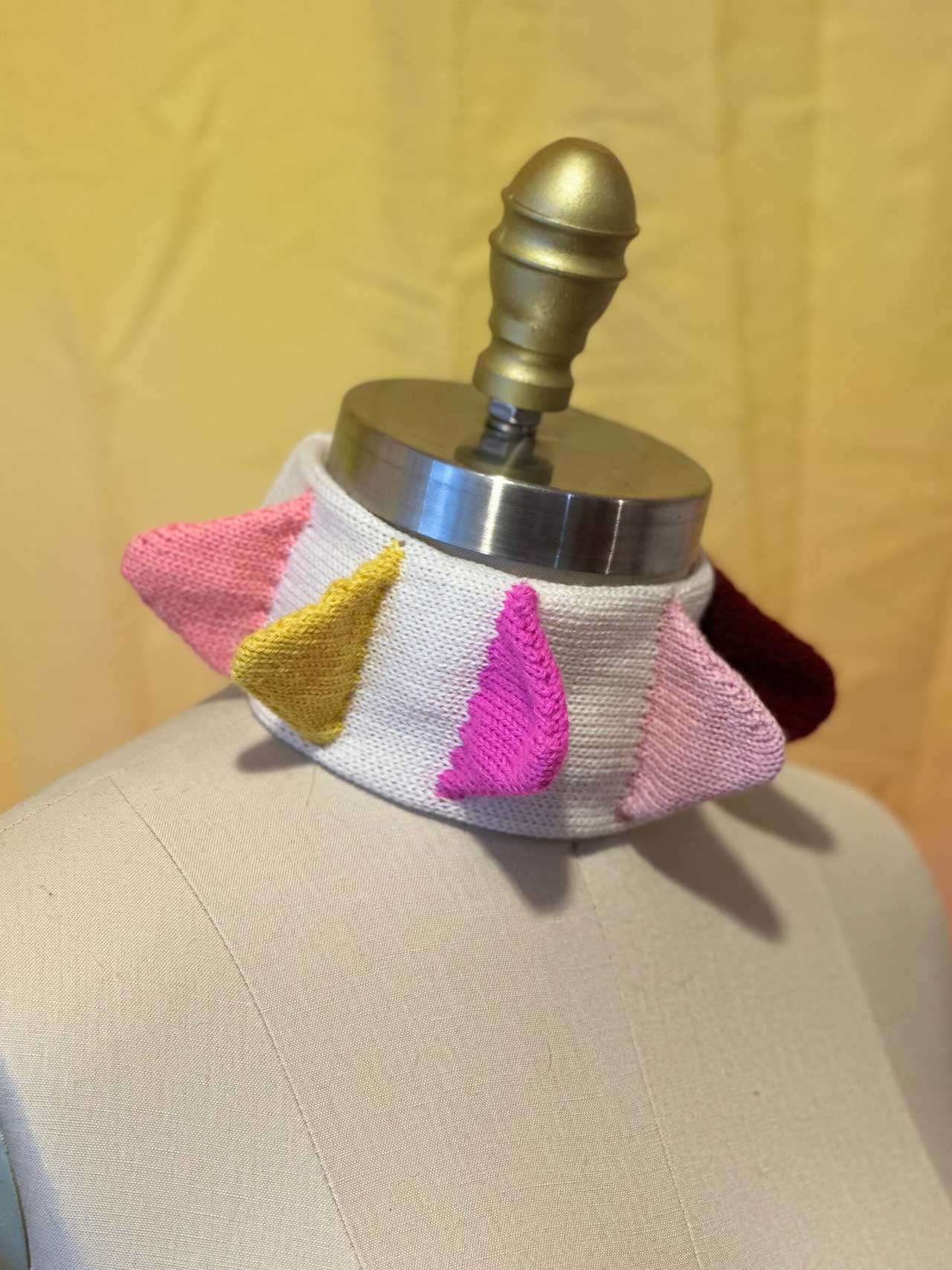
A: I’m devoted to knitting in all its forms and techniques. My background in fiber art and my fondness of quirky art, visual puns and unique perspectives all led me to the idea of making a sock, but making it fun and maybe a little weird. I first learned various techniques for making socks myself before I decided to use it as a teaching tool. During that process, I found that there is a myriad of ways to design a sock, a vast library of knit stitches, and it all gelled in a piece of art I call The Sock Scarf. I thought, why not use this simple, familiar object to teach shaping? The idea has been expanding ever since.

Photo Credit: Linette Messina

Q: What’s a unique fact, surprising statistic or a myth about textiles?

A: Everyone, and I mean, with few exceptions, everyone, is wearing knits almost every day. But very few “non-textile” folks could point to their closets and differentiate between the clothes that are woven and those that are knit, let alone identify the knits found in their upholstery, workplaces and car interiors. Textiles are an integral part of our life but are so commonplace that they are overlooked and taken for granted. To that end, when some people think of knitting, they think of our elders rocking away in comfy chairs, knitting baby blankets. But in truth, the power and versatility of weft-knitting (weft knitting is the most common form of industrial knitting) means that a lot of technical, medical, sustainable, and more, innovation is being developed using knitting machines.

Q: What is the best memory you have from teaching?

A: I really love the “aha” moment when the students find their socks are wearable. Initially, when the students program their design and get their socks off the machine, they don’t understand the shape until they’ve cut off the waste yarn, seamed, and finished them. Once they put them on their feet, they have that lightbulb moment and start gleefully showing off their socks to their classmates. Everyone asks questions like, “How’d you do this part?” or “Show me this on the program,” and then each student becomes a teacher, instructing their classmate how they designed or problem-solved. The collective joy in creation and sharing of know-how is what makes it rewarding for me.

  • Another kind of knitting machine.
  • Other examples of Meghan's personal work. Photo credit: Meghan Kelly.
  • Other examples of Meghan's personal work. Photo credit: Meghan Kelly.

Q: What’s something you’re passionate about outside of your research?

A: I’m an avid gardener, crafter and cyclist. Starting in late winter, I begin to plan my garden, though I don’t have time to start anything from seed. I ride my bike to school every day as long as it’s not raining, and work on my long-distance rides in the summer. And when I need a brain break, I’ll hand-knit or watercolor paint.

Q: Who’s a role model or someone who shaped your journey? Is there a piece of advice that stuck with you or that you try to pass on to young researchers?

A: Years ago, when I was in art school, I worked part time at a local high-end fabric store. One of my co-workers was a professional seamstress and adjunct professor in a local fashion program. Her name was Gigi Delaney and she was a tiny woman who would fill the room with her personality. She took me under her wing and helped me navigate adulthood the way a fun, distantly related aunt would. One day while eating lunch at her house, I broke down in tears because I was under typical stress from school, dealing with a breakup and a project I had spent hours on didn’t work out the way I intended. Her advice to me was, “Listen, even the best seamstresses rip out seams. Take a day to cry out all of your tears. Get it out of your system. Then tomorrow, get up and start again.” I think of her advice all the time. Sometimes things don’t work out like you thought they would. It’s okay to feel and express your feelings. But don’t stop moving forward.

Share This


Tags

  • Research
  • Kanbar College of Design Engineering & Commerce
  • Design
  • East Falls

Categories

  • Design and Style
  • Science and Technology
Showing 3 items.

Related Articles

Alumna Illustrated Whimsical Amazon Kids Gift Book
Students’ Mural Project Brightens Up Jefferson Abington Hospital’s Pediatric Unit
Jefferson Honors Long-Time Employees
Explore More Jefferson News
Thomas Jefferson University Home
  • Apply
  • Visit
  • Give
  • Facebook
  • Twitter
  • YouTube
  • Instagram
  • LinkedIn
  • Jefferson Health
  • Innovation
  • Philanthropy
  • Contact Admissions
  • Privacy Policy
  • Consumer Information

Jefferson holds itself accountable, at every level of the organization, to nurture an environment of inclusion and respect, by valuing the uniqueness of every individual, celebrating and reflecting the rich diversity of its communities, and taking meaningful action to cultivate an environment of fairness, belonging & opportunity.