
Thomas Jefferson University Home Thomas Jefferson University Home
Thomas Jefferson University Home
  • Apply
  • Visit
  • Give
  • Thomas Jefferson University Home
  • Academics
    Back

    Academics

    • Academics Home
    • Program Finder
    • Areas of Interest
    • Registrar's Office
    • Online Programs
    • Continuing & Professional Studies
    • Study Away
    • Academic Calendars

    Colleges, Schools & Institutes

    • Sidney Kimmel Medical College
    • College of Architecture & The Built Environment
    • Kanbar College of Design, Engineering & Commerce
      • School of Business
      • School of Design & Engineering
    • College of Health Professions
    • College of Humanities & Sciences
    • College of Life Sciences
    • College of Nursing
    • College of Pharmacy
    • College of Population Health
    • College of Rehabilitation Sciences
    • Institute of Emerging Health Professions
    Find Your Program

    Prepare yourself for what’s yet to come.

  • Admissions
    Back

    Admissions

    • Admissions Home
    • Undergraduate Admissions
    • Graduate Admissions
    • Continuing & Professional Studies Admissions
    • Sidney Kimmel Medical College Admissions

    Admissions Quick Links

    • Request Information
    • Schedule a Visit
    • Take a Virtual Tour
    • Apply for Admission
    • Financing Your Education
    • Contact Admissions
    Apply

    Start your Jefferson journey today.

  • Tuition & Financial Aid
    Back

    Tuition & Financial Aid

    • Tuition & Financial Aid Home
    • Tuition, Fees and Room & Board (2026-27)

    Tuition & Financial Aid Quick Links

    • Financial Aid Office
    • Student Accounts Office
    Contact Us

    Expert Center City and East Falls staffs are here to help.

  • Life at Jefferson
    Back

    Life at Jefferson

    • Life at Jefferson Home
    • Center City Residential Life
    • East Falls Residential Life
    • Virtual Tours

    Life at Jefferson Quick Links

    • Explore Philadelphia
    • University Catalog & Handbooks
    • Commencement
    • Consumer Information & Disclosures
    Plan Your Visit

    Each of our locations offers a unique learning environment.

  • Research
    Back

    Research

    • Research Home
    • Labs & Service Centers
    • Research Resources
    • 2025 Research Magazine

    Research Quick Links

    • Applied Research
    • Basic Research
    • Clinical Research
  • Athletics
    Back

    Athletics

    • Athletics Home
    • Visit jeffersonrams.com
    • Athletic Facilities
    • Shop Official Store

    Athletics Quick Links

    • Health & Wellness at Jefferson
    • Jefferson Recreation & Fitness Center
  • News
    Back

    News

    • News Home

    News Quick Links

    • Design & Style
    • Science & Technology
    • Business
    • Health
    • Life at Jefferson
    • Podcasts
  • Apply
  • Visit
  • Give
  • Apply
  • Visit
  • Give

Current Students & Faculty

  • Center City Campus
    • Banner
    • Campus Store
    • Canvas
    • Commuter Services
    • Campus Life & Current Students
    • Faculty & Staff
    • JeffMail
    • Library
    • Office 365
    • Student Portal
  • East Falls Campus
    • Banner
    • Campus Store
    • Canvas
    • Faculty & Staff
    • Giving
    • JeffMail
    • Library
    • Starfish
    • Student Life & Resources
    • Student Portal
  • YouTube
  • Instagram
  • Facebook
  • Twitter
  • LinkedIn
  1. Return to Home
    • Thomas Jefferson University News
  2. Thomas Jefferson University News
  3. 2019
  4. April 2019

To Kiss or Not to Kiss

Apr 15, 2019

How does the body keep from spreading a cold to a loved one?
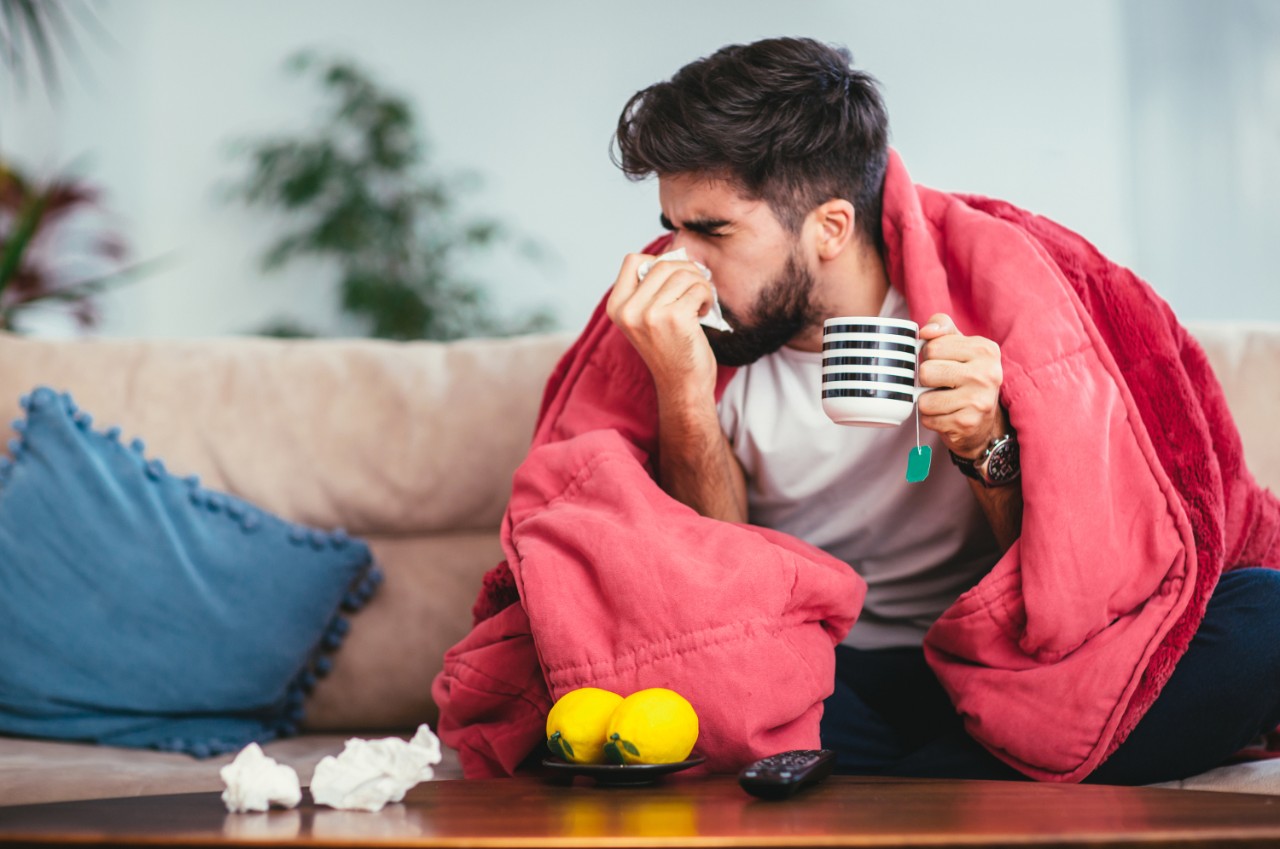
Everyone’s worst nightmare: you feel a cold coming on right before a big date. New research shows that your body is working hard, even before you catch the cold, to try to keep you from spreading those germs.

Immunologist Chris Snyder, PhD, at Jefferson has been studying cytomegalovirus (also called CMV) one of the viruses that causes mononucleosis, a.k.a. the kissing disease, for years. He recently published research exploring how the immune system reacts to viruses like CMV that infect the salivary glands in order to transmit millions of copies of themselves to another host, i.e., your date.

We talked to Dr. Snyder about his research and what it means for others. Here’s what we learned:

What do salivary glands do to protect others from infection?

One of the most surprising findings of this paper is that the salivary glands are actually doing a lot, all the time, to reduce the spread of disease.

We knew that immune cells – our body’s main defense against viruses and bacteria – rush to the scene when salivary glands become infected by a virus like CMV or Epstein Barr Virus (EBV), which both cause mono-like symptoms. But it was surprising to see immune cells in the salivary glands when the body – but not the salivary gland specifically – was infected, and even when there was no infection at all.

We knew that the immune cells called T cells would be drawn or recruited to the salivary gland after infection. In order to learn more about the signals that drew T-cells over to the glands we tried to block many different signals that usually recruit immune cells. But it was nearly impossible to keep them out, even when there was no infection!

It looks like these glands are really set up to start blocking virus transmission from the get-go.

Why was that unexpected?

There aren’t that many places in our body that are set up with the kind of defenses we saw in the salivary glands. Most places in the body are under the immune system’s surveillance, whether or not there’s an infection. After surveying a particular place in the body, immune cells tend to leave if they don’t find an infection, letting the cells in that tissue get on with their jobs.

It looks like these glands are really set up to start blocking virus transmission from the get-go.

Chris Snyder

However, it appears that the immune system leaves many of its guards – the memory T-cells – behind in the salivary gland, whether or not there was any infection of the salivary gland itself. These memory T cells are copies of those that had recognized infectious agents elsewhere in the body and would be able to fight the same pathogen faster than the first time, if it appeared again. Perhaps because the salivary gland is such an important “port” for disease transmission, the immune system makes sure that memory T cells are permanently stationed there, like guards at the gates, to stop pathogens from leaving to spread infection.

Should we stop kissing when we get mono, flu or other viral diseases?

For the flu, you shed the most virus – and are most infectious – when you have a fever. But you may still shed virus for up to a week after the symptoms begin. For viruses like CMV and some others, you never stop being infectious. You can shed the virus through your salivary glands for years and years after your illness and then on-and-off for the rest of your life. You might have no symptoms of the disease and still spread the virus. That’s why most adults have been infected with CMV and EBV.  For a CMV infection, there really is no better or worse time to kiss. But you can take consolation in the fact that some 80-90 percent of people on the planet already carry the virus.

Share This


Tags

  • Center City
  • College of Life Sciences
  • Science
  • Sidney Kimmel Medical College

Categories

  • Science and Technology
Showing 3 items.

Related Articles

24 Remarkable Jefferson Moments From 2024
Jefferson Honors Long-Time Employees
lungs
Jefferson Investigates: Cannabis & ADHD, Improving Recovery for Opioid Use Disorder, Small RNAs in COPD
Explore More Jefferson News
Thomas Jefferson University Home
  • Apply
  • Visit
  • Give
  • Facebook
  • Twitter
  • YouTube
  • Instagram
  • LinkedIn
  • Jefferson Health
  • Innovation
  • Philanthropy
  • Contact Admissions
  • Privacy Policy
  • Consumer Information

Jefferson holds itself accountable, at every level of the organization, to nurture an environment of inclusion and respect, by valuing the uniqueness of every individual, celebrating and reflecting the rich diversity of its communities, and taking meaningful action to cultivate an environment of fairness, belonging & opportunity.