
Thomas Jefferson University Home Thomas Jefferson University Home
Thomas Jefferson University Home
  • Apply
  • Visit
  • Give
  • Thomas Jefferson University Home
  • Academics
    Back

    Academics

    • Academics Home
    • Program Finder
    • Areas of Interest
    • Registrar's Office
    • Online Programs
    • Continuing & Professional Studies
    • Study Away
    • Academic Calendars

    Colleges, Schools & Institutes

    • Sidney Kimmel Medical College
    • College of Architecture & The Built Environment
    • Kanbar College of Design, Engineering & Commerce
      • School of Business
      • School of Design & Engineering
    • College of Health Professions
    • College of Humanities & Sciences
    • College of Life Sciences
    • College of Nursing
    • College of Pharmacy
    • College of Population Health
    • College of Rehabilitation Sciences
    • Institute of Emerging Health Professions
    Find Your Program

    Prepare yourself for what’s yet to come.

  • Admissions
    Back

    Admissions

    • Admissions Home
    • Undergraduate Admissions
    • Graduate Admissions
    • Continuing & Professional Studies Admissions
    • Sidney Kimmel Medical College Admissions

    Admissions Quick Links

    • Request Information
    • Schedule a Visit
    • Take a Virtual Tour
    • Apply for Admission
    • Financing Your Education
    • Contact Admissions
    Apply

    Start your Jefferson journey today.

  • Tuition & Financial Aid
    Back

    Tuition & Financial Aid

    • Tuition & Financial Aid Home
    • Tuition, Fees and Room & Board (2026-27)

    Tuition & Financial Aid Quick Links

    • Financial Aid Office
    • Student Accounts Office
    Contact Us

    Expert Center City and East Falls staffs are here to help.

  • Life at Jefferson
    Back

    Life at Jefferson

    • Life at Jefferson Home
    • Center City Residential Life
    • East Falls Residential Life
    • Virtual Tours

    Life at Jefferson Quick Links

    • Explore Philadelphia
    • University Catalog & Handbooks
    • Commencement
    • Consumer Information & Disclosures
    Plan Your Visit

    Each of our locations offers a unique learning environment.

  • Research
    Back

    Research

    • Research Home
    • Labs & Service Centers
    • Research Resources
    • 2025 Research Magazine

    Research Quick Links

    • Applied Research
    • Basic Research
    • Clinical Research
  • Athletics
    Back

    Athletics

    • Athletics Home
    • Visit jeffersonrams.com
    • Athletic Facilities
    • Shop Official Store

    Athletics Quick Links

    • Health & Wellness at Jefferson
    • Jefferson Recreation & Fitness Center
  • News
    Back

    News

    • News Home

    News Quick Links

    • Design & Style
    • Science & Technology
    • Business
    • Health
    • Life at Jefferson
    • Podcasts
  • Apply
  • Visit
  • Give
  • Apply
  • Visit
  • Give

Current Students & Faculty

  • Center City Campus
    • Banner
    • Campus Store
    • Canvas
    • Commuter Services
    • Campus Life & Current Students
    • Faculty & Staff
    • JeffMail
    • Library
    • Office 365
    • Student Portal
  • East Falls Campus
    • Banner
    • Campus Store
    • Canvas
    • Faculty & Staff
    • Giving
    • JeffMail
    • Library
    • Starfish
    • Student Life & Resources
    • Student Portal
  • YouTube
  • Instagram
  • Facebook
  • Twitter
  • LinkedIn
  1. Return to Home
    • Thomas Jefferson University News
  2. Thomas Jefferson University News
  3. 2020
  4. 01

Using Blue LED Light to Make Organic Molecules

Jan 29, 2020
Karuna Meda

We interview Jefferson researcher on how he is synthesizing molecules that could help treat diseases like cancer, with the help of a little blue light.
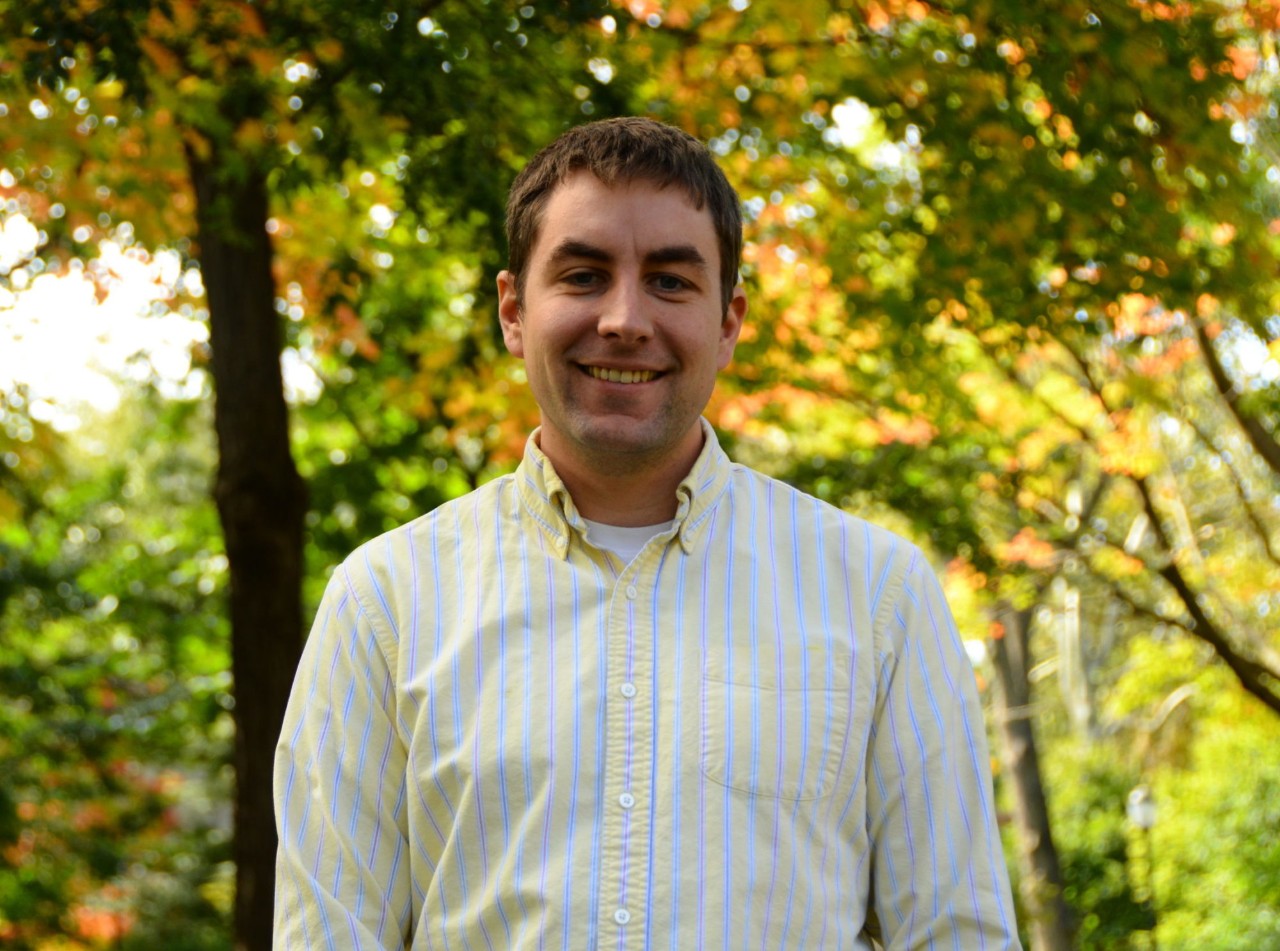
John Milligan, PhD, assistant professor in Chemical and Biological Sciences at Jefferson’s College of Life Sciences.

Proteins, fats, carbohydrates and the very building blocks of all living things – DNA – are all organic molecules. These molecules occur naturally all around us – in the atmosphere, the soil, and the plants and animals we consume. For years, chemists have tried to replicate the synthesis of these organic molecules in the lab. These processes sometimes use toxic and harsh chemicals that can produce harmful waste. Researchers like John Milligan, PhD, assistant professor in Chemical and Biological Sciences at Jefferson’s College of Life Sciences, are developing new ways to produce organic molecules. Read on to find out more about Professor Milligan’s research story and the questions he’s trying to answer.

Q: What first sparked your interest in your area of research?

A: I became interested in the area during my postdoctoral studies at Penn. I think it is very cool that blue LED light can activate innocuous catalysts to carry out reactions that used to require harsh or toxic chemical reagents.

Q: What is your research focus?

A: I am starting a research program that involves using blue LED light to make organic molecules. I am also interested in exploring applications of 3D printing in organic chemistry.
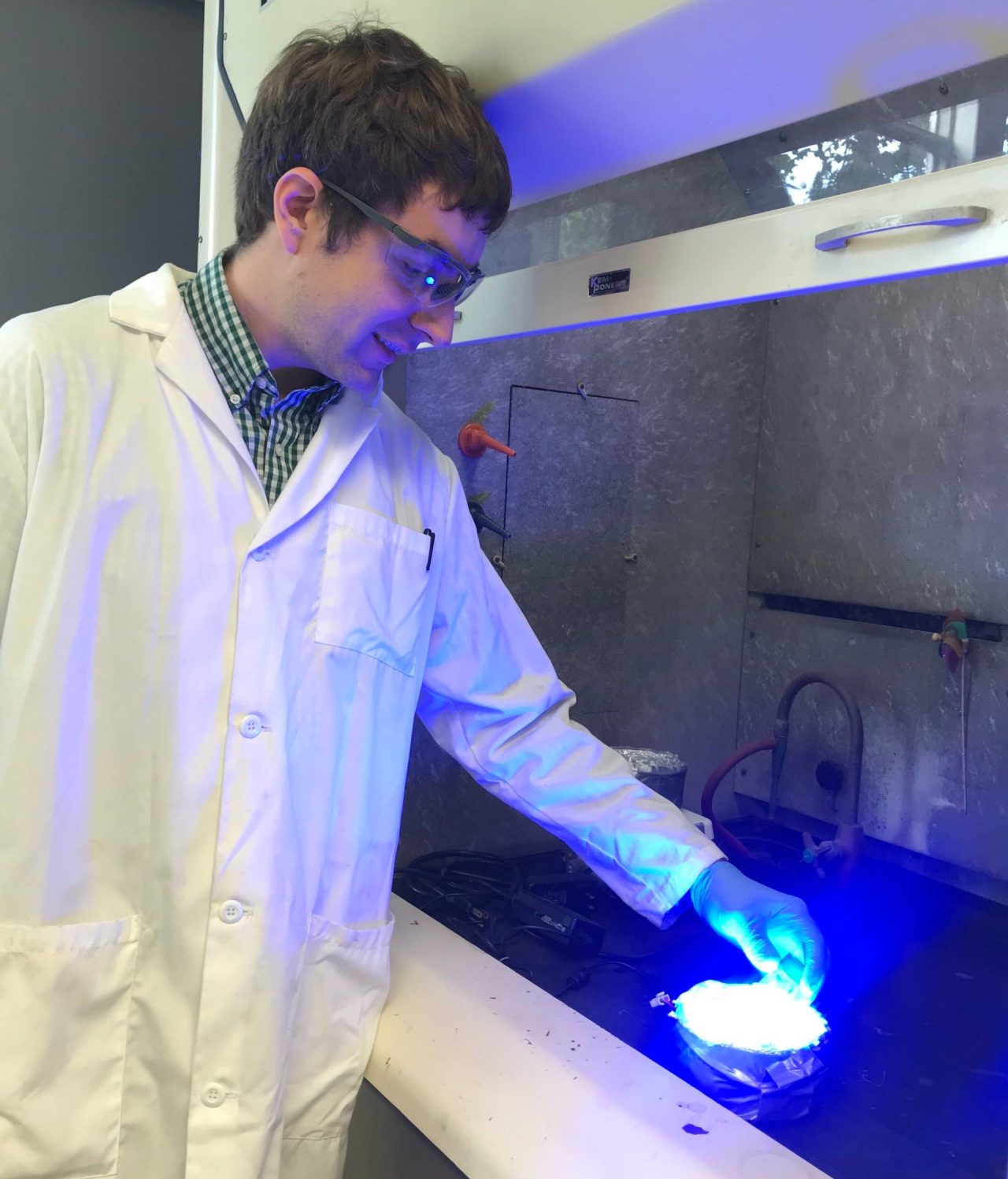
Dr. Milligan's research in action!

Q: What could these organic molecules be used for?

A: The goal is to use this approach to synthesize certain types of indole alkaloids, which are a family of molecules that can treat ailments ranging from cancer to neurological diseases.

Q: What’s one question you’re investigating?

A: One of the first questions we are trying to answer is whether copper salts can be used with the blue light to make amides, which are the groups that make the backbone of peptides and proteins.

Q: What is special about copper salts that they can be used in this process?

A: Copper can share its electrons with organic molecules to do interesting reactions, and since copper is abundant and non-toxic, this could be a very environmentally friendly way to make these molecules.

Q: What’s a cool fact about your study subject?

A: The reactions that we typically run are pretty easy to do. You just have to add all the ingredients in a vial, seal it up under a nitrogen atmosphere, and then let the light shine on it!

Q: How long does it take for the blue light to do its thing?

 A: Usually a few hours

Q: Many researchers have superstitions. Things they’ve done to cosmically help their experiments succeed. What are yours?

A: I’m not really a superstitious person, but I do have a lot of habits in the lab. For example, in my lab coat pockets, I always keep things like markers to make notes on glass (permanent marker isn’t so permanent when you have solvents in the lab!) and tweezers to grab the small objects we sometimes use in setting up reactions.

Q: What’s the best part of your job?

A: I really enjoy teaching students about the organic molecules that make up our bodies and other living things.

Q: What’s something people would be surprised to find out about you?

A: I’ve spent my life bouncing around the corners of Pennsylvania: I grew up in the southwest corner of the state (Washington), did my undergraduate studies in the northwest (Meadville), went back to Pittsburgh for my graduate studies, then ultimately landed in Philadelphia. The city has become home for me, but in a hockey match between the Flyers and Penguins my loyalty still lies with the Penguins!
Share This


Tags

  • Life at Jefferson
  • College of Life Sciences
  • Science
  • East Falls

Categories

  • Science and Technology
Showing 3 items.

Related Articles

24 Remarkable Jefferson Moments From 2024
Jefferson Honors Long-Time Employees
lungs
Jefferson Investigates: Cannabis & ADHD, Improving Recovery for Opioid Use Disorder, Small RNAs in COPD
Explore More Jefferson News
Thomas Jefferson University Home
  • Apply
  • Visit
  • Give
  • Facebook
  • Twitter
  • YouTube
  • Instagram
  • LinkedIn
  • Jefferson Health
  • Innovation
  • Philanthropy
  • Contact Admissions
  • Privacy Policy
  • Consumer Information

Jefferson holds itself accountable, at every level of the organization, to nurture an environment of inclusion and respect, by valuing the uniqueness of every individual, celebrating and reflecting the rich diversity of its communities, and taking meaningful action to cultivate an environment of fairness, belonging & opportunity.