
The time after a patient is discharged from the hospital can be overwhelming – there can be lingering questions about medications and follow-up care, and hospitalization can have a profound impact on an individual’s well-being. During this time, many patients and their care support at home and in the clinic don’t receive timely follow-up and/or clear communication of what’s an emergency and what can be managed at home. It can be a lot to navigate, particularly for vulnerable populations who are struggling with financial burdens, and people with mental illness who may face challenges and barriers to executing discharge plans. Competing familial and economic needs and poor access and engagement with care providers also exacerbate patient adherence to their healthcare plans. The result—many patients end up being re-admitted to the hospital.
How Can Researchers Address Psychosocial Needs That Arise During Care Transitions?
Advocating for vulnerable populations to improve the care experience and health outcomes.
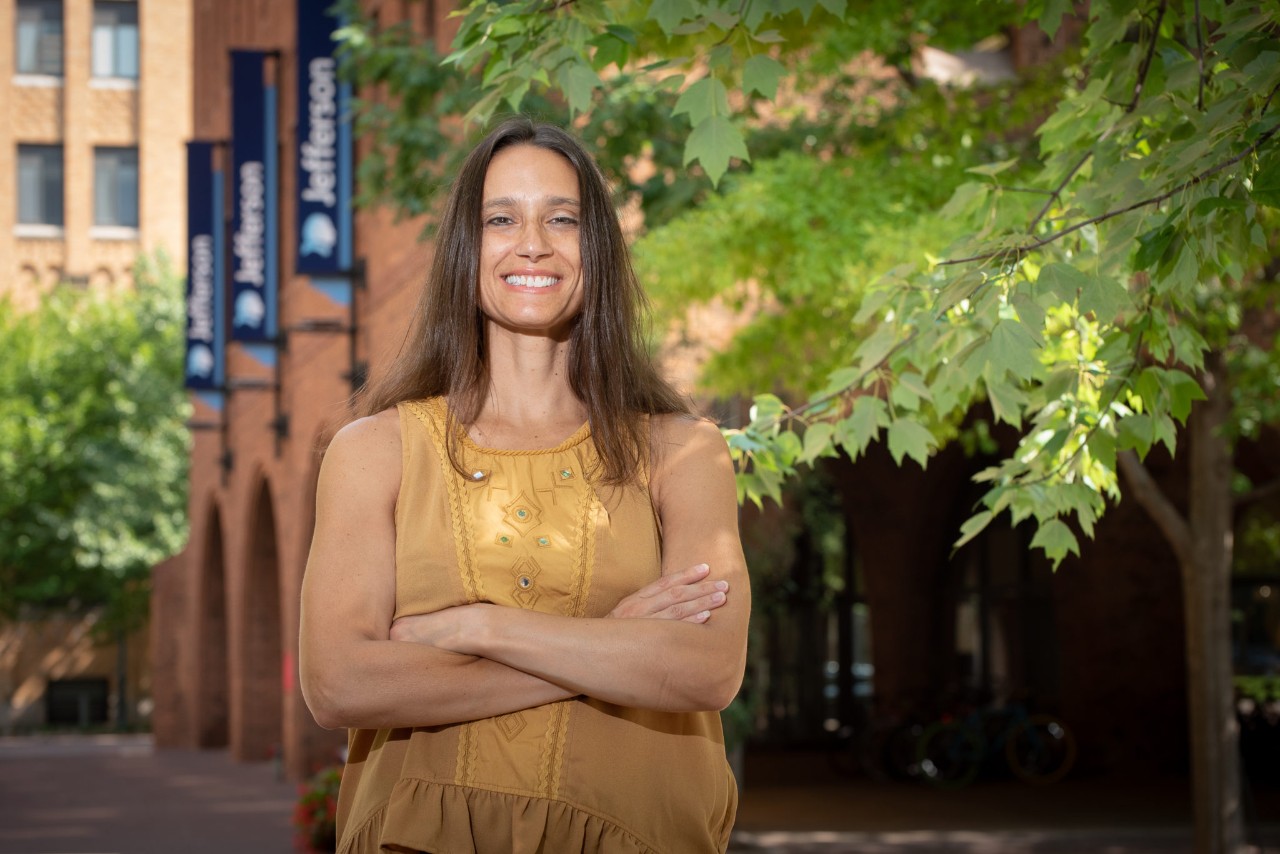 Dr. Angela Gerolamo, Associate Professor in the Jefferson College of Nursing. Photo by ©Thomas Jefferson University Photography Services
There is very limited evidence of interventions during care transition that reduce re-hospitalization in vulnerable populations, but researchers like Angela M. Gerolamo, PhD, associate professor in the Jefferson College of Nursing, are working to inform the development of patient-centered interventions that promise to improve the care experience and patient health outcomes.
Find out more about Dr. Gerolamo’s research and the questions she’s trying to answer.
Q: How long have you been at Jefferson? What led you here?
A: I have worked at Jefferson for eight years. Prior to working here, I was a senior researcher at Mathematica Policy Research, where I conducted rigorous mixed-methods evaluations. While I loved my work, I felt far removed from my roots—that is, “boots on the ground” advocacy for people with mental illness. In 2013, I transitioned to Thomas Jefferson University College of Nursing so I could have a more direct impact on patients through educating students.
Q: Tell us a bit about your field or area of research. What’s one question you’re exploring?
A: I am a board-certified psychiatric mental health nurse practitioner and have spent the majority of my career in the behavioral health field. My research examines the psychosocial needs of diverse, vulnerable populations during care transitions, like being discharged from the hospital. The ultimate goal of my work is to inform the development of patient-centered interventions that improve the care experience and patient health outcomes. I recently led a study, where we assessed the unmet needs of patients and their caregivers who were receiving home care services, post-hospitalization as well as those with chronic conditions like dementia, cancer, and heart failure to identify potential gaps in care and support services. Prior to that, I completed a study examining the unmet needs of individuals who experienced acute traumatic eye injury. In earlier work, I received funding from the Emergency Medicine Foundation and Emergency Nurses Association to assess the needs of patients seeking emergency care for an acute illness. Findings from these studies suggest that patients have unmet behavioral health and psychosocial needs during care transitions, and frequently, they are not connected to behavioral health services. In some cases, patients were linked to behavioral health services, but they were perceived as inadequate, while other patients could not access services due to lack of transportation or being homebound.
This interdisciplinary work, which also includes my co-investigator, Kristin Rising, MD, was foundational to focusing my research interests on the unmet psychosocial needs of diverse populations during care transitions.
Q: What first sparked your interest in your area of research/your research question?
A: I have always been drawn to working with vulnerable and disadvantaged populations, in particular, individuals with mental health problems. Early in my career, I did this by “touching one patient at a time” as a charge nurse of a 31-bed acute unit in a psychiatric hospital. I think bedside nursing is about having an impact on patients on an individual level, through one-to-one interactions, whereas research is focused on populations.
It was through my interactions with patients that I observed inequities in the care received by individuals with mental illness. While we stabilized patients’ conditions with medications, once we discharged them from the hospital, they returned to difficult social conditions and fragmented health care. It was clear that the system was broken and care transitions lacked effective coordination. My desire to ensure health equity of individuals with mental health problems propelled me to pursue a doctoral degree so I could address the inequities and outcomes of this population on a broader scale—that is, through scientific inquiry. My work supports the need for the development and delivery of integrated interventions that address behavioral health and psychosocial needs as well as physical needs. Interventions should be person-centered and incorporate perspectives of caregivers.
Q: What’s the fire in your belly that drives your passion for your research?
A: The stigma that exists around mental illness and the inequities experienced by individuals with mental health problems inspires me to bring awareness to the importance of addressing mental health and psychosocial concerns. In my view, the standard of care should be the integration of behavioral and physical health care.
Q: What’s a cool or little known or unique fact about your work?
A: My work highlights the importance of interdisciplinary research and collaboration. For instance, I responded to an e-mail from a colleague looking for a nurse collaborator. This relationship set the stage for a successful program of research that received funding and awards. Given my experience across diverse sectors and settings, I bring a unique lens and skill set to patient-centered research.
Q: If you had any words of advice for an aspiring researcher or student in this field, what would they be?
A: Follow your bliss and be humble.