
Editor’s Note: Alyssa Liegel is a 2022 graduate of the MS in health communication design program. She’s now a senior visual designer at Coforma.
Health Communication Design Can Help Navigate Tricky Topics
For her capstone, student Alyssa Liegel designs an app to break down stigmas and provide puberty and sex education resources.
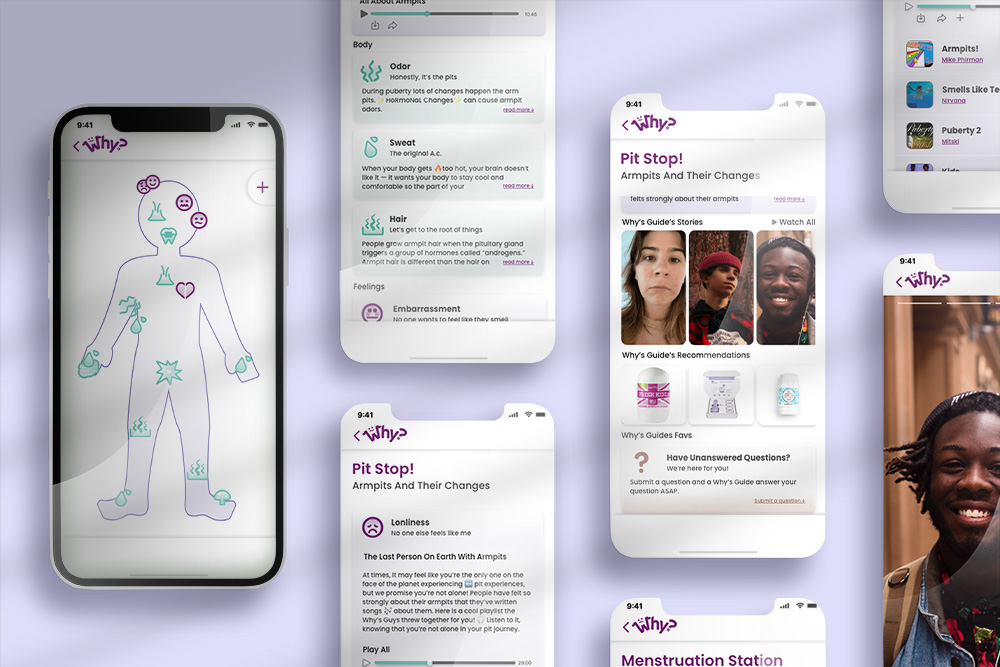 Tweens and teens often rely on unreliable and unregulated puberty and sex education resources. “Why? Body Talk for Kids” can help to bridge that gap.
Only 24 states mandate sex education in educational curriculums. Nationwide, current sex education programs vary widely in their content accuracy, emphasis and effectiveness. It’s not feasible to think children can or should be sheltered from this information.
Comprehensive puberty and sex education is medically accurate, evidence-based and age-appropriate. Most importantly, it gives children autonomy over their bodies, allowing them to arm themselves with the knowledge needed to protect themselves from abuse, STDs and STIs and give them the necessary info to understand their changing bodies.
 Jefferson grad Alyssa Liegel created “Why? Body Talk for Kids” for her capstone.
As children learn about puberty and sex from older siblings or classmates and become curious about their changing bodies, they will seek it out, often leading to unreliable and unregulated resources. Health communication design can help.
For my capstone, I designed the app, “Why? Body Talk for Kids,” to address these needs. The accessible comprehensive puberty and sex education resources meet youth where they are, use their own language and include them in the conversation. These resources can break down stigmas surrounding the experiences associated with puberty and create a more open, empathic puberty experience.
“Why? Body Talk for Kids” is a two-pronged system featuring in-person, enjoyable interactives and private digital resources. The interactives act as a fun way to build trust in the system and bridge to private digital resources that dive deeper into more nuanced, inclusive and personal subjects.
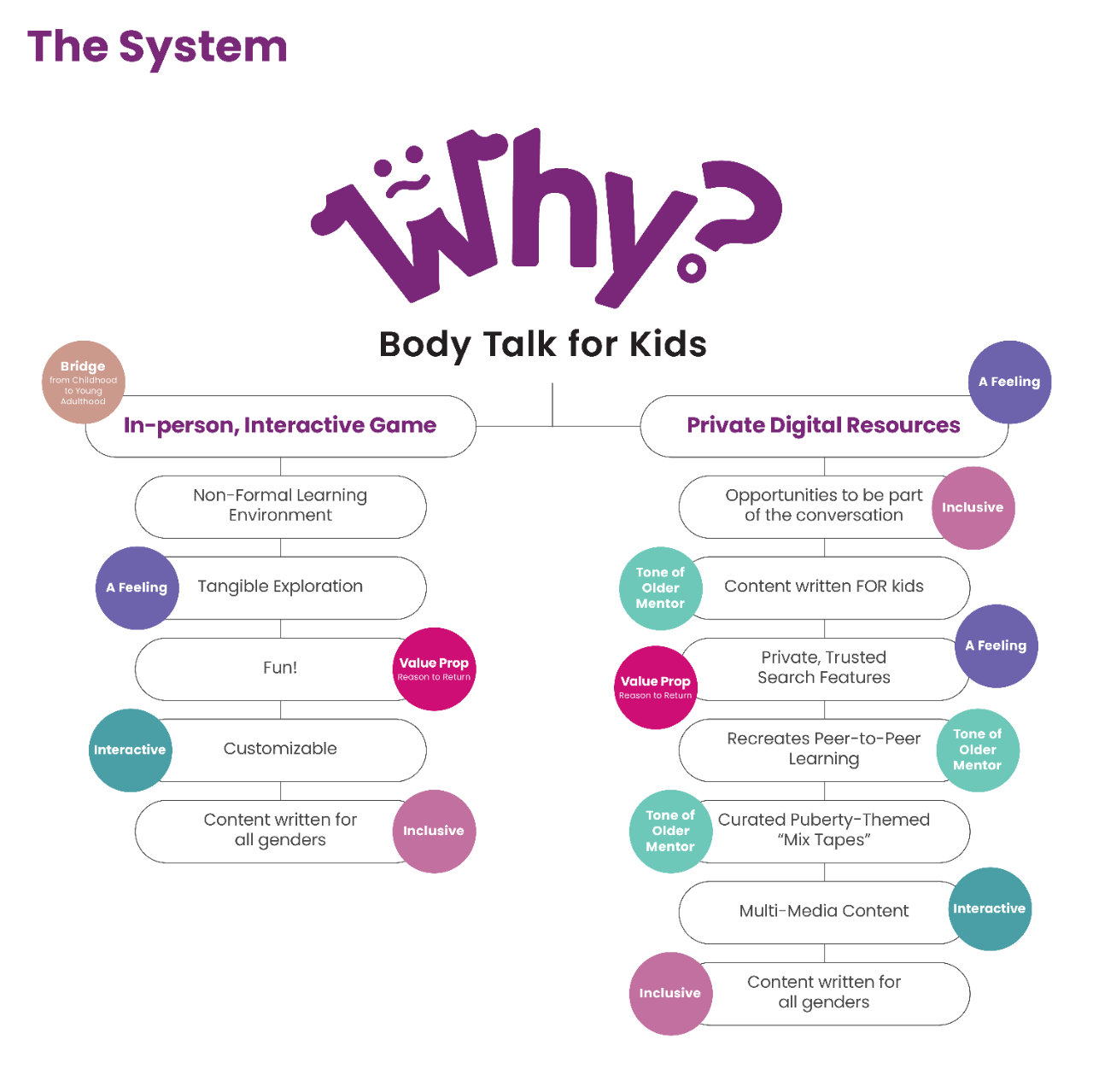 “Why? Body Talk for Kids” provides accessible comprehensive puberty and sex education resources to meet youth where they are, using their own language and including them in the conversation.
The system’s visual language centers around emojis, a familiar communication form for kids. In the interactive physical game, players compete to collect the most “Puberty Pogs”—pieces that use a custom emoji system to represent feelings and physical changes associated with puberty experiences—by creating matches in “Puberty Experience Cards” and “Body Part Cards.”
Once players earn Puberty Pogs, they insert them into “Puberty Pal” to create a new puberty experience in every game. As Puberty Pal fills up with experiences, players can either refer to the glossary that comes with the game or they can use the corresponding app to take a picture using the AR filter and see that puberty experience “come to life.”
The physical interactive game acts as a bridge to move to private, comprehensive digital resources for children to explore. Once in the app, players can zoom in on emojis representing puberty experiences and explore the experiences they made on Puberty Pal or can build their own experience by dragging emojis to body parts.
For example, zooming in on the armpit brings users to “Pit Stop, Armpits and Their Changes.” Each topic within each landing screen is expandable to learn more and features info in different formats for varied learning styles. Included here are audio, video and text versions about armpit hair. Added humor makes it digestible, approachable and fun.
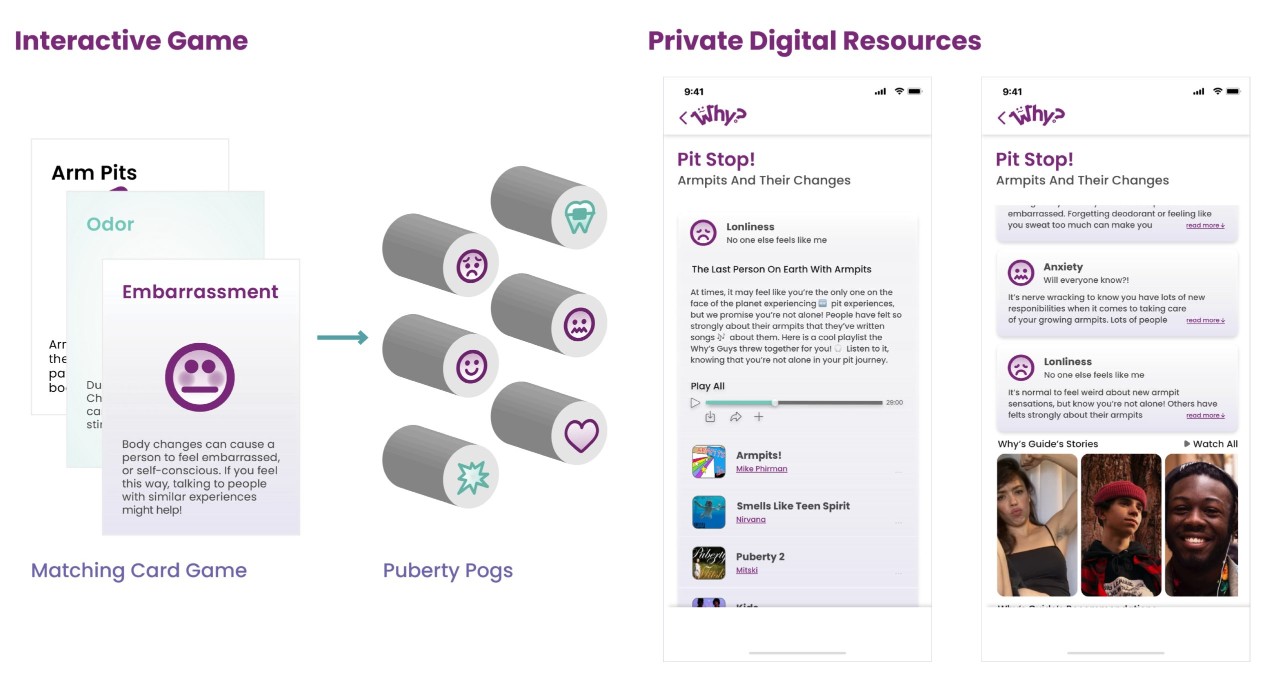 “Why? Body Talk for Kids” features interactive games and private digital resources.
Resources, including mixtapes, recommendations and front-camera TikTok-style stories about puberty topics, facilitate a “cool older sibling or mentor” tone. The app addresses new armpit experiences through a mixtape of songs about armpits and armpit-related topics to make children understand they’re not alone in these changes.
Research shows peer-to-peer education works in this space, and health communication design can be used to better connect with children instead of relying on outdated methods, notes Renee Walker, associate professor in the MS in health communication design program.
“As technology quickly evolves, so have channels we learn from and receive information,” Walker says. “More urgently than ever, design needs to address the gaps in how we receive crucial health information.”
Puberty can be a challenging and uncomfortable subject, but health communication design can make it approachable through a light-hearted tone and interactive engagement strategies, adds Maribeth Kradel-Weitzel, health communication design program director. “‘Why? Body Talk for Kids’ responds to a clear and immediate societal health need in an empathetic, inclusive and trustworthy manner.”