
At 14,411 feet, John Douds saw the sunrise on the summit of Mount Rainier outside of Seattle, and he also has hiked to the 100-Mile Wilderness on the Appalachian Trail in Maine. “It’s 100 miles from paved road to paved road with nothing manmade as far as the eye can see,” describes the third-year Sidney Kimmel Medical College student.
Jobs of the Future: From Mountains to Deserts and Oceans, Wilderness Medicine Provides Care in Austere Environments
Jefferson’s Wilderness and Disaster Medicine Society president explains the field’s rapid growth and why all med students can benefit from learning more about wilderness medicine.
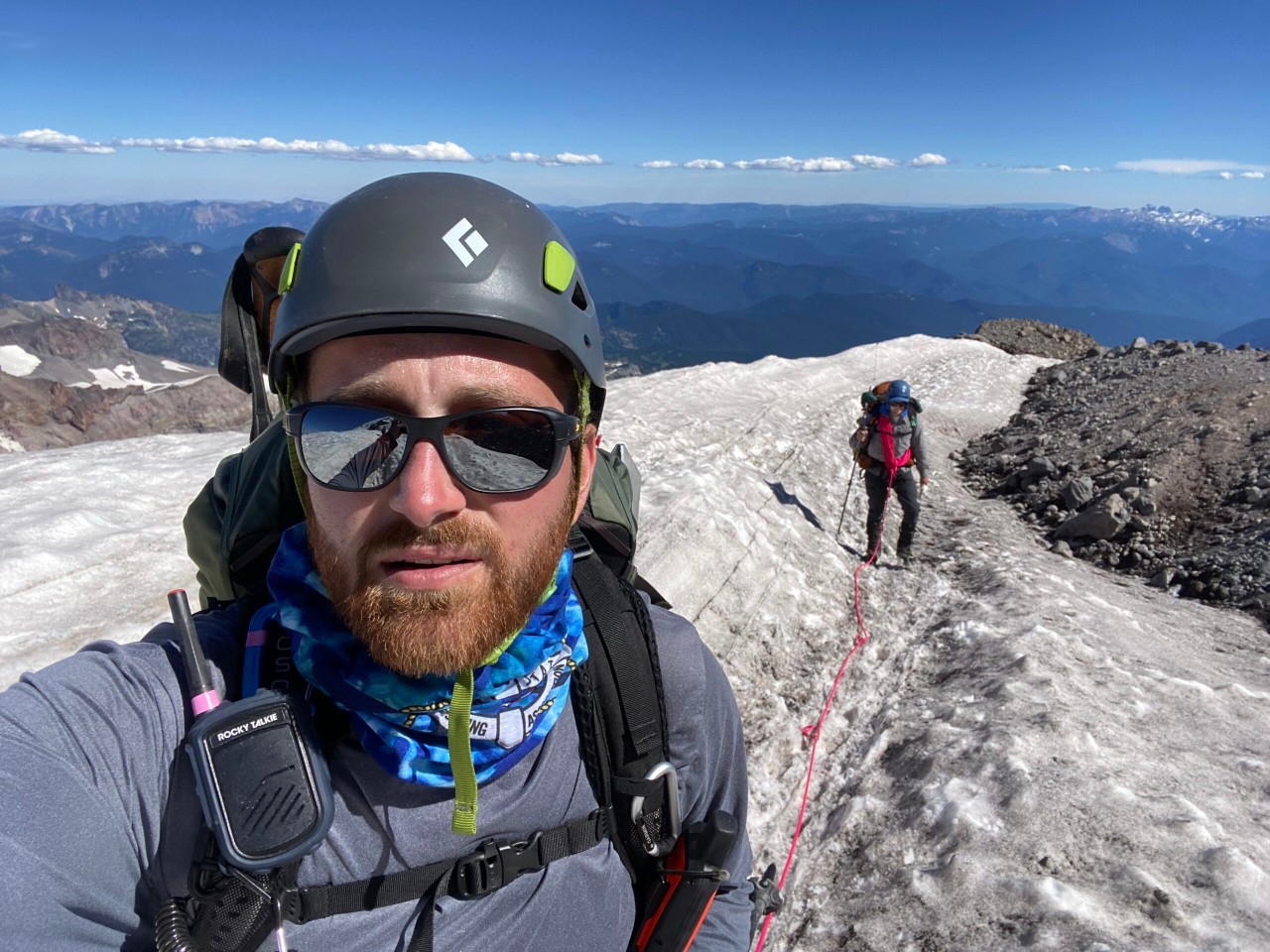 Sidney Kimmel Medical College student John Douds climbs to the summit of Mount Rainier.
The avid outdoorsman serves as president of the University’s Wilderness and Disaster Medicine Society. In addition, he organizes the Mid-Atlantic Student Wilderness Medicine Conference, which will be at Jefferson on Oct. 14-15. The meeting will attract hundreds of medical students, residents, fellows and attendings from around the nation.
For The Nexus, Douds explains the field’s growing interest; where he sees his career heading (hint: temperatures can reach -58°F there); and why wilderness medicine isn’t only for nature lovers.
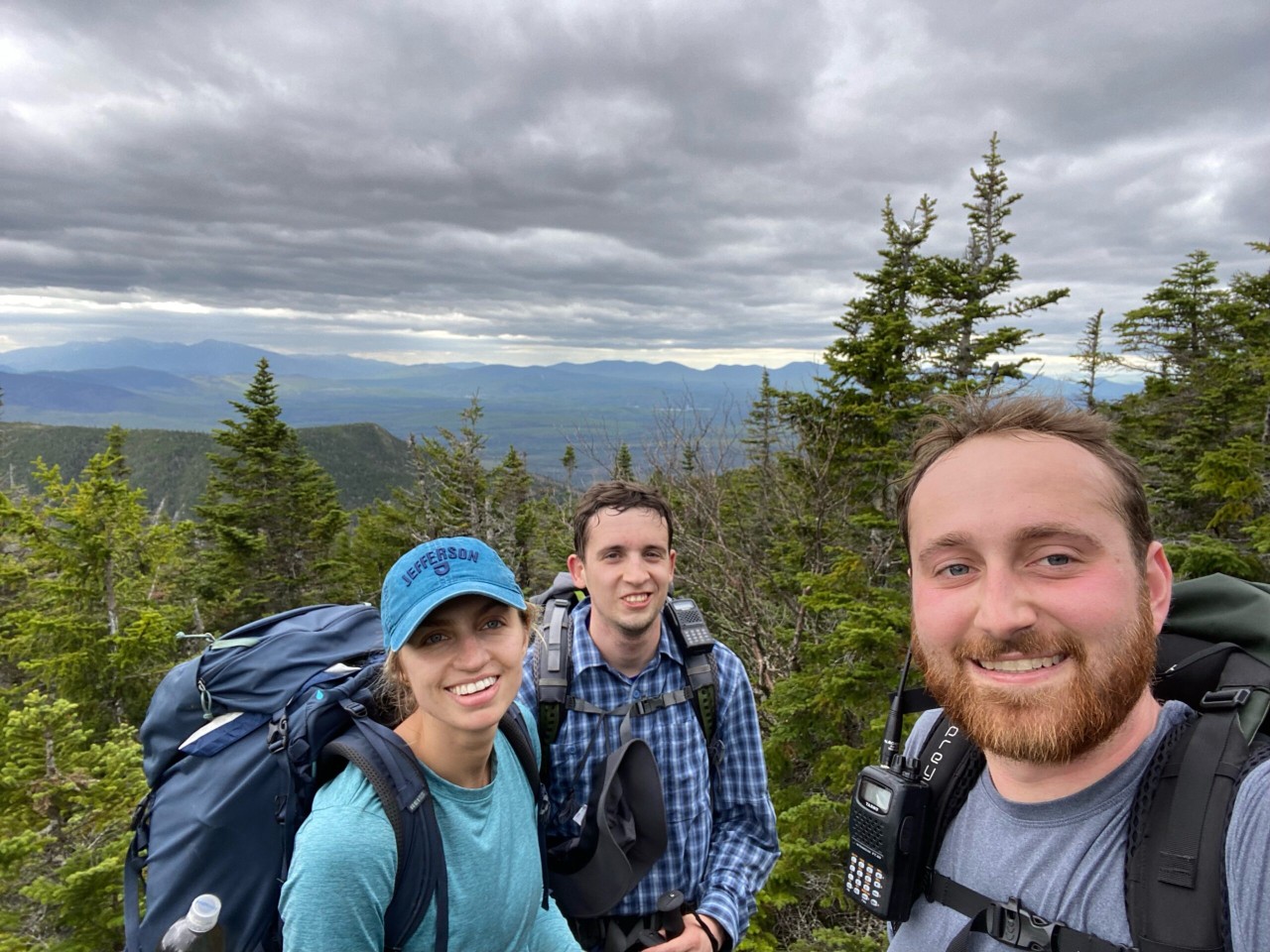 The board of the University’s Wilderness and Disaster Medicine Society includes (l-r) Vice President Michaela Farrell, Secretary Matthew Piechni and President John Douds.
What is wilderness medicine?
Wilderness medicine focuses on the methods, logistics and considerations for providing patient care in an austere environment with limited resources. Prolonged care in the field, dive medicine, alpine medicine, tactical/military medicine, medicine in space, humanitarian medicine and disaster response are just some aspects covered in wilderness medicine.
Has the need for this type of care—and wilderness medicine providers—increased in recent years?
Wilderness medicine sees a constantly growing need for providers. From local nature spots to national parks, more and more people are getting outside. The growth of global tourism and guided tours to remote environments will likely create new opportunities in the field.
Just this year, the world has seen commercial deep-sea submarines and low-orbit space travel. Furthermore, climate change is leading to increasingly severe and unstable weather patterns requiring humanitarian and disaster medical responses.
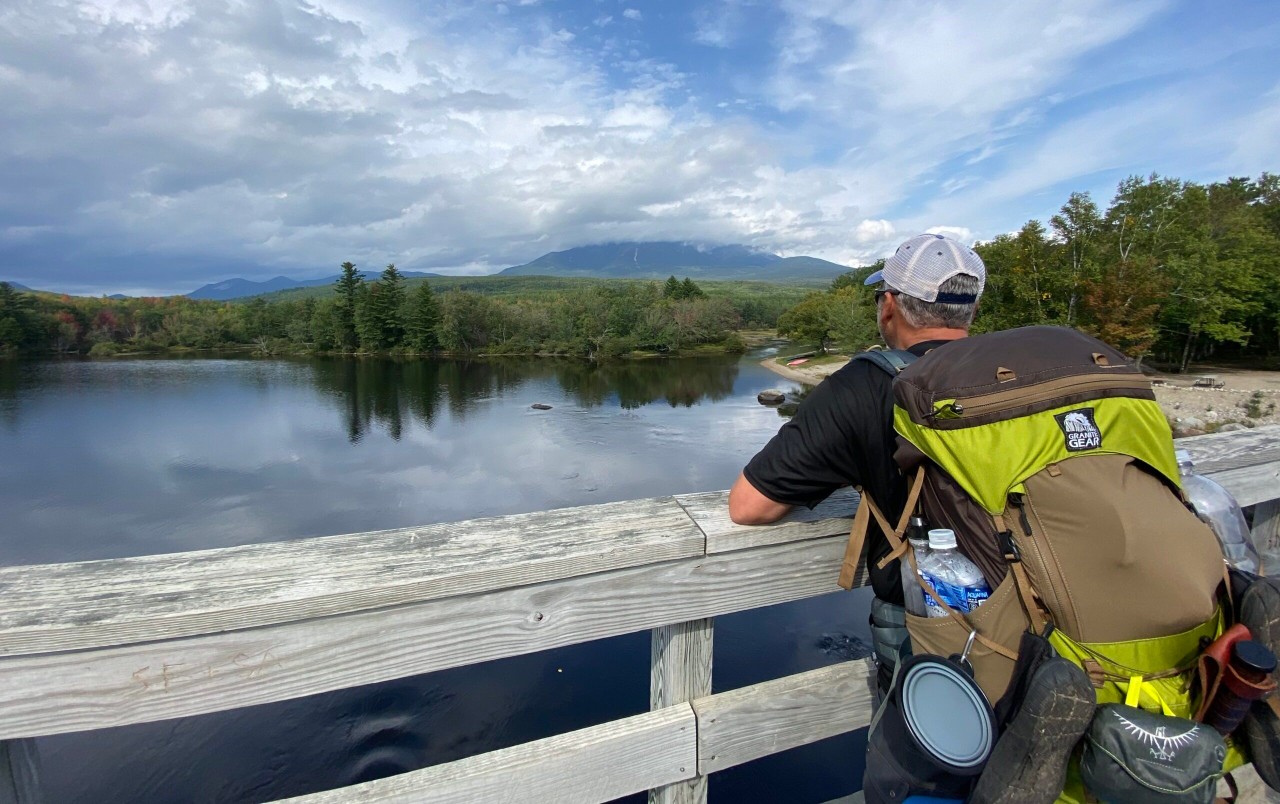 Med student John Douds takes in the view of the 100-Mile Wilderness on the Appalachian Trail in Maine.
What are some examples of settings where physicians practice wilderness medicine?
Wilderness medicine is practiced all over the globe. The knowledge and training can be applied to any situation where care is being provided with limited resources. Those in wilderness medicine operate in places like Mount Everest, Yellowstone National Park, Antarctica’s McMurdo Research Station, reservations and warzones.
Why are you interested in this field, and where do you see wilderness medicine taking you?
I’ve enjoyed the outdoors since my time as an Eagle Scout. When I’m not in the hospital, I love backpacking, climbing, mountaineering, skiing and boating—all of which have applications for wilderness medicine. I see myself incorporating my medical practice into these activities after residency and intend to apply to practice at McMurdo Research Station.
 In one of his favorite wilderness moments, John Douds saw the sunrise on the summit of Mount Rainier.
What types of qualities and attributes does someone need to practice wilderness medicine?
They should be knowledgeable, able to quickly adapt to new situations and enjoy working in a field rapidly evolving in its opportunities and guidelines. Plus, it can’t hurt to be interested in the outdoors and emergency medical care. For those who like the outdoors, it’s a great way to incorporate your hobbies into your career.
With lecture titles like “Revenge of the Fish” and “Swamp Medicine,” the Mid-Atlantic Student Wilderness Medicine Conference doesn’t sound like most medical meetings. What’s your pitch for med students to attend?
When people hear “wilderness medicine,” they think it’s for those who hike, backpack, climb, etc. However, wilderness medicine teaches principles and skills applicable to all fields of medicine. Every healthcare provider will likely come across some form of out-of-hospital emergency—from anaphylaxis on an airplane to wilderness ailments presenting at your practice. Lessons from this conference teach physical exam diagnosis skills for when ultrasound, CT and MRI aren’t immediately available and how to solve complex medical problems by thinking outside the box.
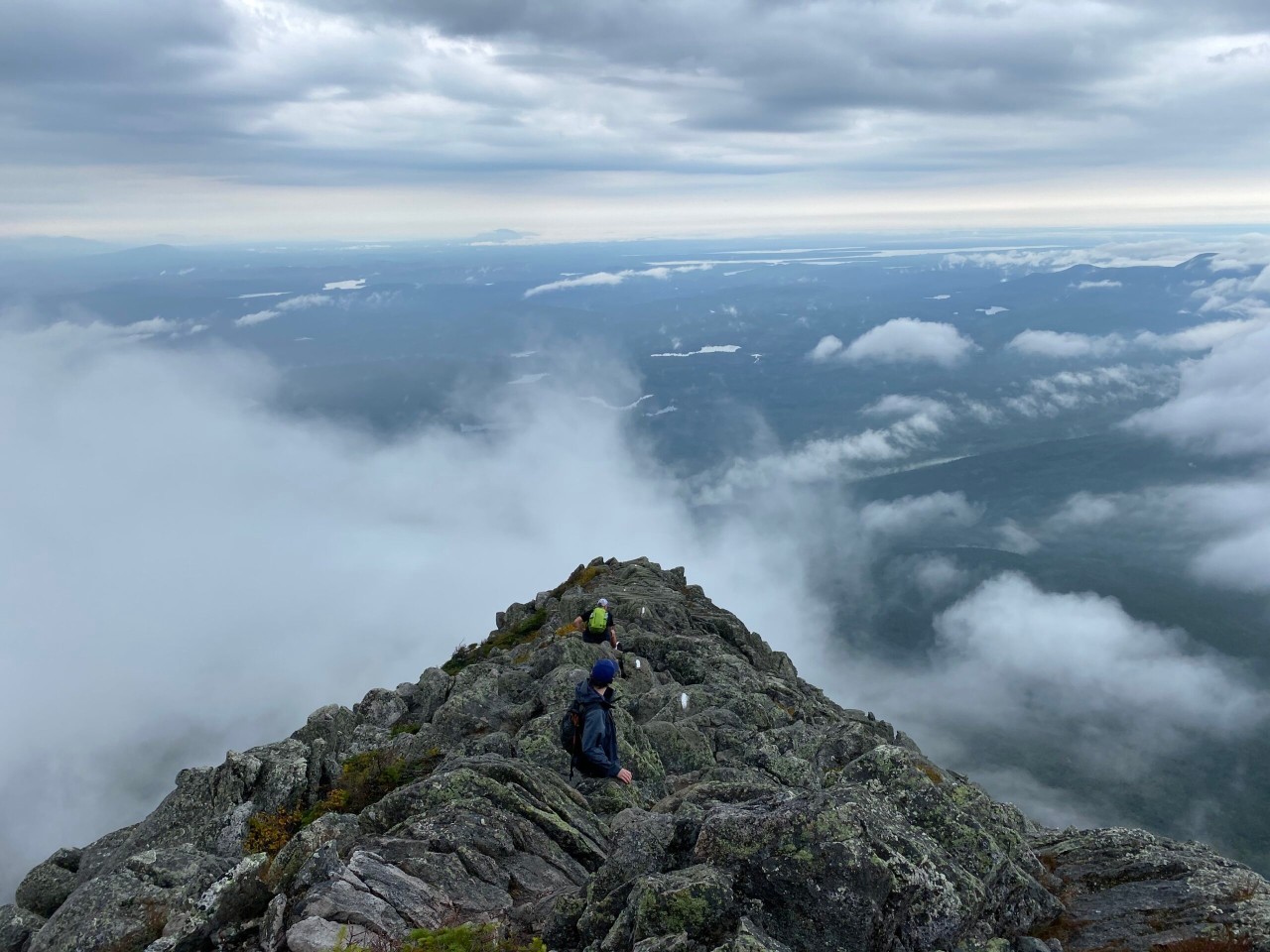 The growth of global tourism and guided tours to austere environments will likely create new opportunities in wilderness medicine. Here, John Douds hikes Mount Katahdin, Maine’s highest point.