

Jefferson Investigates: The Mother-Child Bond, Prostate Cancer Disparities, Platelet Spreading & Clotting
Exploring the impact of prenatal connection; the use of MRI to diagnose prostate cancer; the separate pathways used for platelet spreading and clotting.
 Image Credit: © Adobe Stock Seventyfour/422307550
How a Mother’s Connection during Pregnancy Shapes Future Relationships
A recent study conducted by Nora Medina, PhD, a postdoctoral researcher of family and community medicine at Thomas Jefferson University, along with colleagues from the University of Chicago, highlights the importance of the emotional bond that a mother establishes with her child during pregnancy.
The study team followed 160 young, low-income, racially diverse mothers from pregnancy until their children were two and a half years old. Mothers who felt more connected to their babies during pregnancy were more likely to have a healthier, positive relationship with their children later. Additionally, those who had more challenging relationships with their own parents had weaker prenatal connections and expressed more anger and other negative feelings towards their infants.
The research fills a gap in existing studies, which have not extensively explored how mothers’ attachment to their babies during pregnancy serves as a foundation for parent-child relationships later in life.
In addition, Dr. Medina’s research addresses historical misconceptions about young, low-income mothers as being problematic parents. The large majority of the young mothers in this study had strong prenatal connections to their infants and positive relationships with their toddlers.
“Parenting is challenging, and young, low-income mothers face additional stressors,” Dr. Medina says. “I focused on studying mother-infant relationships within this population to produce findings that may inform parenting support programs more closely aligned with the lived experiences of young, low-income mothers.”
Dr. Medina suggests that support to promote strong parent-child relationships should begin during pregnancy. Interventions should help young mothers explore their past relationship experiences and recognize how they shape their expectations of parenthood. Programs that incorporate perinatal social workers or doulas could help facilitate these discussions and encourage healthier attachment patterns.
Despite the promising insights, Dr. Medina says funding remains a key barrier to accessibility of such support programs. Moving forward, she hopes to further investigate how familial and community-based support can help strengthen early mother-child bonds and improve long-term outcomes for young mothers and their children.
By Queen Muse
 Image Credit: © Adobe Stock Mark Kostich/464160113
Disparities in Use of MRI to Detect Prostate Cancer
Prostate cancer is the second-leading cause of cancer deaths in American men. Further, non-Hispanic Blacks have a higher incidence of prostate cancer and are more likely to die from it than are non-Hispanic whites. A biopsy is recommended if a patient has certain risk factors like age, family history, symptoms and screening test results. When the biopsy sample is taken, physicians use either ultrasound or magnetic resonance imaging (MRI) to guide the procedure.
In a new study, researchers at Thomas Jefferson University combed through one of the largest cancer databases to assess the use of MRI in diagnosing prostate cancer from 2012 - 2019 and whether this choice contributes to disparities in cancer care.
“According to clinical guidelines, MRI is better at identifying cancers and has been increasingly used over the past decade,” says Christiane El Khoury, PharmD, assistant director of cancer research administration at Jefferson and first author of the study. Studies have found that MRI-guided biopsies reduce the number of future biopsies a patient may undergo. However, the technology is more costly and may incur more out-of-pocket expenses.
Dr. El Khoury and her colleagues at the Sidney Kimmel Comprehensive Cancer Center - Jefferson Health found that there continues to be a gap in MRI use between Black and white patients. The good news is that the gap was halved in 2019 when it was about 20% compared to 2012, when it was 43%.
However, other disparities persist. Rural patients are 35% less likely than urban patients to have used MRI diagnostics, and that gap was relatively stable over the study period. In addition, the study identified regional differences, with far less MRI use in South and Central U.S. compared to the West. The research team, led by Grace Lu-Yao, PhD, population science researcher and professor at Sidney Kimmel Comprehensive Cancer Center - Jefferson Health – Jefferson Health, plans to dig more deeply into geographic disparities to look for clusters of high or low utilization.
“We’re passionate about this research: finding drivers of disparities,” Dr. El Khoury says, adding that the hope is to enhance access to MRI and potentially improve prostate cancer outcomes.
By Jill Adams
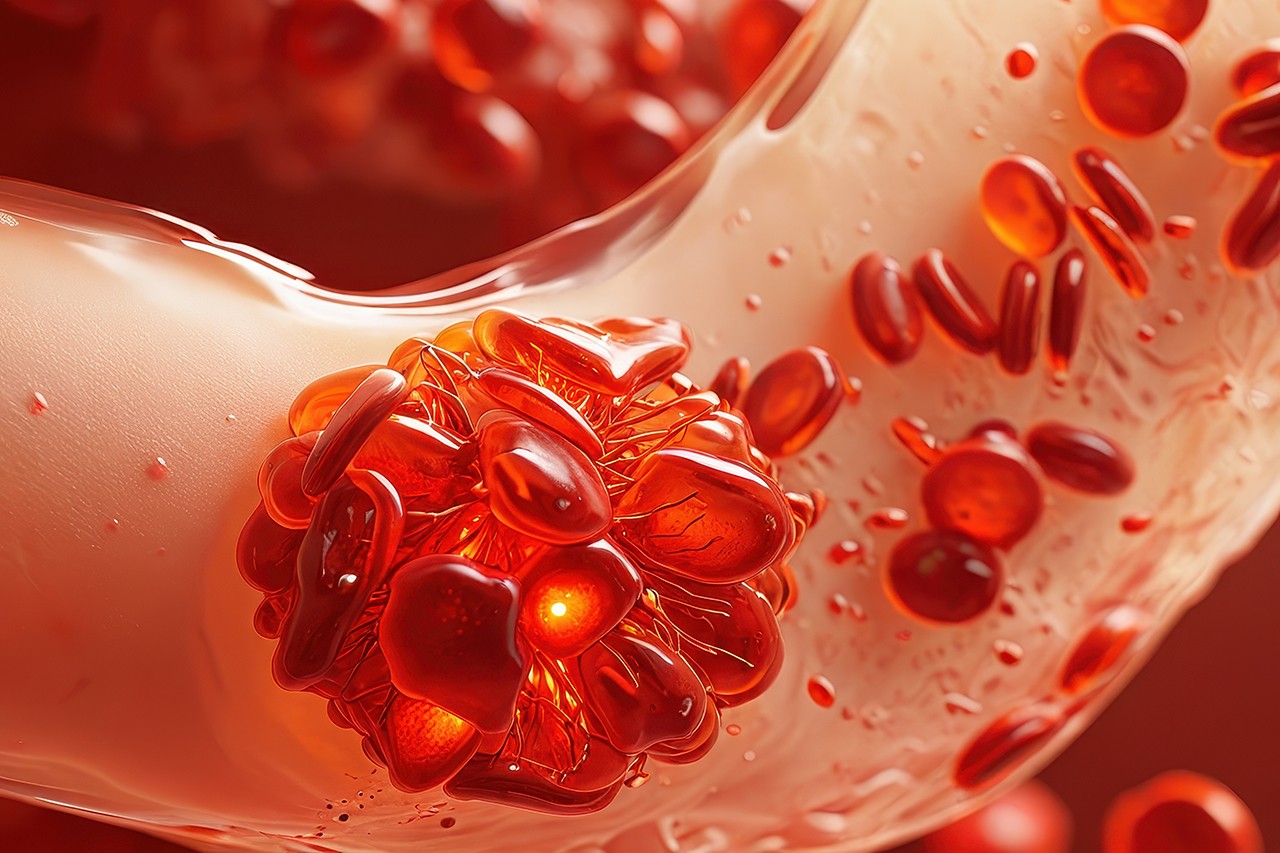 Image Credit: © Adobe Stock vartox/885863081
Spreading and Clotting of Platelets are Regulated by Separate Pathways
When skin is cut or damaged, tiny cell fragments circulating in the blood, called platelets, arrive at the injury and spread out to stop the blood from leaking out. Once enough layers of platelets accumulate, like stacks of sandbags against a flood, a blood clot is formed, trapping red blood cells. When the break occurs in a blood vessel, the clot contracts to facilitate smooth blood flow through the vessels.
Until recently, researchers believed that platelet spreading and clot contraction were controlled by the same pathway. However a recent study from Thomas Jefferson University researchers challenges that thinking, opening up a holy grail of possibilities for treatments targeting both bleeding and thrombosis or clotting.
The study, led by molecular biologist and professor at Sidney Kimmel Medical College, Ulhas Naik, PhD, showed that while the process starts from the same place, different signaling molecules were activated depending on the endpoint. Using human platelet-rich plasma, the researchers found that when certain signaling molecules were inhibited, spreading was blocked but not clot contraction and the opposite was true as well.
“This is the first time anybody has reported two different pathways playing distinct roles,” says Dr. Naik.
Dr. Naik explains that in certain diseases, it may be useful to prevent clot contraction without blocking platelet spreading – this allows the loose clot to be dissolved without risking excessive blood loss. Therapies that block platelet spreading could be advantageous in implanted devices such as artificial valves and stents, where platelets adhere to these devices and form a thrombus. Current thrombotic platelet inhibitors used clinically often lead to bleeding side effects since they inhibit both processes.
The next steps would involve testing these pathways in genetically engineered mice. Dr. Naik sees promise in this discovery attracting pharmaceutical avenues in the future.
By Deborah Balthazar