Jefferson Students Embrace New Studio Art Minor
Open to all majors, the courses create a richer learning environment.
When a few pre-med and biology students unexpectedly enrolled in a design-based drawing course in 2022, associate professor EJ Herczyk realized something important: Students across Jefferson sought creative outlets that felt just as meaningful as their major coursework.
Until then, the University had only offered a handful of undergraduate drawing classes—none tailored to students outside design fields.
As Herczyk spoke with these students, he realized they wanted more opportunities to explore creativity, traditional studio courses and spaces to learn skills that extended beyond their disciplines.
“It became clear that a wider range of art studio offerings could enrich students’ education and give them the chance to explore interests beyond their designated discipline,” he says. “The program was really inspired by that student curiosity and desire to offer something meaningful that didn’t previously exist here.”
That spark grew into a full suite of courses, including painting, printmaking, drawing, and materials and techniques, and ultimately into the launch of the studio art minor, available to all majors starting in 2025.
A Creative Community for Any Major
One of the program’s defining values is its commitment to being open to all students—an intentional decision from the start, Herczyk says.
“Each student brings in a unique perspective and approach to the studio art courses, creating a richer learning environment for everyone,” he explains. “It’s wonderful to see students form connections and build friendships with people they might never have met outside of these art courses.”
That sense of community resonates deeply with students.
Grace Gaither thought at first being a pre-medical studies student precluded her from the art minor. However, once she walked into the Mott Hall studio, she found what she now describes as “a whole little community ... and I truly don’t know what I would do without it.”
For Gaither, art class goes beyond a creative break; it’s a lifeline in the intensity of her major. “I’m constantly bombarded with stress, work and exams, and having an art class break up the day is a lifesaver,” she says. “The separation from my major allows me to enter a less competitive environment with people from all majors and backgrounds.”
Skills That Strengthen Every Discipline
While the courses focus on traditional studio techniques, students quickly discover their impact stretches far beyond the page or canvas.
Herczyk recalls a Jefferson pre-med alumnus now in med school, who credits figure drawing with sharpening his approach to studying the human body.
“Spending time studying the human form, noticing subtle details and translating them through drawing builds a kind of understanding that’s very different from memorizing charts,” Herczyk says.
Students across majors echo that experience:
Landscape architecture student Emily Luckenbach says the courses have directly influenced her design work: “Taking these classes has helped me fine-tune my skills and inspired me to take on a more artistic approach, creating more work by hand instead of digitally.”
Fashion design major Annalee Capuano found printmaking transformative. “This class opened up opportunities for me to create visual interest and surface design on my garments,” she says. “The editing and revising process we practiced in printmaking translates directly to the design process.”
Biotechnology student Jennifer Tran enrolled to balance the structure of her STEM classes. “The most meaningful part has been realizing how much progress you can make without a formal art background,” she says. “It surprised me how much the process teaches you about patience and trusting your own creative development.”
For Herczyk, this blend of disciplines is part of the magic. “Creating art enhances cognitive flexibility, patience and the ability to generate and refine ideas—all skills that apply to every discipline,” he says.
A Growing Presence Across Campus
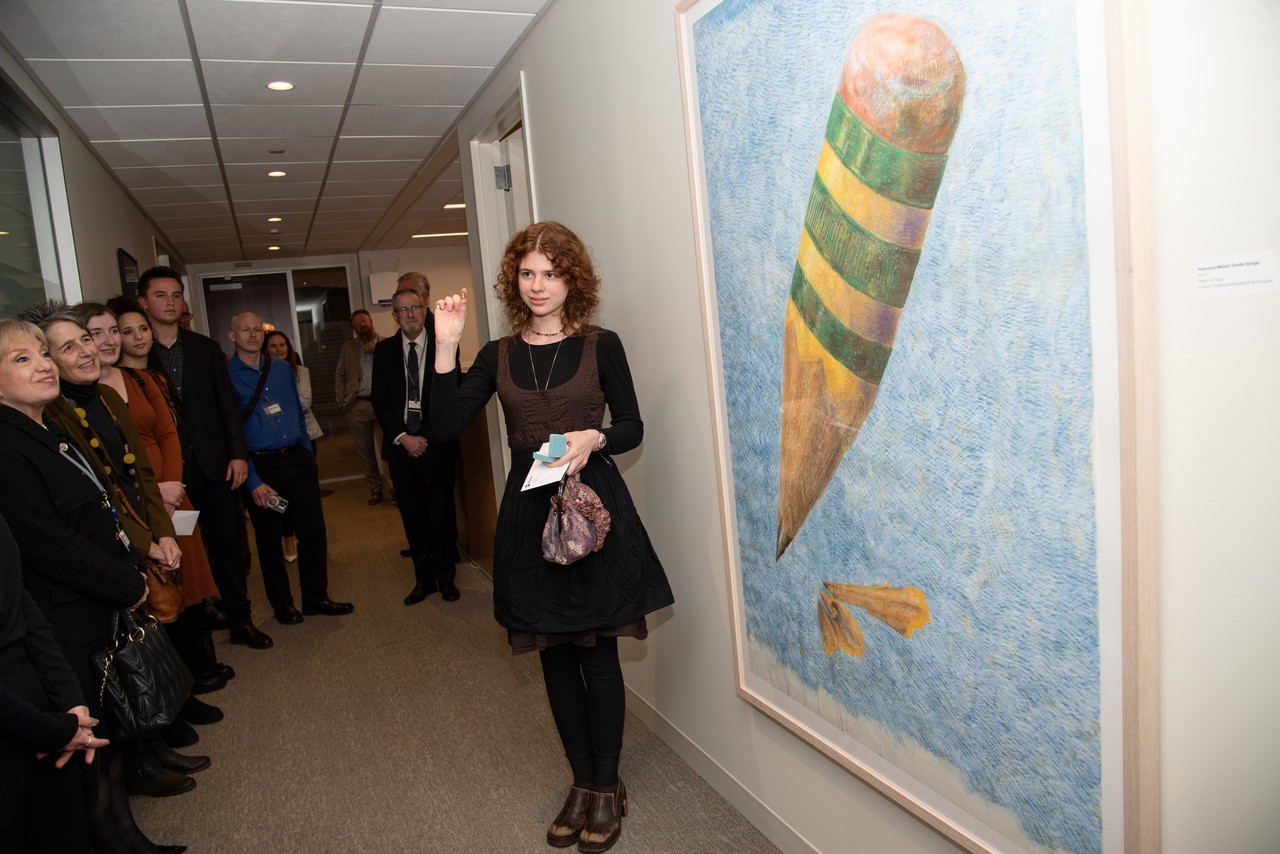
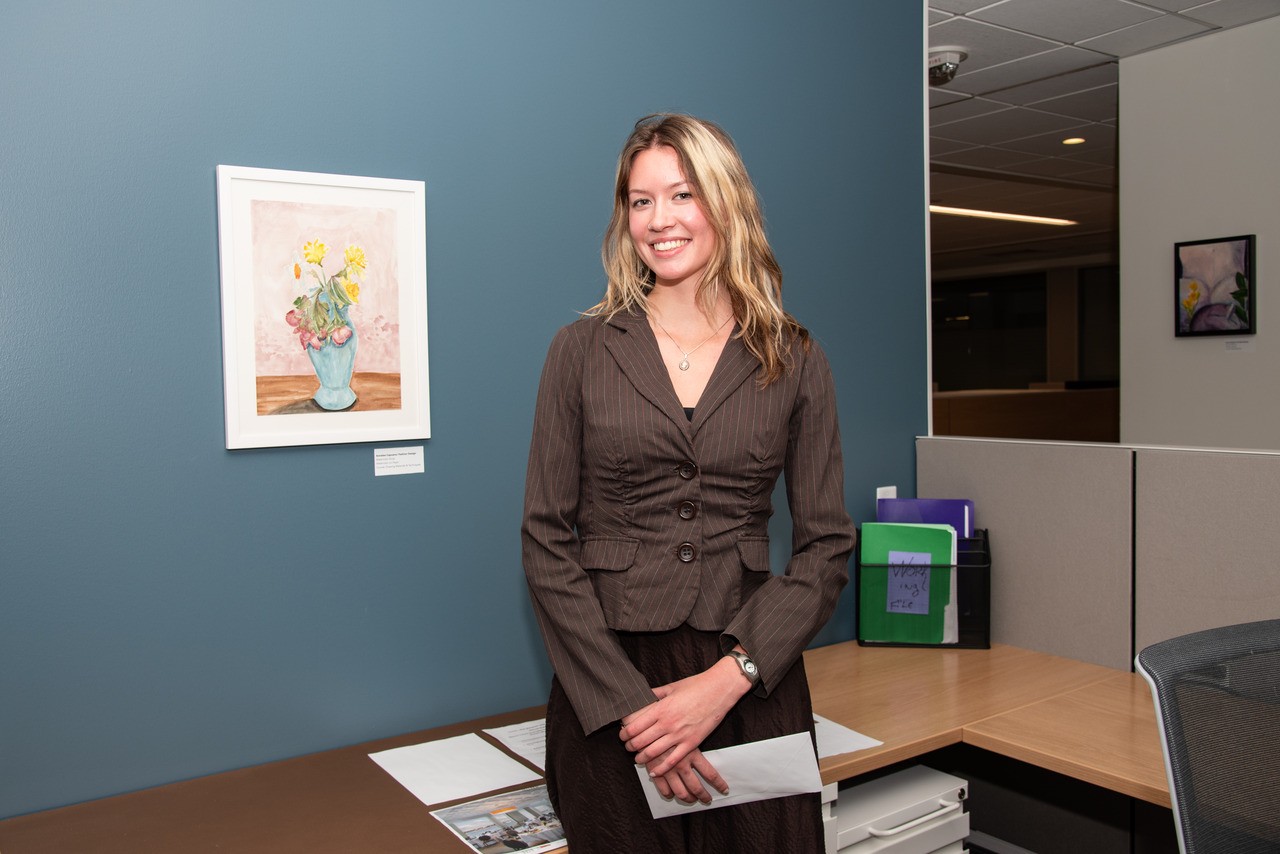
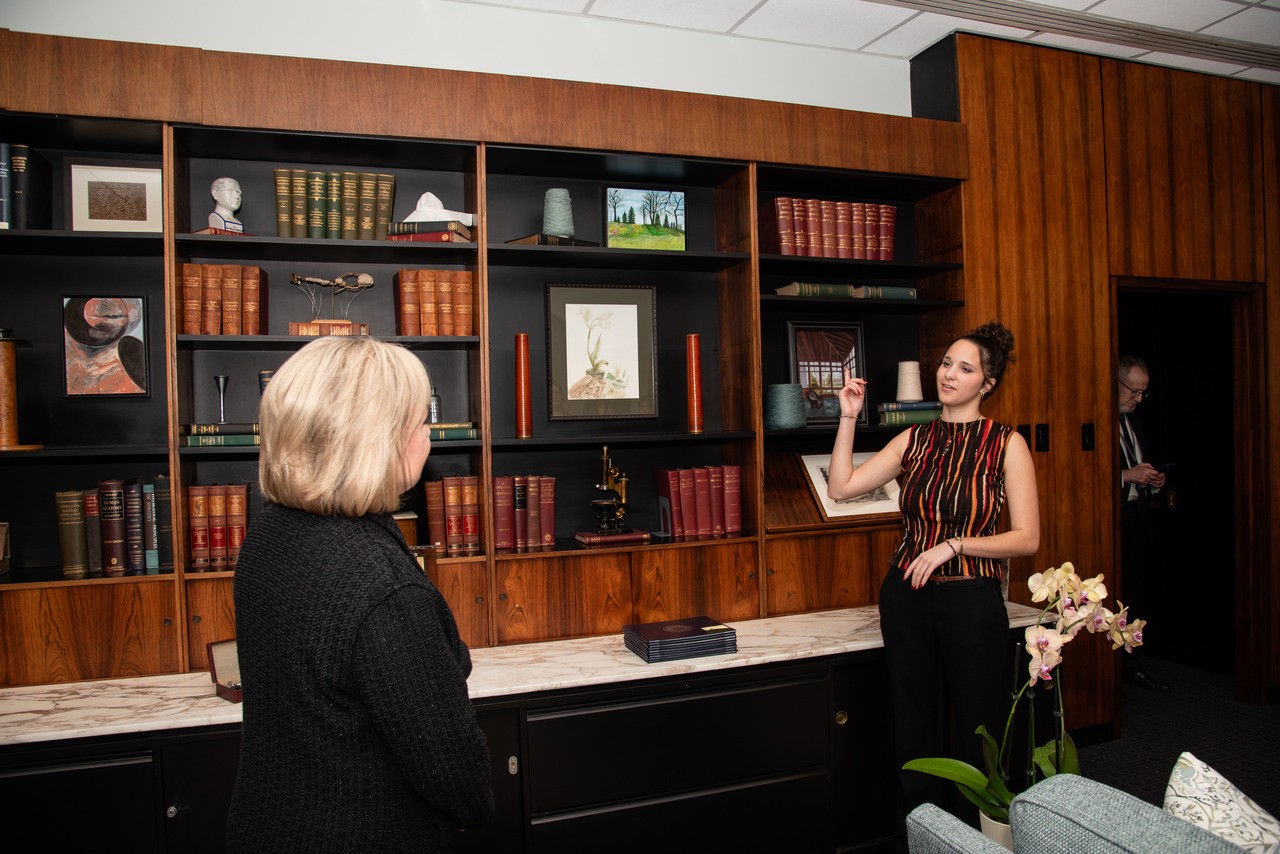
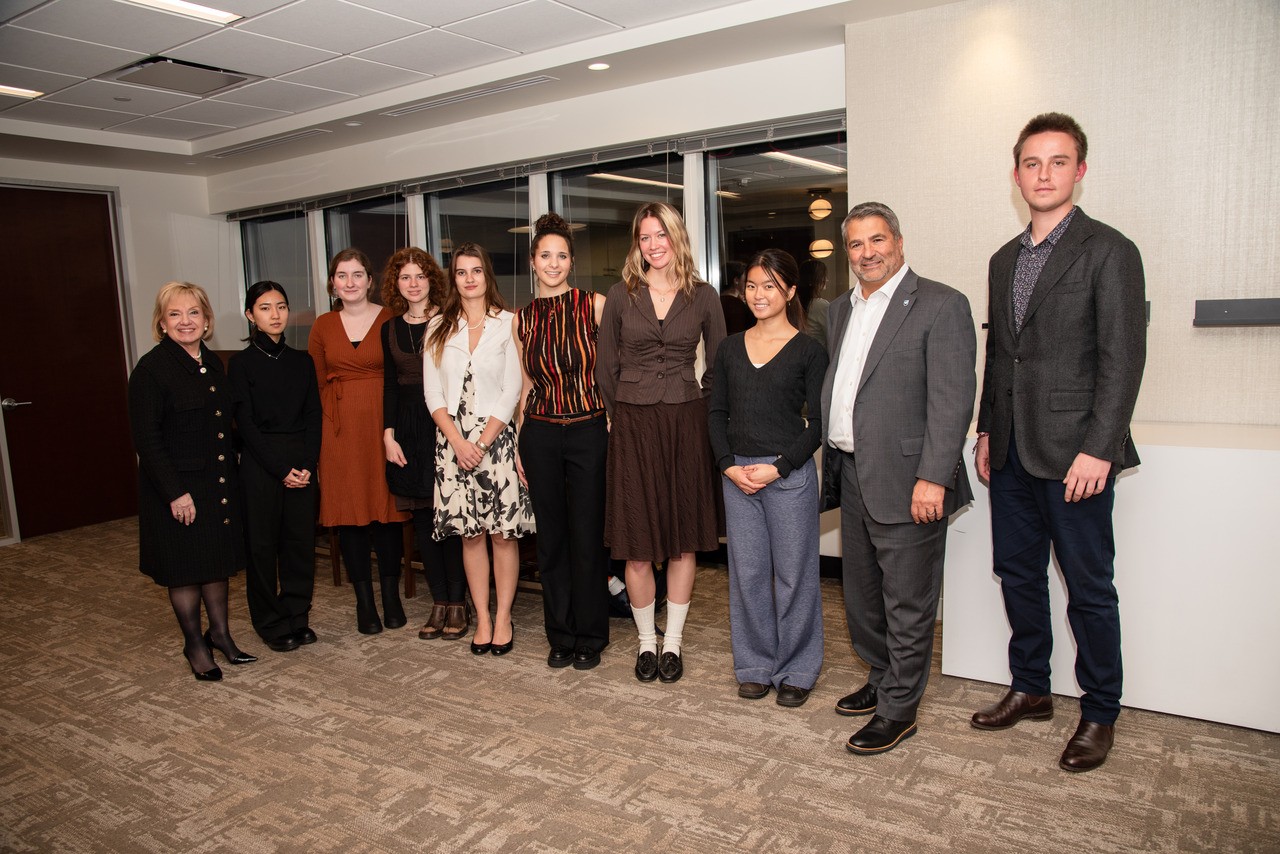
As the program expands, so does its visibility. Student work is now on display in the offices of Jefferson leadership, including CEO Dr. Joe Cacchione and University President Dr. Susan Aldridge.
“It signals how genuinely enthusiastic and supportive our leadership is about the arts at Jefferson, which is an honor and a huge encouragement for the program,” Herczyk says.
Inside the classroom, he sees another kind of growth unfolding. “Something special happens when students push past their comfort zones and challenge their own habits or assumptions,” he says. “That’s where discoveries happen, both technically and creatively.”
The studio art minor offers a structured pathway for students to deepen their skills, beginning with observational drawing and progressing through figure study, materials exploration, painting and printmaking. For Herczyk, the goal is simple: to continue building spaces where creativity is treated as a vital part of learning, regardless of major.
“It’s incredibly satisfying to offer something that students see as valuable to both their academic pursuits and personal growth,” he says. “My hope is that the arts continue to become an important and integrated part of how we educate students at Jefferson.”