

Jefferson Rises in U.S. News & World Report Best Graduate Schools Rankings

The University also jumps in Wall Street Journal, Newsweek and Blue Ridge rankings.

The University’s occupational therapy department extended its longstanding position among the top 10 programs in the country.

Jefferson’s College of Rehabilitation Sciences and Sidney Kimmel Medical College climbed in the annual Best Graduate Schools Rankings by U.S. News & World Report, reflecting continued momentum across key academic programs.

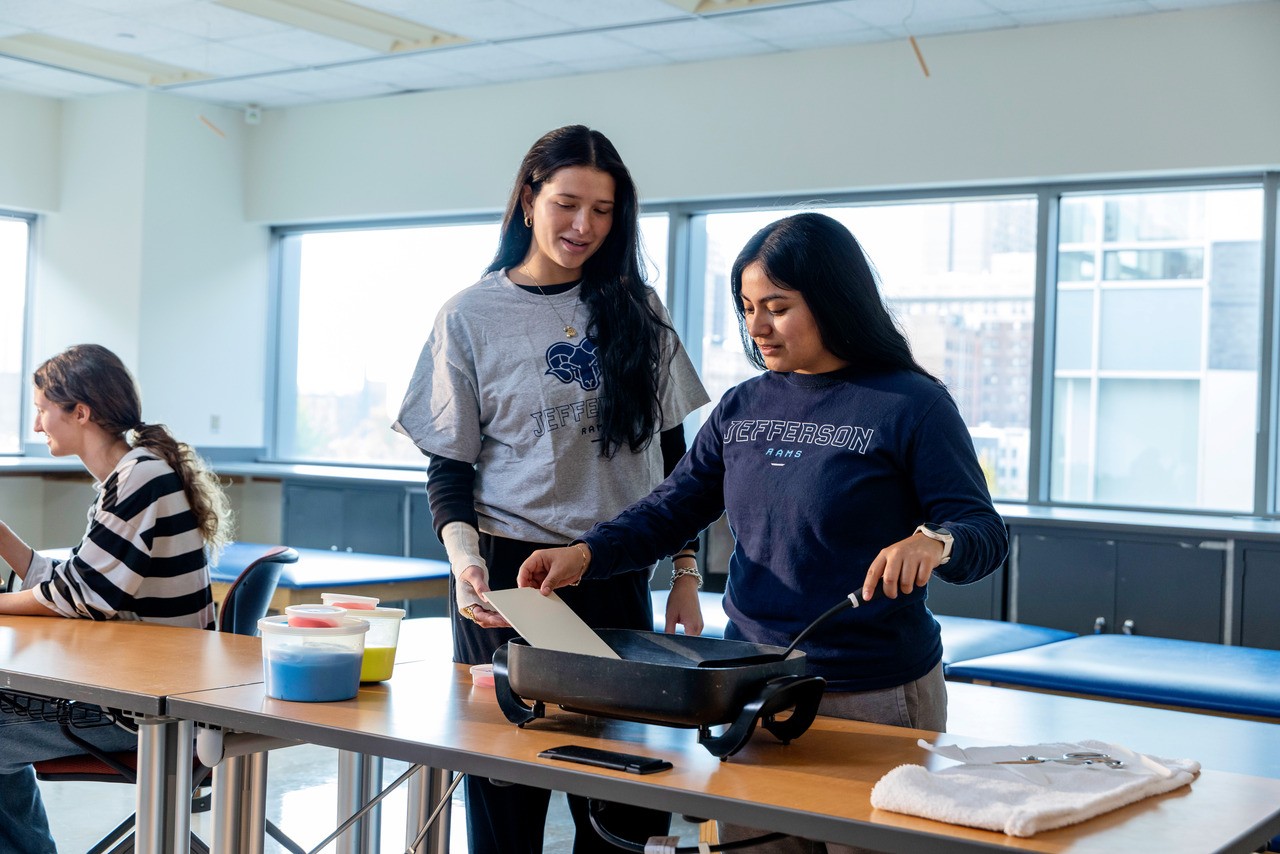
In the rankings released April 7, Jefferson’s physical therapy department rose six spots to No. 40 nationally, and the occupational therapy department held firm at No. 8, extending its longstanding position among the top 10 in the country.

Jefferson’s medical college also advanced to Tier 2 in the U.S. News primary care ranking and maintained its Tier 2 research ranking. U.S. News evaluates medical schools on faculty resources and academic achievements, grouping them into four tiers. (Read the full methodology here.)

“These rankings affirm both our progress and the meaningful return on investment for our students and their families,” says University President Dr. Susan Aldridge. “I’m incredibly proud of Jefferson’s accomplishments and excited about what the future holds.”
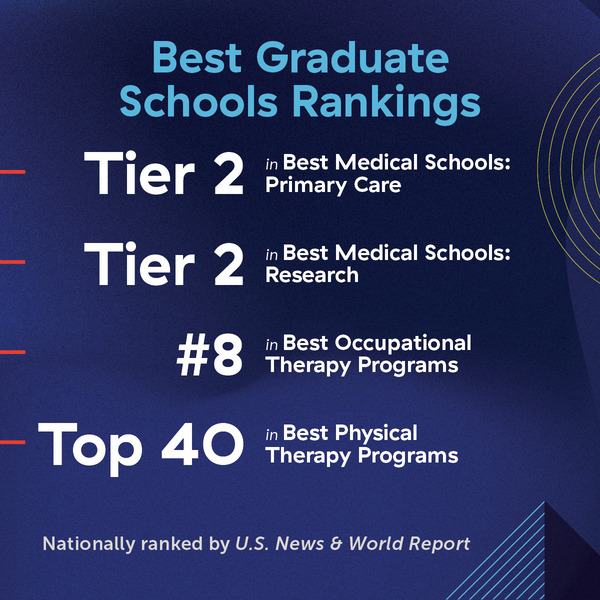
College of Rehabilitation Sciences Dean Dr. Steve Williams calls it “truly rewarding” to see the dedicated and distinguished work of the occupational therapy and physical therapy departments recognized among the country’s leaders in their respective fields.

“This distinction reflects the excellence of Jefferson’s faculty, the strength of the academic and clinical training, and the unwavering commitment to advancing rehabilitation science and patient care,” he says. “Such national recognition underscores Jefferson’s leadership in preparing the next generation of rehabilitation professionals and highlights the meaningful impact these departments continue to make within the profession and beyond.”

Dr. Said Ibrahim, SKMC’s Anthony F. and Gertrude M. DePalma Dean, shared this enthusiasm in response to the latest U.S. News rankings.

“Biomedical research isn’t an elective enrichment activity at SKMC,” he says. “It’s woven into the DNA of the educational experience from the start. We believe a physician who doesn’t understand how medical knowledge is generated cannot fully evaluate how it should be applied to human beings.

“Similarly, primary care is the backbone of any well-functioning healthcare system,” Dr. Ibrahim continues. “Since our nation faces a serious primary care shortage, we’re committed to training as many primary care doctors as we can. Being recognized for both our research productivity and commitment to primary care medicine reflects exactly what a great medical school should be doing—advancing science and serving patients.”

Sidney Kimmel Medical College advanced to Tier 2 for Best Medical Schools: Primary Care in the latest U.S. News rankings.

In addition to maintaining its Carnegie Classification of Research 2: High Research Spending and Doctorate Production, Jefferson also saw significant gains in the Blue Ridge Institute for Medical Research 2025 rankings. Based on 2024 federal fiscal year data, Blue Ridge ranks U.S. medical schools and departments by National Institutes of Health (NIH) funding. Here’s how Jefferson departments ranked:

Jefferson’s physical therapy department rose six spots to No. 40 nationally.

In other recent rankings news, Jefferson jumped from No. 67 to No. 44 in the latest Wall Street Journal/College Pulse Social Mobility Ranking. It rewards universities that admit the highest proportion of students from lower-income families while maintaining high graduation rates, positively impacting graduate salaries and minimizing the cost of attending college.

Newsweek also named Jefferson the No. 2 best college for women in the nation, evaluating schools in four categories: leadership, pay and policies, safety and opportunity. “This Newsweek distinction speaks not only to academic excellence, but to an institutional culture that values opportunity and impact,” Dr. Aldridge says. “It’s a recognition of what occurs when women are empowered to learn, lead and thrive.”