
In the age of social media and online connectivity, the world has become figuratively “smaller” as well as international immigration, familiarity with and appreciation of global perspectives has become increasingly vital for students entering the workplace. The undergraduate curriculum at Jefferson is designed to ensure that all students develop the ability to understand and value cultural diversity at the local, national and global levels. In the Hallmarks Program for General Education, requirements like American Diversity and Global Citizenship equip students to navigate a complex multicultural world that constantly grows smaller and more intensively connected.
How Do Cultural Artifacts Reveal Truths About Societies?
Examining contemporary Italy through literature, film, and fashion.
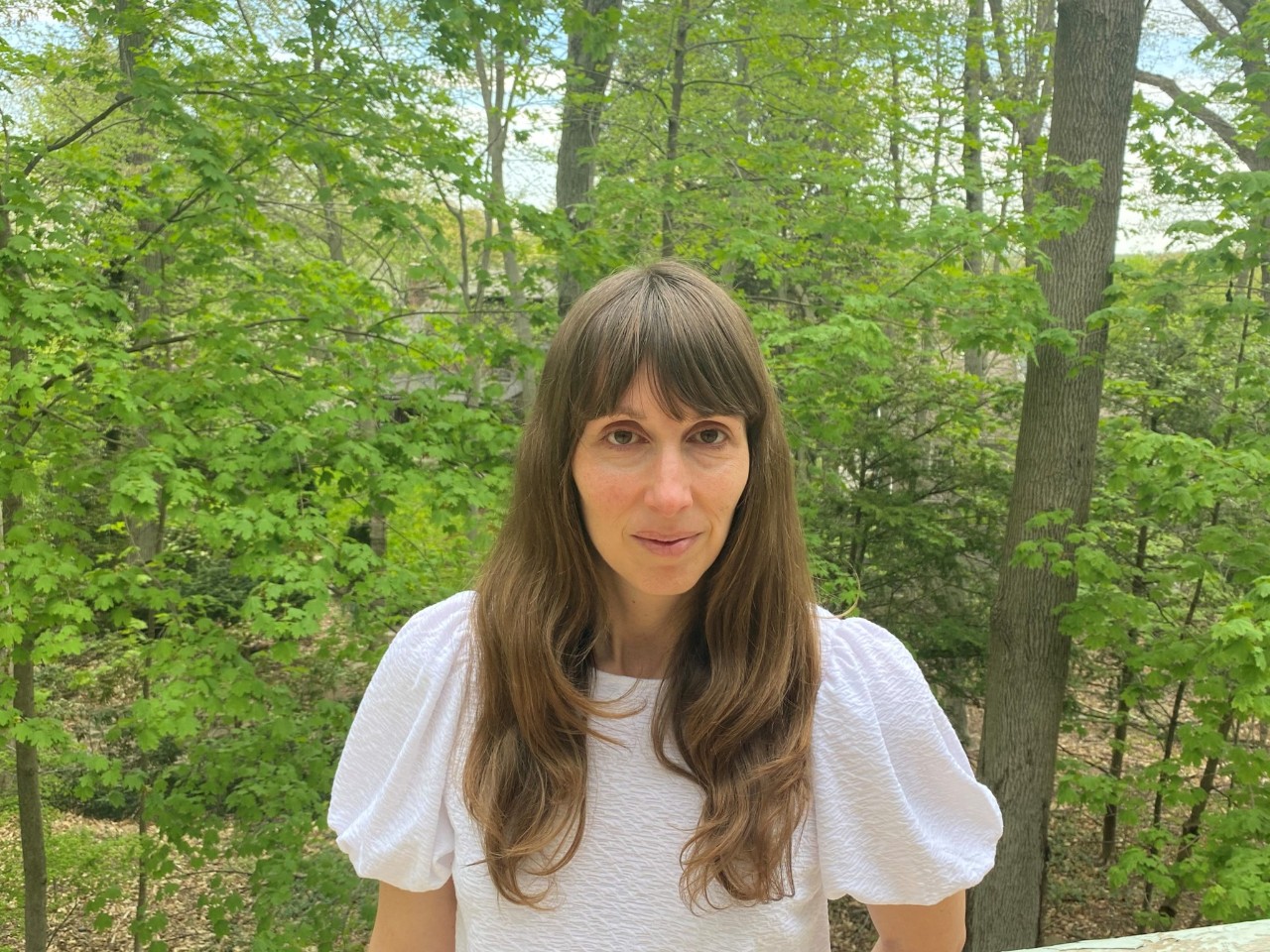 Meriel Tulante, PhD, Associate Professor of Italian Studies in Jefferson's College of Humanities and Sciences.
As program director for the Hallmarks Core, Meriel Tulante, PhD, Associate Professor of Italian Studies, uses courses on literature, film, and cultural studies to build students’ awareness of global issues that impact their professional and personal lives. Most recently, she has delved into Italian national identity, through examining the work of the author, Sebastiano Vassalli. Find out about what inspired Dr. Tulante’s interest in Italian studies, her research and the questions she’s trying to answer.
Q: What is your research focus?
A: My research focuses on 20th-century and contemporary Italian literature, migrant and post-colonial literature in Italian, and the relationship between fashion and film in Italy.
I have just published a book, Italian Chimeras: Narrating Italy through the Writing of Sebastiano Vassalli (Oxford: Peter Lang, 2020), focusing on the life and works of a well-known Italian author, Sebastiano Vassalli (1941-2015).
Vassalli was incredibly prolific, writing a novel every two years on average. His best-known novel, La chimera (1990), was the story of a girl put to death as a witch in seventeenth-century Lombardy. Through this account, he reflects on both the historical moment and contemporary Italian society: misogyny, the influence of the Catholic church, and the nature of Italian national identity.
My book, Italian Chimeras, argues for the value of examining Vassalli, his works and his position as a witness and interpreter of some of the most significant cultural, social and political moments in postwar Italy. At the time of his death, Vassalli was shortlisted for the 2015 Nobel Prize for Literature and would have received the extremely prestigious 2015 Premio Campiello literary prize to honor his career. Despite his wide readership, his reclusive, often combative attitude to the literary establishment, media and the outside world in general meant that his work was generally overlooked in critical and scholarly discussions. My book highlights the importance of his writing in the field of Italian cultural, historical and literary studies.
Q: What’s one question you’re investigating?
A: Broadly in my work, I’m investigating what we can understand about Italian society through literature or other forms of cultural production.
My book argues that Vassalli should be understood as an iconoclast who was determined to confront a range of problems in Italian society, with the intention of exposing hypocrisy, corruption and deceit. He tackled controversial or sensitive issues with the intention to provoke strong reactions: national identity and the national character, mafia, fascism, the role of the intellectual, mental illness, religion and political dysfunction. He was often the center of controversy and fierce debates in the newspapers. This was the case after the publication of a historical novel about the Sicilian mafia in the late 19th century, Il cigno (The Swan, 1992), when prominent intellectuals and others questioned his qualifications as a northerner to speak about Southern Italy, and accused him of spreading lies about the mafia.
Q: What first sparked your interest in this area of research?
A: I became interested in this area while taking a course on 20th-century Italian literature toward earning my PhD at Harvard. In the postwar period in Italy, writers tried to make sense of their nation through literature. As the country emerged from Fascist rule and the trauma of World War II, literature became a means to process – or to avoid processing – these realities. Sebastiano Vassalli would say that his contemporaries did not adequately reflect on the twenty years of Fascism or other violent periods, such as the political terrorism of the 1970s known as the anni di piombo (years of lead). He believed that this cultural amnesia, or unwillingness to confront difficult truths, whether in literature or more generally, hinders a frank discussion of national identity.
Q: What’s an interesting fact about your study subject?
A: I am also exploring questions of national reckonings of difficult historical periods in my work on postcolonial or migrant writing in Italian. With the influx of migrants and immigrants since the mid-1980s, Italy has transformed from a nation of emigrants into a country that is a destination for immigrants, many of whom come from former Italian colonies (Somalia, Eritrea, Ethiopia and Libya). Migrant authors challenge Italy to interrogate its colonial past, which has largely been swept under the rug.
My work on fashion in film similarly asks how visual media such as film and dress reflect the contemporary social moment and its preoccupations.
Q: Many researchers have superstitions – things that they’ve done to cosmically help their research work succeed. What are yours?
A: For my research I really just need time and books. Although I have interviewed authors and carried out a little archival work, working on texts mostly requires time to work through ideas and transfer them onto paper.
Q: What’s the best part of your job?
A: I enjoy the variation in the pace and the diversity of the work – going from writing on my own in a library, to teaching, to working with colleagues.
Q: What’s something people would be surprised to find out about you?
A: That I’m British. It’s often confusing to students when they hear me speak Italian and English with a British-English accent. They find it difficult to figure out where I’m really from!