
Jefferson Investigates: AI for Parkinson’s, Immune Aging in HIV & Finding Better Care for Patients with Diabetes
Exploring computer learning to predict Parkinson's disease progression, how the immune system becomes exhausted in HIV, and how to offer patients better diabetes care.
 Image Credit: TUMEGGY/SCIENCE PHOTO LIBRARY/ Science Photo Library via Getty Images
Motor impairments such as tremor, rigidity and slow movements are cardinal features of Parkinson’s disease. However, patients experience many other symptoms that can negatively affect their quality of life — for instance, changes in vision, loss of smell, altered digestion and trouble with swallowing.
In addition, Parkinson’s varies significantly from person to person, which makes it difficult to generalize how the disease might progress. Dr. Chengyuan Wu, associate professor of Neurosurgery and Radiology, wanted to explore whether quality-of-life indicators might hold clues to a patient’s prognosis.
Dr. Wu and MD-PhD student Tyler Alexander, designed a study that used machine learning to analyze a large database of patient records in which people report their symptoms on a standardized questionnaire. The self-reports are conducted every two months over a period of at least a year.
For each of the 630 patients analyzed in the study, the researchers looked at 13 questions that make up part of the standard Unified Parkinson’s Disease Rating Scale (UPDRS). This large dataset makes a good fit for machine learning. The strategy allows researchers to use “the minimal data necessary to allow us to predict what a patient’s quality of life will be in one year,” says Dr. Wu.
The results showed that just three self-reports, at the start of the study, at two months and again at four months were sufficient to predict significant worsening in patients a year later.
Dr. Wu says such information can help families prepare people for what’s coming. “It helps manage expectations,” he says.
Dr. Wu hopes to build on this work by incorporating different types of data — such as adding brain imaging measures to the self-assessments — to improve predictive performance. His research team will continue to focus on quality of life issues, because they are too often overlooked in Parkinson’s research even though they can have a huge impact on patients’ lives.
By Jill Adams
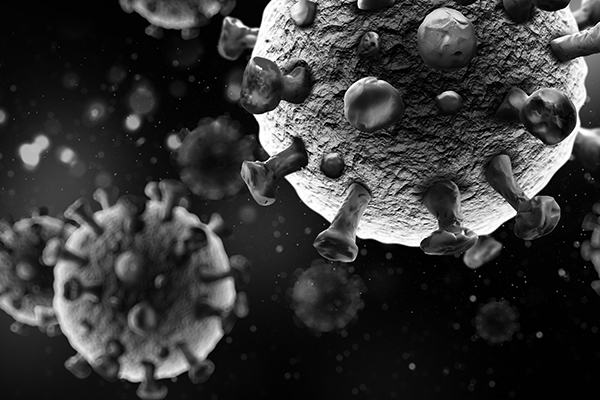 Photo Credit: fotograzia/ Moment via Getty Images
Scientists have long known that HIV attacks and infects CD4 T cells, the “helper” white blood cells that coordinate immune responses. Because these cells stop functioning, researchers say the disease causes premature aging of the immune system. But new research shows another type of cell may be implicated in the weakening immune system of HIV patients. According to a new study published in the journal Nature Communications, CD8 T cells—the “killer” white blood cells that attack abnormal cells damaged by cancer or pathogens—also seem to be altered by HIV.
“CD8 T cells play a critical role in control of viruses and tumor cells,” says Yuri Sykulev, MD, PhD, a professor of microbiology and immunology and senior author on the study. Under normal conditions, when CD8 lymphocytes detect an abnormal cell, they transition from a naive to an activated state. In this activated state, molecules on the surface of the lymphocytes recognize special molecules on aberrant cells and form a gasket-like structure around the cell called a synaptic interface. They then inject poisonous granules into the target cell that kills it and prevents cancer or pathogens from spreading.
To study how HIV affects this process, Dr. Sykulev and his colleagues purified CD8 T cells from blood samples of people with and without HIV. By exposing these lymphocytes to an artificial cell membrane, the researchers were able to recreate and microscopically image the synaptic interface.
They found that once activated, CD8 T cells from healthy individuals normally formed a bullseye shape called a mature synapse, with adhesion molecules forming the outer ring and the poisonous granule in the center. But surprisingly, many CD8 T cells from people with HIV formed mature synapses while still in a naive state—before they had been activated—leading these cells to disrupt regular immune system activity.
Dr. Sykulev believes this may be because people with HIV suffer from chronic, low-grade inflammation that upregulates certain signaling pathways in the immune system, leading to changes in lymphocyte behavior that in turn make it more difficult for the body to fight HIV and other pathogens. These changes also exhaust the immune system, inducing a state that resembles premature aging.
By Marilyn Perkins
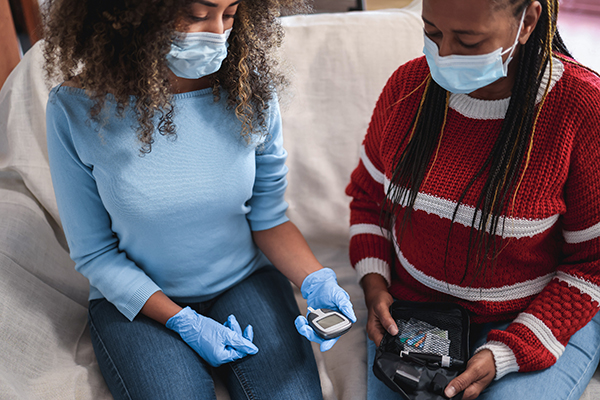 Image Credit: © DisobeyArt/Adobe Stock 409439102
Kristin Rising, MD, professor of emergency medicine, thought there must be a better way to meet the needs of people who show up in the emergency room for diabetes-related issues. “It’s appropriate for them to come to emergency in crisis,” she says. And yet, it was clear that “many of their needs weren’t being met sufficiently by the rest of the system.”
Dr. Rising forged a collaboration with Barry Rovner, MD, professor of psychiatry and neurology, to design a team-based intervention to address the issue. The intervention was comprised of race-concordant community care workers, with training in diabetes self-care and behavioral change who made home visits to help participants improve diabetes self-care. Diabetes nurse educators and primary care physicians also providedtelehealth visits. Finally, a clinical pharmacist also reviewed and optimized medication plans.
The study found that this intervention, delivered over 12 months, did not decrease emergency room visits relative to usual care. However, the intervention improved participants’ ability to manage their diabetes and increased trust in health care. In addition, overall satisfaction with the intervention was good, Dr. Rising says. “People liked it.”
Still, she adds, “We want to make sure we’re measuring things that are important to patients.” The researchers expect they could learn more by engaging community members and finding out what is most important to them for measurement in future related studies.
Diabetes is a complex medical condition, says Dr. Rovner, and patients function within a social context that influences how they interact with the healthcare systems. Therefore, he says, “Our results suggest that we don’t fully understand what all the drivers are for emergency room visits.”
By Jill Adams