
Terry Hyslop, PhD, was the lead statistician for a clinical trial that compared two treatment pathways after diagnosis of a precancerous breast condition known as ductal carcinoma in situ (DCIS). The study was named among the nine most impactful papers of 2025 by the Journal of the American Medical Association (JAMA). Dr. Hyslop is vice chair of the Pharmacology, Physiology & Cancer Biology department at Thomas Jefferson University’s Sidney Kimmel Medical College, and director of cancer health equity at Sidney Kimmel Comprehensive Cancer Center – Jefferson Health. Read on to learn about Dr. Hyslop’s research and her role in the trial:
Jefferson Researcher Brings Statistical Experience to Bear in Groundbreaking Trial
Biostatistician’s unconventional study design shows no benefit to surgery over watchful waiting for precancerous breast condition.
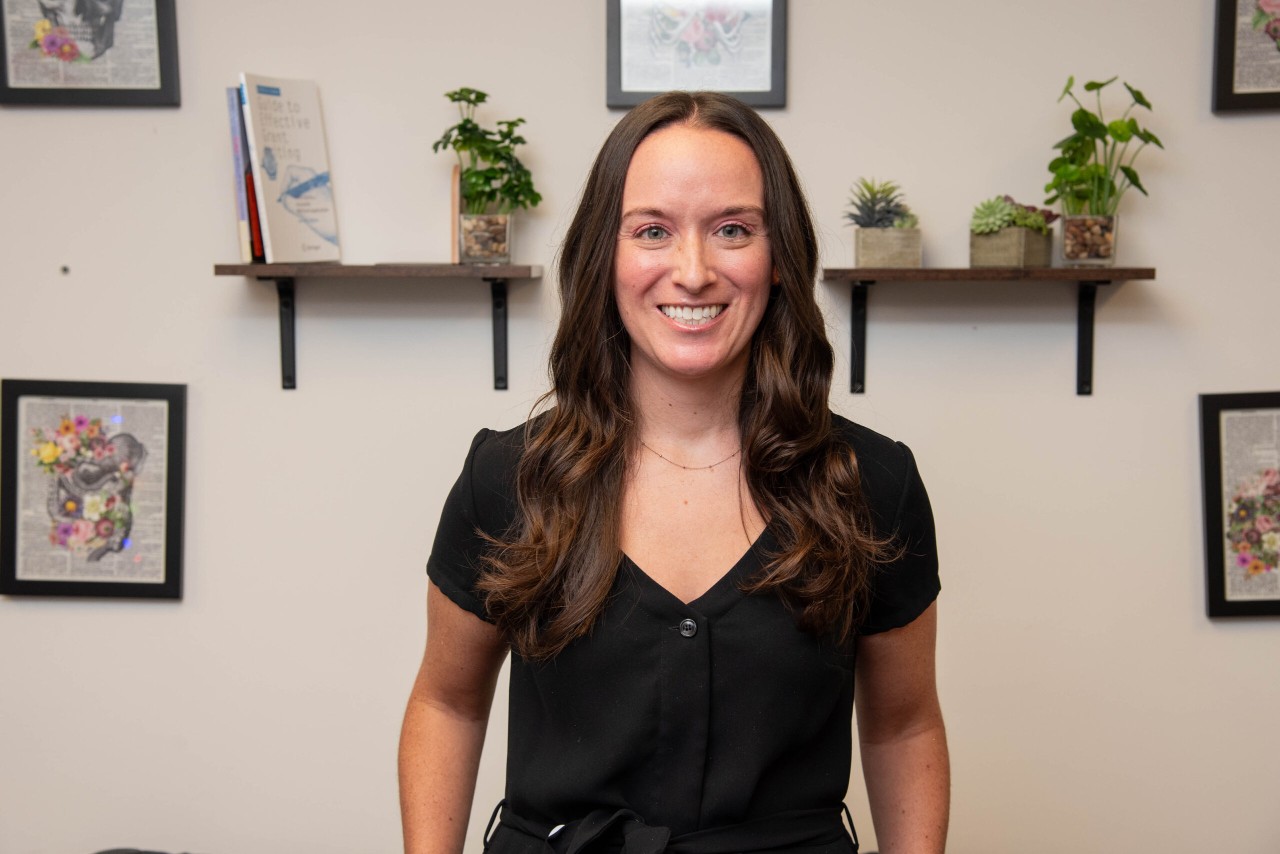
 Terry Hyslop, PhD, vice chair of the Pharmacology, Physiology & Cancer Biology department at Thomas Jefferson University’s Sidney Kimmel Medical College and director of cancer health equity at Sidney Kimmel Comprehensive Cancer Center – Jefferson Health. Photo Credit: ©Thomas Jefferson University Photography Services
You’ve spent most of your career at Jefferson, beginning as an IT specialist in the 1990s. How did your path lead to your current role?
After a few years in IT, I moved to pharmacology, where I worked with a doctoral statistician researcher, who had me write code simulations for his research. I didn’t know that I could use math and statistics to answer big questions! The more I worked with him, the more I had my own ideas. So I went back to school to get a PhD in statistics. I worked full-time at Jefferson and took classes in the evening.
I’m grateful for the combination of flexibility and financial support from Jefferson. I got to work from home the days I went to school, which was unusual in the 1990s. I used dial-up internet access, and my remote-work laptop was thick and heavy, like a brick! I saw my sons after they got home and prepped dinner before going to school. I earned my PhD after six years, the same year my older son graduated from high school. I then became faculty at Jefferson in the field of cancer statistics.
Your COMET (Comparing an Operation to Monitoring, With or Without Endocrine Therapy for Low-Risk DCIS) trial has received attention. What inspired that study?
I’ve always done breast cancer research, so when I moved to Duke in 2013 for a faculty position as head of biostatistics (until 2022, after which I returned to a faculty position at Jefferson, as co-leader of population science), I began working with surgical oncologist Shelley Hwang. She had an idea for a DCIS clinical trial and needed backing for the statistical part. I’ve been lead statistician for the trial since 2015.
DCIS is identified more and more, partly because imaging methods are becoming better. But these increased diagnoses don’t translate into more serious outcomes. That is because with DCIS, abnormal cells are encapsulated within the milk duct – they’re not cancerous cells. But the guideline-concordant care is surgery, with or without radiation therapy. There was a disconnect that Shelley wanted to investigate. She believed these cells are not dangerous enough to warrant mastectomy or even lumpectomy. She said the only way to get this to happen is through a clinical trial. I thought it was very brave for a surgeon to come up with the idea that maybe you don’t need surgery.
COMET compares two-year outcomes of active monitoring (mammography and a physical exam every six months) and surgery (lumpectomy or mastectomy), with patients being able to decide which group they wanted to be a part of. Why was it important to design such a patient-centric trial?
We’d seen other DCIS trials falling apart. People dropped out of European trials; they didn’t agree to be randomized because they had specific preferences about treatment. They might have been eager to have surgery, then found out they were assigned to the active monitoring group, or vice versa. We didn’t want women to drop out if they decided they couldn’t face whatever they were randomized with.
We built in data collection to allow for patient refusal to accept the randomization. If a patient said, “I really don’t want surgery,” we said, “We’ll monitor you instead,” and kept them in the trial. One way to deal with that is having a slightly bigger sample size, to overcome variation in the analysis. People in the field had questions along the way, like, "What proportion of people do you think won't comply?" We weren’t exactly sure. But as we were designing the study, I found evidence from another paper that showed that if the number of people who switched groups was below a certain level, you were still unbiased in our estimate. Moreover, the conditions in that publication were similar to ours. That's the kind of thing a statistician wants to see.
COMET received recognition from JAMA’s editors. What’s notable about the study to you?
This is the only such trial that’s been completed across the world, so people will be looking at it. Active monitoring could become the standard one day.
One of the most important takeaways is that patients diagnosed with DCIS don’t have to make treatment decisions quickly. For two years, the outcomes look very similar. Patients can take their time and think about what they really want.
What other research projects are you working on?
I’m passionate about my health equity work. I’m doing some studies now about metabolic dysregulation, or when your metabolism doesn’t work correctly. In certain conditions like cancer, metabolic dysregulation is more likely to occur in minority populations. If I can figure out some things about the underlying mechanisms, I will be able to help those populations.
Does mentorship play a role in your work as a researcher?
I do a lot of mentoring, and I find it rewarding. Many of the postdoctoral researchers I either work with or interacted with in my department had questions about seeking funding for their research, particularly about the National Institutes of Health’s career development awards, which are informally called K grants. The awards are for early-career, to give them funding for three to five years, as well as support from mentors, so they can develop as researchers.
I’ve mentored people over the years who wrote K grants, so I thought, "What if we had a group that came together for help writing K grants?" And that’s how the K Club came about. The researchers are from different departments at Jefferson and even other institutions, like Drexel. We meet weekly, to look at someone’s paper or their research aims. They share their ideas, and we give them feedback. I also help them find people to be on their mentoring teams. It’s good for them to have somewhere to go for advice, beyond the lab or group that they work in.
Why is it important for you to mentor the next generation of researchers?
Because my path was not the same as others, I came to realize that everybody needs help, and everybody needs someone to show them the way. For everyone I’ve mentored, I walk the path with them, but when they get to the point that they feel comfortable and want to step off, I say goodbye and watch them be successful. Research is such a love of mine, and I want other people to have similar opportunities.