Sijan Basnet, MD
Post Graduate-Employment
Cardiology Fellowship
Reading Hospital, Reading PA



1 year
111 S. 11th Street
Gibbon Building, Ste. 6270
Philadelphia, PA 19107
The Jefferson Vascular Medicine Fellowship is an advanced graduate medical education beyond a core residency program in Internal Medicine for physicians who desire to practice Vascular Medicine. The fellowship will train candidates to become vascular medicine specialist eligible to become diplomats of the American Board of Vascular Medicine (ABVM). The program at Thomas Jefferson University Hospitals is as unique training program aimed at producing the next generation of Vascular Medicine specialist able not only to practice the specialty with the highest standards, but to become regional and national academic leaders.
The fellow enrolled in the Jefferson Vascular Medicine Fellowship will fulfill the requirements to be eligible to take the American Board of Vascular Medicine examination through dedicated care of patients with vascular diseases under the Division of Vascular Medicine faculty supervision.
The core training in Vascular Medicine entails clinical rotations with appropriate faculty supervision and conditional independence to be completed over a period of 12 month depending on the effort time dedicated to training or clinical core duties. Table 1 depicts the clinical rotations a trainee must complete including inpatient vascular medicine (JATS Service), outpatient vascular medicine, vascular wound care and hyperbaric medicine, vascular ultrasound, vascular surgery, cardiology, cardiovascular interventional radiology, rheumatology, hematology, PERT/MICU, Pulmonary Hypertension, and Clinical Translational Research. Each trainee will also have a combined 2 weeks of vacation and 6 weeks academic/clinical research protected time. A dedicated half a day every week to perform and interpret vascular imaging will be scheduled throughout the length of the training program in order to fulfill the requirements for the RPVI and POCUS vascular imaging certifications. Table 2 depicts our fiscal year clinical volume for new outpatients and inpatient JATS consults.
In addition, the Vascular Medicine Fellow will be required to fulfill mandatory scholar activities including attendance to academic and clinical conferences (Table 3). The Vascular Medicine Fellow will be in charge of running the weekly vascular medicine academic conference and attendance to the weekly vascular surgery education session. The Vascular Medicine Fellow will be also required to complete the Thomas Jefferson University faculty development program, attend the Society of Vascular Medicine (SVM) fellow-in-training program, the SVM yearly academic meeting, Anticoagulation Forum Meeting or Training Programs, the American Venous Forum (AVF) yearly academic meeting, and to complete and approved preparation course for the RPVI examination (approved programs: PEGASUS or NAVIX).
At the end of the program and in order to obtain a certificate of training the Vascular Medicine Fellow will be required to take the American Board of Vascular Medicine (ABVM) examination, the American Registry for Diagnostic Medical Sonography (ARDMS) examination to become a Registered Physician in Vascular Interpretation (RPVI), the Point of Care Ultrasound (POCUS) for vascular imaging certification, and the primary training Hyperbaric Oxygen Therapy (HBOT) certification. Table 4.
| Fiscal Year | New Outpatients | New Inpatient JATS Consults |
| FY 2019 | 906 | 1,252 |
| FY 2020 (Pandemic) | 750 | 1,321 |
| FY 2021 | 920 | 1,659 |
| FY 2022 Projected* | 824* | 1,796 |
*Loss of one faculty member recruited new member start date 1/1/2022
| Frequency | Duration | |
| Vascular medicine academic conference | Weekly (Tuesday Morning) | Throughout duration of training program |
| Vascular surgery clinical conference | Weekly (Friday Morning) | Throughout duration of fellowship |
| Jefferson Faculty Development Program | Weekly (As Scheduled) | Throughout duration of fellowship |
| Society of Vascular Medicine Fellow in-training Program/Board Review and Annual Meeting | Once a year | 1 week |
| Anticoagulation Forum (Lunch & Learn, Webinars, National Meeting every other year) | On going | As indicated by programs offered and annual meeting every other year |
| RPVI Examination Training Program | Once a year | 3 – 4 weeks (on-line) |
| Examination | Regulatory Entity | Requirement for graduation |
| American Board of Vascular Medicine (ABVM) | ABVM | Mandatory |
| Register Physician in Vascular Interpretation (RPVI) | American Registry for Diagnostic Medical Sonography (ARDMS) | Mandatory |
| POCUS Vascular Certificate | ARDMS-APACA | Mandatory |
| Primary Training in Hyperbaric Medicine | Hyperbaric Medical Society and the National Board of Diving and Hyperbaric Medical Technology. | Optional |
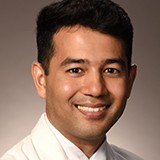
Post Graduate-Employment
Cardiology Fellowship
Reading Hospital, Reading PA