

Featured Alumni

Featured Alumni

Population Health '20

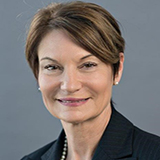
Colleen’s advice to aspiring physicians or those seeking to have a positive impact on yourself and your community’s health: go rural! That is where people are most in need and the most appreciative of medical expertise and services.

Colleen was born on the island of Kauai, Hawaii but spent much of her childhood in California. She attended the University of Southern California (USC) and Rosalind Franklin University/Chicago Medical School before returning to the women’s hospital at USC /Los Angeles County for residency. As one of the senior OB/GYN residents in LA County in the early 80’s, it was an exciting time – her hospital delivered the most babies in the U.S.

After her residency, Colleen and her husband, a pediatrician, moved to Maui. She soon opened her own solo private practice, where she stayed for over 35 years, welcoming generations of babies, watching children grow into parents/patients, and caring for multi-generational families in her small community.

“You get to know the community well,” she said. “We would see patients when we went to the stores or out to dinner. It’s not something physicians can appreciate in a big city. If you want to have the relationships and gratitude and community feeling with patients, then rural communities are the place to be.”

After Colleen became Chief of Staff at Maui Memorial Medical Center in 2010, she began focusing on education – first by joining the American Association for Physician Leadership (then known as ACPE), and applying course credits towards then by earning a master’s degree in medical management.  Next, she began reading about the emerging area of population health and applied to the Jefferson College of Population Health (JCPH) Certificate program, having been introduced by a JCPH representative at an AAPL conference, and after listening to an inspiring lecture by Dr. David Nash. 

“Then I thought ‘What the heck, why don’t I get the master’s degree?’ So, I went for it,” Colleen said. “And by that time, of course, population health became a widespread topic. Having a master’s degree in population health helped me understand what population health really means for the healthcare ecosystem and what inclusive good health and wellness, backed by the principles of population health, can do for your community.”

Colleen has educated physicians, legislators, and payors about the importance of embracing population health and how to think globally about what patients need to become healthy. 

“The Jefferson program was excellent because the faculty has a wealth of knowledge, excellent communication with applicants and students, and you feel like you’re being taken care of,” she said. “I felt like I was part of a close-knit community helping me to achieve what I set out to do.”  “In fact, after I graduated Dr. Mitchell Kaminski, population health program director,  collaborated with me on two published articles.”

The momentum propelled her to become the Interim Executive Director of the Hawaii Independent Physicians Association. When the 2023 wildfires hit Maui, Colleen used all her accumulated professional and population health knowledge to meet the needs of the survivors. She oversaw emergency shelters, helping the Red Cross by sharing information about her community and how to best facilitate assistance for people with medical and social needs big and small. Food, economic, housing , and transportation insecurity affected this entire community. She was on the front lines.

“When people look at what I’ve done, they see how much I’ve dedicated my life to taking care of my patients and my community,” she said.

Truer words could not be spoken.

Dr. Inouye is currently a board member at AAPL.

Applied Health Economics & Outcomes Research '22

A life-long learner, Scott Goldfarb got involved in population health after completing pharmacy school at University of Maryland. After graduation, he did a residency year and a year of specialized training in managing population health, including formularies and national disease management programs.

Scott was part of a global health outcomes group at a pharmaceutical company where he worked. In this role, he conducted observational research using medical and pharmacy claims, electronic medical records, and chart reviews. He published peer-reviewed research and presented his research for multiple audiences.

“I spent time in various medical affairs roles in the pharmaceutical industry, working with key opinion leaders who drive the research and guidelines,” Scott said. “Working with them over the years, I became even more interested in generating scientific evidence to help inform patients, providers, and payers in the U.S. about the value of new medicines for oncology.”

It was at that point that Scott realized he had a lot of on-the-job experience, but wished to refresh his formal training in outcomes research. That’s why he joined the online master’s program in Applied Health Economics and Outcomes Research at Jefferson College of Population Health. For a busy professional living in Arizona, the program was perfect because it comprised few live meetings and included a comprehensive asynchronous program developed by expert faculty. That meant Scott could tackle his studies between hiking desert trails near his home and spending time with his family.

“This program is a great way to increase your knowledge in health economics and outcomes research, with a very organized and knowledgeable faculty,” Scott said. “If you enjoy HEOR, which involves cost effectiveness modeling, budget impact analysis, and comparative effectiveness research, this program will help you beef up your skills.”

Scott’s education helped land him a new job at BeiGene in a unique market access role, in the area of applied health economics and outcomes research related to oncology. His job at this upstart company involves working with key customers in the U.S. to conduct collaborative outcomes research projects. On a day-to-day basis, you’ll see Scott gathering insights from medical records and insurance claims as part of a cross-functional team. His research is informing strategies that benefit oncology patients and improve public health.

Population Health '19

As a young nurse, Janice Nissen learned about the vital role of compassionate care as she worked long nights in pediatrics at an Illinois hospital. Eager to help more patients in a new business venture, she took a role as a nurse clinician at Abbott Laboratories, helping patients across the country become comfortable at home using an IV and pump. When they felt empowered, she felt successful. Over the next decade, ever seeking to have a greater impact in healthcare, Janice worked in a variety of roles in sales leadership, operations and marketing for hospital products, pharmaceuticals, and diagnostics. She was most energized when a role involved building a new business model.  One such example was building a business unit for established pharmaceutical brands, the other was her final role at Merck where she and her team created a Center of Excellence for Patient Engagement.“Life science companies were becoming increasingly interested in what the end-user thought about their products,” Janice said. “Do they want longer life or a better quality of life? With the Center of Excellence, we focused on many things, including the ways patients can inform clinical trial design, how products are packaged, are instructions for use easy, do we have a website that is designed for patients in health literate terms, and how can a pharmaceutical company best support the important work of patient organizations. This work involved working with patient organizations globally and the chance to see how healthcare is delivered in all parts of the globe.”

It was during her time at Merck that Janice was inspired to gain a greater understanding of the broader world of global health and population health. She first enrolled in the Population Health Academy at JCPH and loved it. She then decided to pursue the certificate program and then her Masters degree in Population Health.

“I loved it because it gave me the surround sound of what healthcare was all about,” Janice said. “Up to this point my experience was heavily focused on life science companies and their issues,  but I learned about broader policy issues that were impacting all of the stakeholders in healthcare. Ultimately the course work and interaction with other students focused on what each stakeholder in healthcare could do to create a better healthcare system.”

As a result of her JCPH education, Janice said she felt more equipped to apply a broader perspective on the healthcare environment to her work at Merck. However, she often thought about being in school at this point in her career! “I used to tell people that I was in school and would likely be on Medicare when I finished,” she said. “I actually finished before hitting Medicare, but I like to think it’s a testament that you are never too old to go back to school and further your education!”

Today, while technically “retired,” Janice is anything but! She is a member of the JCPH Alumni Board. She consults with the National Institutes of Health Foundation on how to evolve their patient engagement strategy. As a nurse Janice is also passionate about the role that nurses can play in the industry she worked in for most of her career, life sciences. So also she is working with a medical education company to raise awareness about a program for nurses who want to transition into the life sciences field. Finally, Janice has just joined the Helene Fuld College of Nursing as a trustee.